
Energy bill 2027: what changes
Posted on 9 min read
Net metering ends on 1 January 2027. Status 25 October 2026: energy tax and network tariffs are still proposals. See what is fixed and what is not.
All articlesNet metering ends on 1 January 2027, and more moves on your energy bill. The proposed energy tax rate on electricity is slightly lower than in 2026: 8.80 against 9.161 cents per kWh, excluding VAT. The grid operators' proposed tariffs come to about €89 a year more for electricity and €52 for gas. The CO2 levy on gas for suppliers only starts in 2028. Status as of 25 October 2026. What is still a proposal or an expectation is flagged each time. We do not give a total for your household: that depends on your usage, your grid operator and your contract.

What is fixed and what is still a proposal?
 Solar panels
The table lists each item: what has been decided, what is still a proposal and what the cabinet expects. Fixed means it is in a law or regulation. For a proposal a decision is still to come. The status is as of 25 October 2026.
| Item | What changes | Status |
|---|---|---|
| Net metering | Ends on 1 January 2027. All export is paid for | Fixed |
| Feed-in payment | Until 2030 at least 50% of the bare supply rate | Fixed |
| Feed-in charges on your bill | An amount per exported kWh | Fixed |
| Energy tax on electricity | 8.80 instead of 9.161 cents per kWh, excluding VAT, up to 10,000 kWh | Proposal, status as of 25 October 2026: Tax Plan 2027, Senate in December |
| Energy tax reduction | €519.58 instead of €519.80 per connection, excluding VAT | Proposal, status as of 25 October 2026: Tax Plan 2027 |
| Network tariffs | About €89 more for electricity and €52 for gas per year, average household | Proposal by the grid operators, status as of 25 October 2026: ACM decides in November |
| Blending in green gas | Extra costs at most 1.5 cents per m³ in the first year | House of Representatives agreed, Senate not yet, status as of 25 October 2026 |
| CO2 levy on gas (ETS-2) | Suppliers pay for the CO2 emissions of gas | Starts on 1 January 2028, not in 2027 |
Amounts with VAT are our own calculation (× 1.21), rounded. The source does not say whether the network tariff amount includes or excludes VAT.
Want to see what storage does for your situation? Look at with or without a home battery.
1. Net metering ends
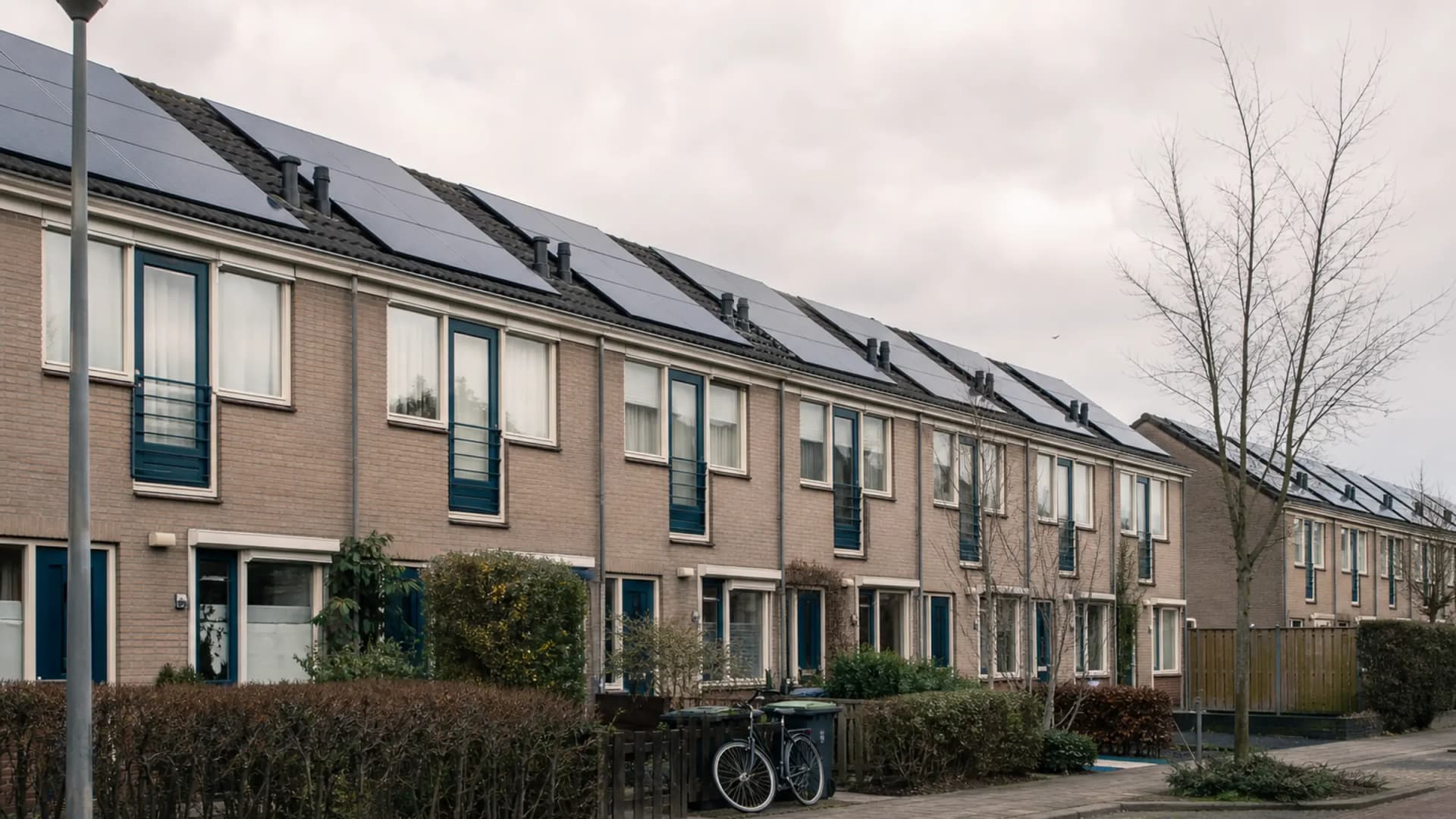
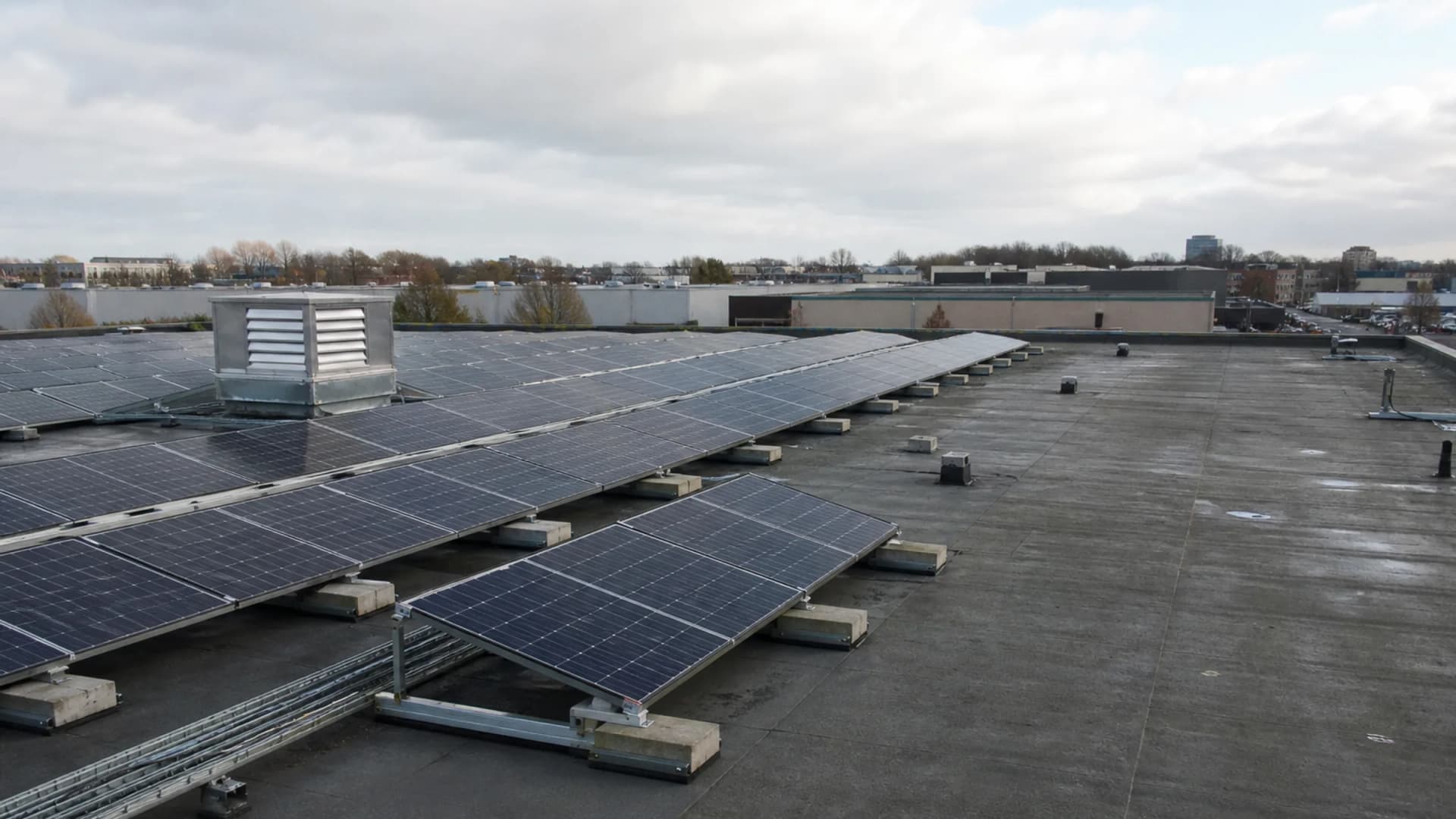
Until 31 December 2026 your supplier still offsets exported power against what you draw. From 1 January 2027 you can no longer offset it: you pay for all the power you draw, and receive a payment from your supplier for everything you export.
Until 2030 that payment must be at least 50% of the bare supply rate, the power rate without taxes. On power you generate and use directly you pay no tax. A kWh you use yourself is therefore usually worth more than a kWh you export. For export your supplier may only charge the costs it incurs to process the exported power, under ACM supervision.
More in our article net metering ends 2027 and in the knowledge base on the feed-in payment and feed-in charges.
2. Energy tax on electricity: rate slightly lower (proposal)
In the Tax Plan 2027 package the energy tax rate on electricity is lower: from 9.161 cents per kWh in 2026 to 8.80 cents in 2027, excluding VAT. That applies to the first 10,000 kWh: the first two brackets have the same rate. With VAT that is 11.1 cents in 2026 and about 10.6 cents in 2027 (our calculation: × 1.21).
The fixed energy tax reduction per connection drops in that proposal from €519.80 to €519.58, excluding VAT. With VAT that is about €629 in both years (our calculation: × 1.21).
The cabinet expects the rate up to 10,000 kWh to fall further in the coming years, to 7.73 cents per kWh in 2030, in 2026 prices and on the same basis as the 9.16 cents of 2026 (excluding VAT). That is a cabinet expectation, not law. Only 2027 is in the Tax Plan, so we do not fill in the years in between.
The Tax Plan 2027 is with parliament. The House of Representatives has been dealing with it since October, the Senate follows in December. Only once both chambers agree is the plan final. Now that net metering ends, you pay energy tax on all the power you draw from the grid, including the kWh you used to offset.
Further ahead: an overview with the Tax Plan 2027 lists a measure for the Tax Plan 2028 to focus the energy tax reduction on households. The memorandum gives no detail, so do not count on it yet.
3. Network tariffs rise (proposal)
The transport costs you pay to the grid operator through your supplier go up in 2027 under the proposal. On 7 October 2026 the ACM published the grid operators' proposed tariffs: on average about 20% more for transporting electricity and gas, for households and businesses on the regional grids. For an average household that is about €89 a year for electricity and €52 a year for gas. What it comes to for you depends on your grid operator. The ACM decides in November 2026, until then it is a proposal.
The reason: grid operators have to invest heavily to expand and strengthen the power grid, including new cables, transformer stations and high-voltage stations. Transport tariffs are about a third of a household's electricity bill.
Further ahead the ACM wants network tariffs from 1 January 2029 that depend on how much and when you use power. A draft decision has been out since 8 October 2026; what it means for you is in new network tariffs 2029.
4. Gas: green gas and the CO2 levy
Two rules are coming for gas suppliers, at different stages. The obligation to blend in green gas: the House of Representatives agreed on 6 October 2026, the Senate still has to vote. The aim is 2027. According to calculations the extra costs are at most 1.5 cents per m³ in the first year. For an average household heating with gas that is €15 a year excluding VAT in the first year. After that it rises to at most 9 cents per m³ in 2031.
The CO2 levy on gas (ETS-2) starts on 1 January 2028. The European rules postpone the start of ETS-2 until 2028. Suppliers then pay for the CO2 emissions of gas delivered to households. The ACM prohibits suppliers from offering a fixed gas contract in which the price can be changed once this levy or the blending obligation takes effect. A fixed price may only change in exceptional cases: the ACM currently sees only a change in grid costs, energy tax or VAT.
5. Do you have a fixed contract that runs past 1 January?
For contracts that run past 1 January 2027, suppliers have to explain properly when you sign what the new rules mean. Some contracts already state the price after 1 January 2027. Those simply continue and cannot just be cancelled free of charge.
Your supplier may not simply change a running fixed contract. It may only do so if the terms clearly say so and it announces the change at least a month ahead, so you can end the contract before the change takes effect. As a reason for a price change the ACM currently sees only a change in grid costs, energy tax or VAT.
Tip: look in your contract for the feed-in payment and any feed-in charges after 1 January 2027. From then on your supplier has to show feed-in charges as an amount per exported kWh on your bill, so you can set them next to your feed-in payment. More on feed-in charges.
What can you do now?
Four things you can do whatever happens to the proposals:
- Check your contract. Which feed-in payment and feed-in charges apply after 1 January 2027, and what does it say about price changes?
- Shift usage to the sun hours. Run the washing machine, dishwasher, charger and boiler during the day. How to automate that is covered in smart home energy management.
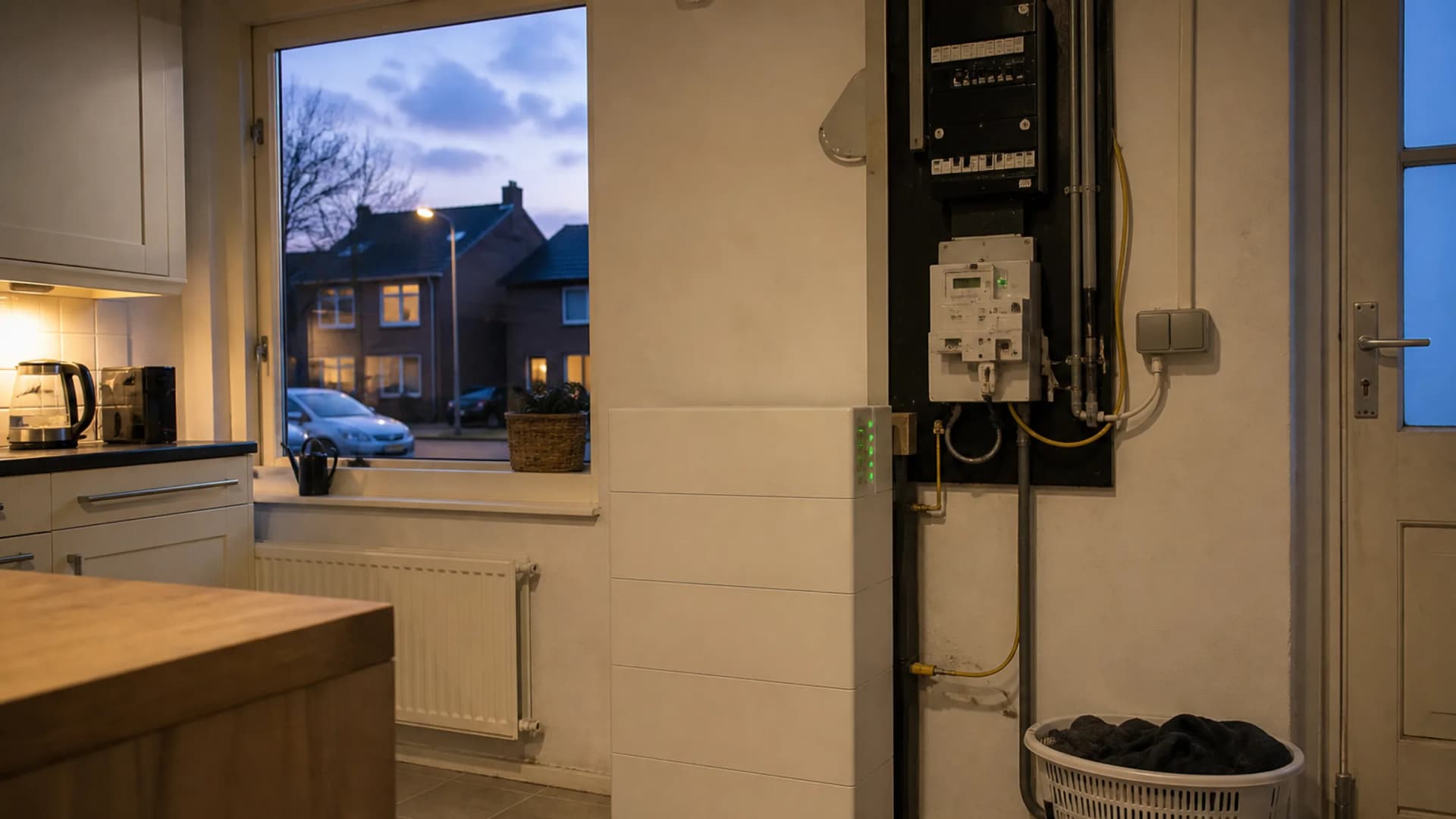
- Run the numbers on storage if you export a lot. See with or without a home battery. The timing of a purchase is covered in buy a home battery or wait until 2027. If you charge a battery with grid power and feed it back, first read when that costs double energy tax.
- Weigh your contract type. See fixed or dynamic energy contract and the explainer on a dynamic energy contract.
Conclusion
On 1 January 2027 net metering ends, and that is fixed. The energy tax, the network tariffs and the green gas obligation were still a proposal or expectation on 25 October 2026. The CO2 levy on gas only starts in 2028. That is why we give no total, only separate items with their status.
Do you have a question about your situation with solar panels? Get in touch.
Read more
- Dutch government: net metering ends on 1 January 2027, payment, at least 50% and feed-in charges (Dutch)
- Government Gazette 2026, 28208: feed-in charges as an amount per exported kWh on the bill (Dutch)
- Tax Administration: energy tax rate and reduction per connection in 2026 (Dutch)
- Rijksfinanciën: fiscal key table Tax Plan 2027, rate and reduction in 2027 (Dutch)
- Dutch government: Tax Plan 2027 under debate, Senate in December (Dutch)
- Dutch government: build-up of the energy bill, rate and reduction including VAT (Dutch)
- House of Representatives: cabinet answers on the Tax Plan 2027 (16 October 2026), rate up to 2030 (Dutch)
- House of Representatives: memorandum after the report, Tax Plan 2027 (20 October 2026) (Dutch)
- ACM: grid operators' proposed tariffs for 2027 (7 October 2026) (Dutch)
- ACM: explanation of the draft decision on time-dependent network tariffs from 2029 (Dutch)
- Dutch government: green gas blending obligation, House agreed, extra costs per m³ (Dutch)
- Senate: bill on the green gas blending obligation (Dutch)
- ACM: fixed contracts, ETS-2 from 1 January 2028 and green gas (6 August 2026) (Dutch)
- ETS-2 postponed until 2028: Regulation (EU) 2026/667, Article 2 (EUR-Lex, 18 March 2026)
- ACM Energy Monitor: fixed contracts that run past 1 January 2027 (Dutch)
- Own generation that you store and use yourself is free of energy tax: House of Representatives, answer to parliamentary questions (Appendix to the Proceedings II, no. 96, 23 September 2026) (Dutch)
- Conditions for reclaiming VAT on a home battery if you buy and sell power: Tax Administration, home battery and VAT (Dutch)
- Slim Handelen steers a home battery automatically on a dynamic contract: Frank Energie (partner), Slim Handelen (Dutch)
Get more out of your own power. Four things to watch for, even as net metering ends
Your energy use
Planning to drive, cook or heat electrically? Factor that into how many panels you install now.
Spread the yield
Spread panels across roof faces so you generate through the day and use more of your own energy.
Your data
Ask your installer where your system's data is stored and which parties have remote access.
Boost your energy
A smart home battery stores today's power for later, so you use more of your own electricity after sunset.

We install your solar panels in a day
We can often start within three weeks. A day later your panels are on the roof and everything is connected. We leave your home clean and make sure you know exactly how it all works.
- Use more of your own power during the day
- 0% VAT on solar panels on or at your home
The zero rate applies to the supply and installation of solar panels on or at a home. Exception: solar panels integrated into the roof of a new-build home and supplied together with the home. Source: Belastingdienst (Dutch Tax Authority).
Book an appointmentFrequently asked questions
That depends on your situation. If you have solar panels and exported a lot, you mainly notice the end of net metering. The proposed transport tariffs come to about €89 a year more for electricity and €52 for gas, a proposal the ACM decides on in November. The proposed energy tax rate on electricity is slightly lower than in 2026. We cannot give a total for your household without your figures.
No. The rates are in the Tax Plan 2027, which the House of Representatives and the Senate still have to pass. The Senate deals with it in December. Status as of 25 October 2026.
No. On power you generate and use directly you pay no tax.
Your supplier decides. Until 2030 the payment must be at least 50% of the bare supply rate: the power price without taxes.
Not simply. It may only do so if the terms clearly say so and it announces the change at least a month ahead, so you can end the contract before the change takes effect. Contracts that already contain the prices after 1 January 2027 simply continue.
From 1 January 2027 every kWh of solar power you use yourself counts. Feeding back earns less: until 2030 you get at least 50% of the bare supply rate. A home battery keeps your daytime solar power for the evening. Stored power you generated and use yourself is free of energy tax, and you pay fewer feed-in charges if your supplier charges them. With a dynamic energy contract a battery gets more out of it: it charges when power is cheap and uses it or feeds back when the price is high. With a suitable system (HyxiPower, KStar or Sungrow) and the dynamic contract of our partner Frank Energie, Slim Handelen does that automatically if you want it to. If you trade with the battery on a dynamic contract, you may also be able to reclaim the VAT: our VAT refund check shows in a few questions whether that route fits you. If your battery charges grid power and later feeds it back, you pay energy tax twice from 2027. The cabinet is looking into (status as of 25 October 2026) whether that can go. Whether it works out for you depends mostly on: how much power you have left over in the daytime, your evening use, whether your supplier charges feed-in charges, and whether you have a dynamic contract. Not sure about the timing? Read buy a home battery in 2026 or wait until 2027.

Discover what smart energy can do for you
In about an hour you get insight into your savings, the options for your home and when the investment pays back. Straightforward, honest advice so you know exactly where you stand.
Smart energy at home
- Upgrade your home with our smart battery
- Solar panels matched to your roof and usage
- A heat pump to minimise your energy use
- Charge your electric car easily at home with an EV charger
Booking an advice call is easy
Fill in your details below. Within a day we will contact you to schedule a no-obligation advice call together.
Related articles