Self-consumption
The more of your own generation you use yourself, the less you depend on feed-in rates.

See what a home battery can do for you.
Curious about the options? We'll help you get started with a clear explanation and advice that fits your home.
Leave your details for an advice call. We will look at what suits your home and needs together, with no obligation.
More and more people in the Netherlands choose a home battery. Not only because net metering is ending, but mainly to use more of the power they generate. A smart home battery stores extra energy so you can use it later. We'll explain how that works and what to look out for.

During the day panels often generate more than you use. Without a battery that surplus goes back to the grid. With a home battery you keep it for the evening or a cloudy day.
The right capacity depends on your use, panels and fuse box. In an advice call we calculate that for your home.
The more of your own generation you use yourself, the less you depend on feed-in rates.
Too small and you run empty at night. Too large and it never fills. We size it to your use.
With dynamic tariffs or grid control, your battery charges and discharges when it pays off most for you.
A battery without enough own generation does less. First check whether your roof and use fit together.
Want to keep going during an outage? Ask about backup. Not every battery includes that by default.
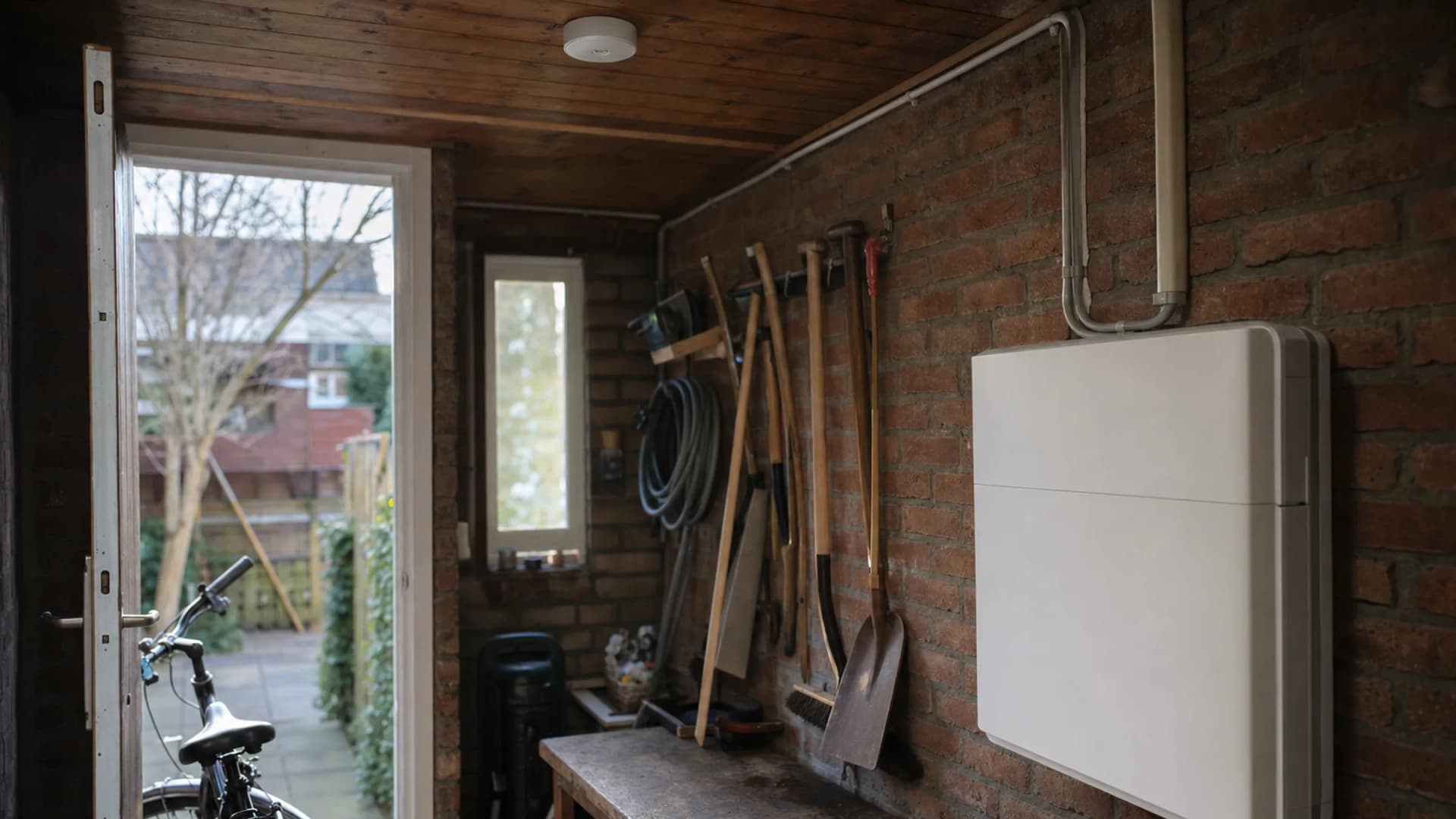
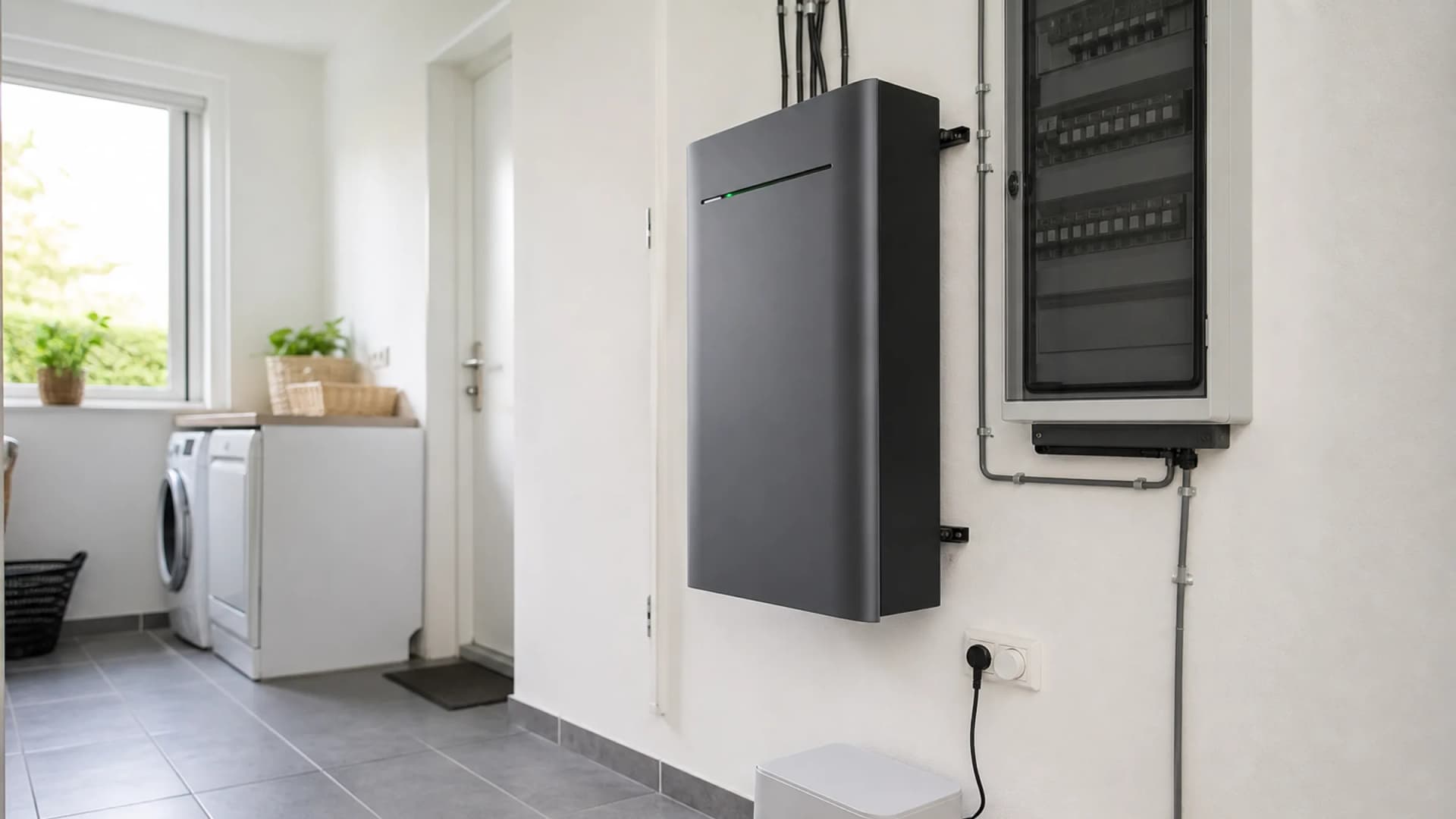
Garage, utility room or wall: the spot decides cooling, access and how tidy the cable run is.
Check cycles and remaining capacity in the warranty. Ten years on paper means less than what is actually guaranteed.

We install HyxiPower, Sungrow PowerHarbor, KStar and Dyness. Hybrid or ALL-IN, with or without backup. The battery stays yours: no closed brand account.
A home battery with installation costs from €5,445 to €12,705 with us, including 21% VAT. Price level September 2026. If you trade power with your battery, you can get that VAT back under conditions. Use the VAT refund check to see whether that works for you.
Which line fits?
HyxiPower and KStar we link to Frank Energie if you take their dynamic contract or already have one. Dyness is steered through Smart Grid One. Sungrow has no default energy-contract link.
Backup is on HyxiPower ALL-IN and KStar ALL-IN, not on HyxiPower hybrid or Dyness.
Single-phase or three-phase follows from your fuse box.
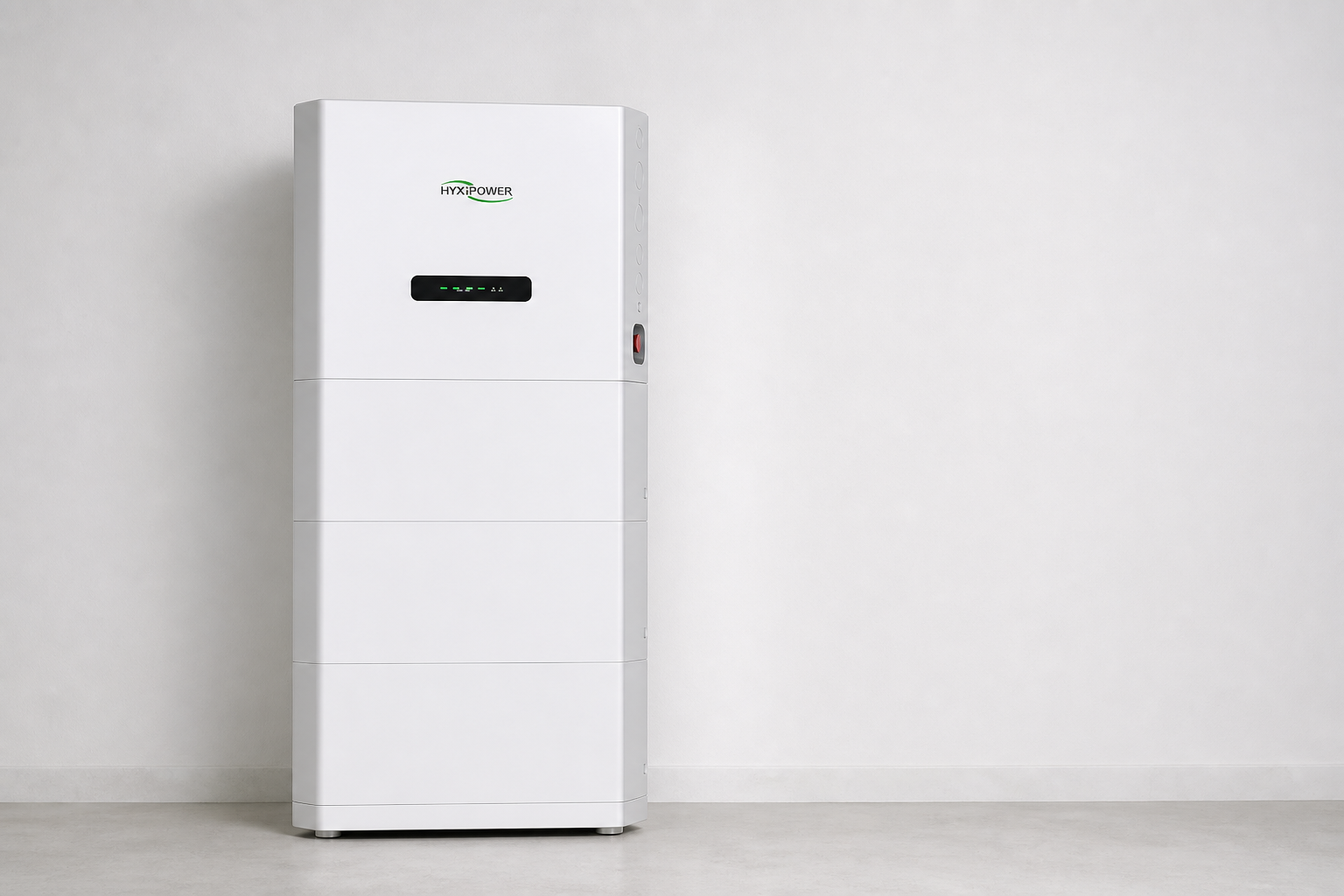
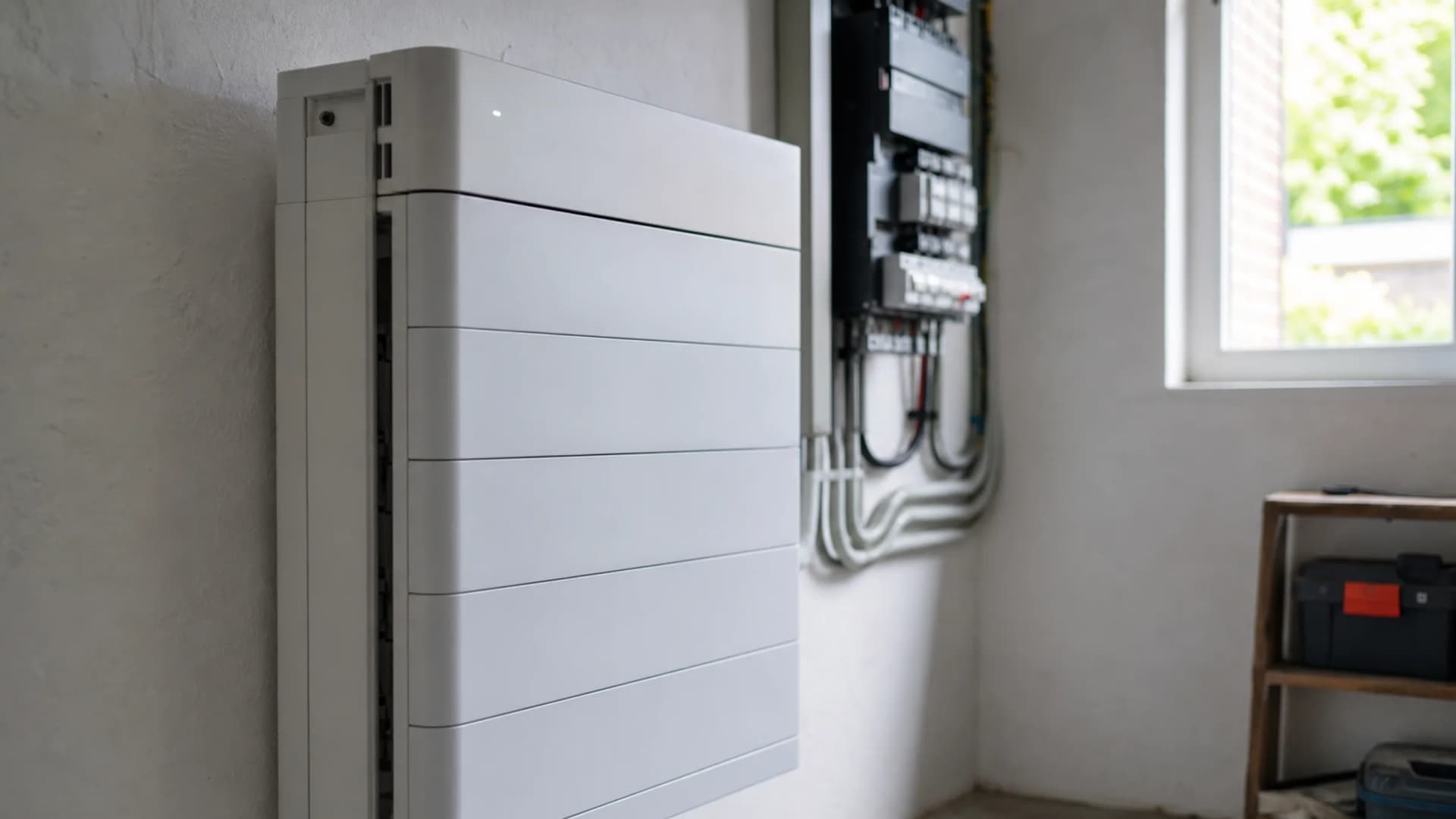
Modular or All-in-One, LiFePO4, 10-year battery warranty. No mandatory maintenance contract.
From €5,445 to €12,705, incl. installation and VAT
Learn more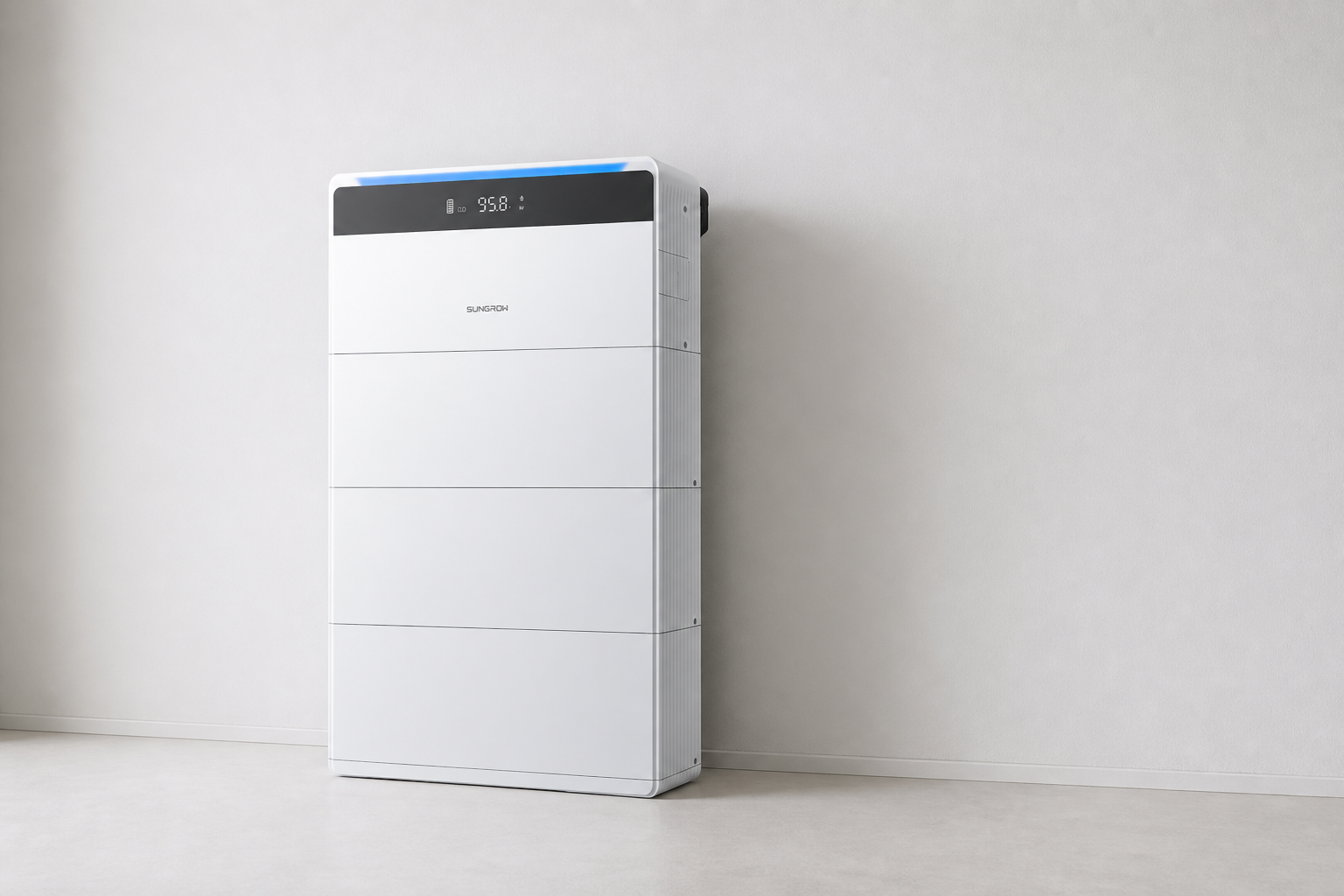
All-in-one PowerHarbor on three-phase. We install 6 to 20 kWh, outage cover via EnergyBridge.
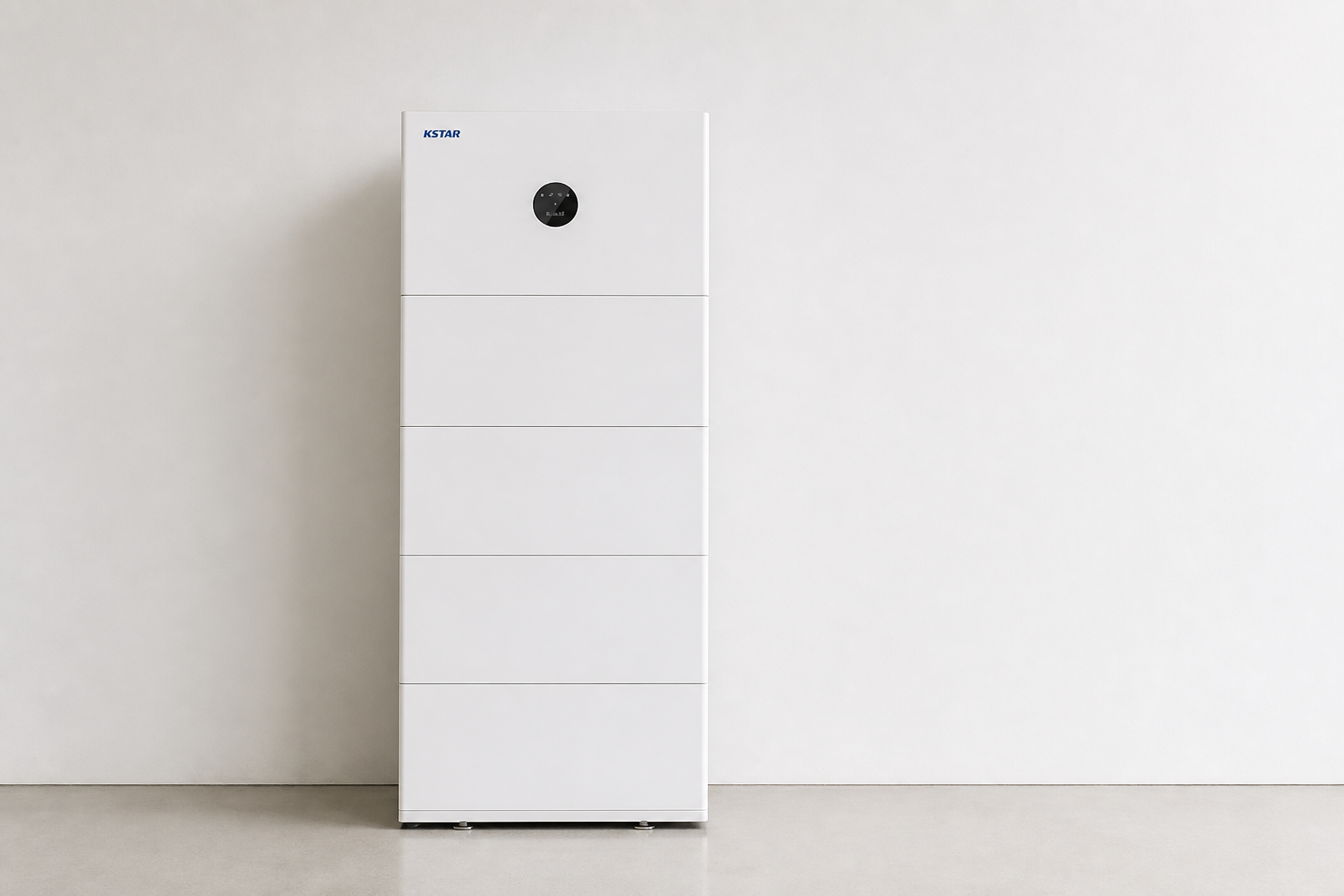
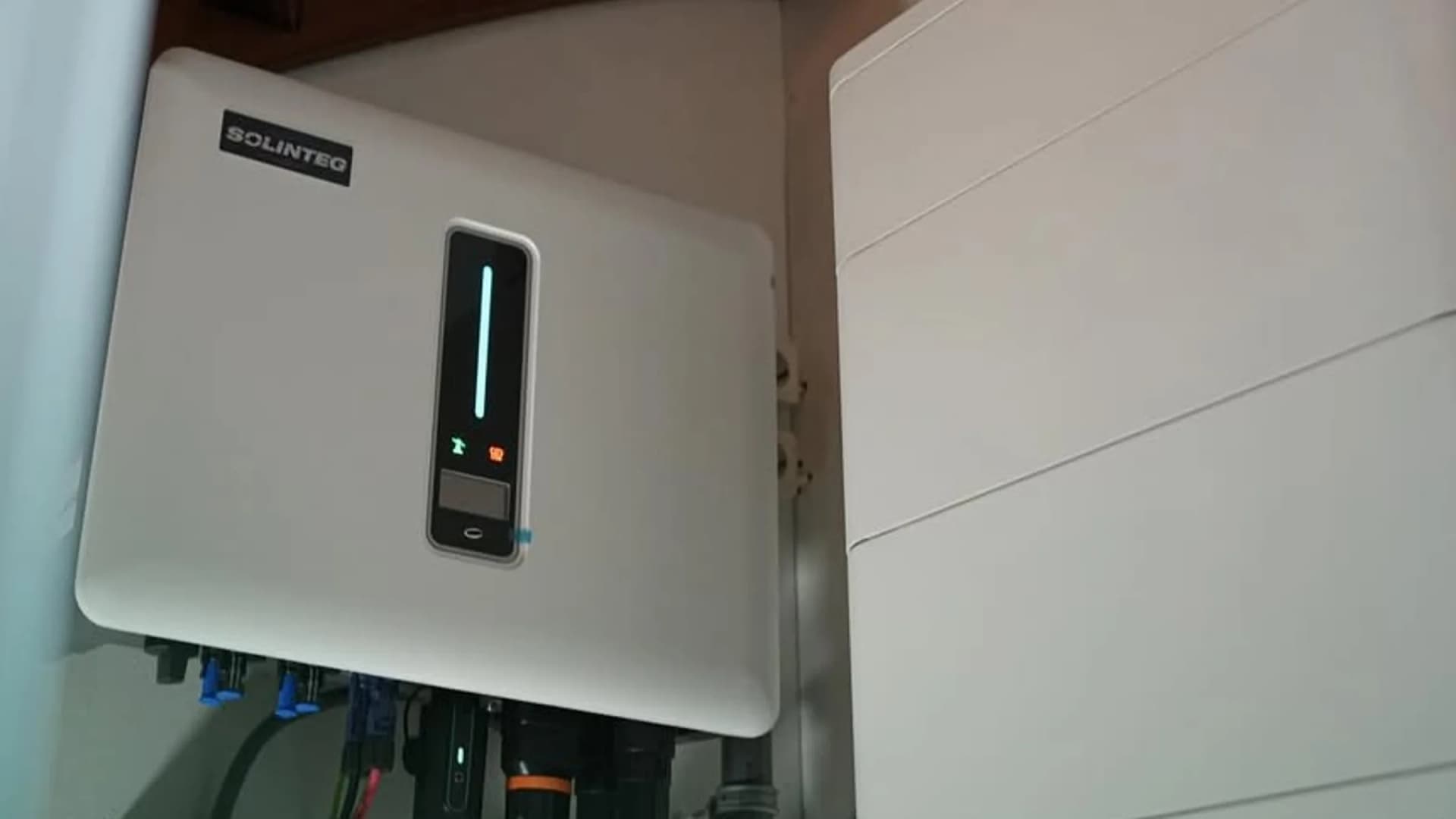
Compact All-in-One from 5.12 to 15.36 kWh. Hybrid inverter and stackable LiFePO4 modules. Single-phase, 3.68 to 6 kW.
From €5,990 to €9,075, incl. installation and VAT
Learn more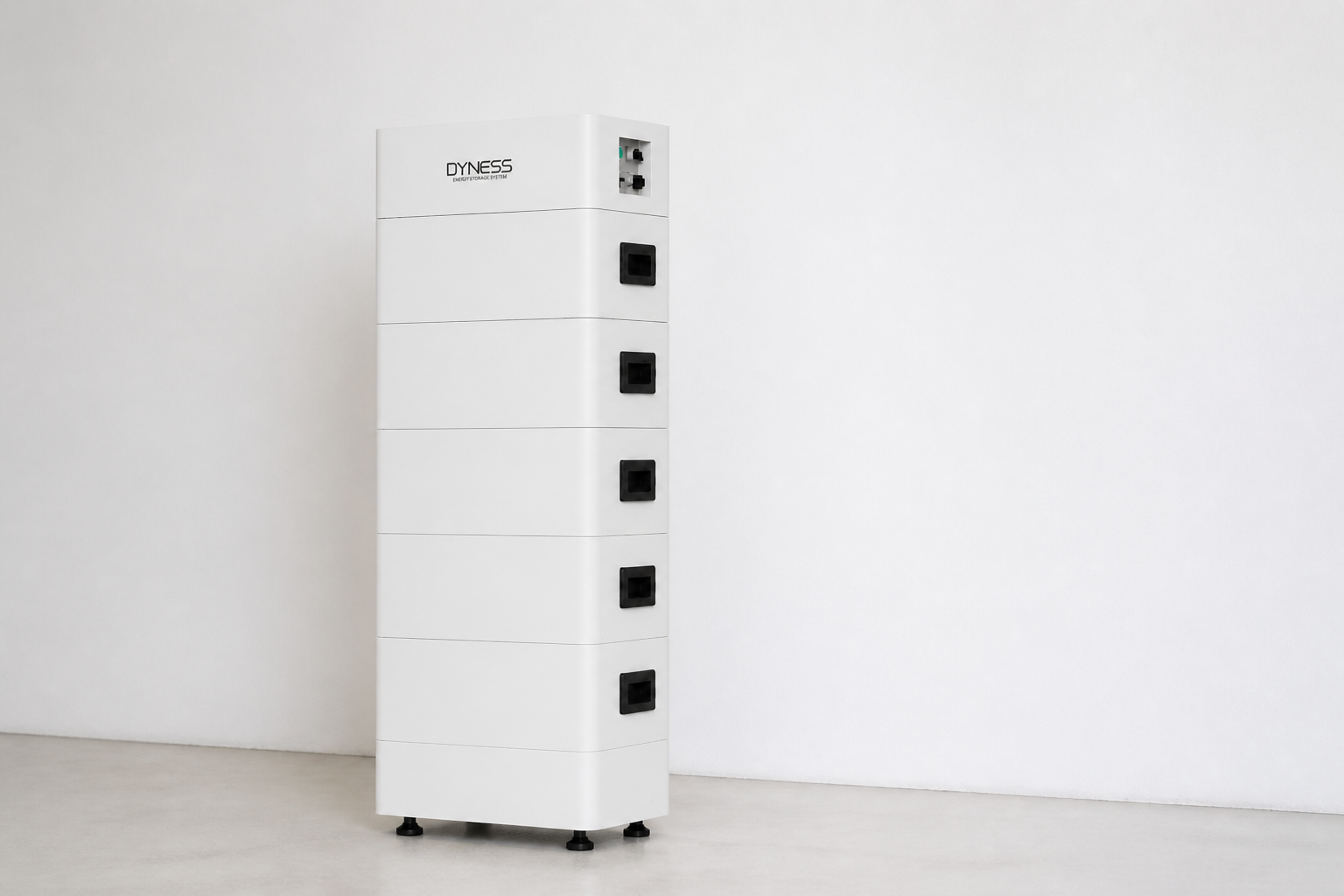
Modular Tower S3 from 7.1 to 21.31 kWh. Battery plus hybrid inverter. Steering via Smart Grid One.
From €6,655 to €10,285, incl. installation and VAT
Learn moreVAT refund check
A few questions, a first indication. Not tax advice.
Prefer a dedicated page? Open the VAT refund check.
The full conditions are on the Tax Administration page Thuisbatterij en btw (Dutch).
Background, the step-by-step plan and the worked example are in our guide reclaiming VAT on a home battery.

Four moments
Solar panels
Supply by day
In the house
Lights, cooking, laundry
Home battery
Keeps what is left
The house first uses power from your solar panels. What is left charges the home battery. If the roof falls short, the battery steps in.
Energy at the right moment
Energy through the day
Morning 06:00
Generation, direct use and power use
Look at a moment in the day
Pick a time or move over the chart.
The battery talks to your inverter and fuse box. A smart system charges when it fits and discharges when you use power, with nothing for you to do.
During an outage, backup power only keeps critical appliances on if you chose that option. Without panels the battery can also charge during cheap hours.
The less net metering gives you, the more attractive it becomes to keep your own power. A battery pays off most if you use a lot in the evening, have a heat pump or EV charger, or want to be more self-sufficient.
Whether it adds up financially depends on your use, the size of your battery and your energy tariff. We are happy to run the numbers with you at home. More on what a home battery costs and how to choose is in the knowledge base. Since 29 May 2026 a fixed battery from 5 kWh with solar panels can also help toward your energy label; read the conditions in our article on home batteries and the energy label.
Capacity, in kilowatt-hours, says how much power the battery holds. Power, in kilowatts, says how fast it can charge and discharge. A battery that is too small runs empty quickly in the evening. One that is too big never fills. The right size depends on your use; see also choosing a home battery.
With a dynamic energy contract you charge the battery when the electricity price is low, often midday or overnight, and use it when the price spikes during the evening peak. That creates an extra way to save, completely separate from your solar panels.
We install HyxiPower, Sungrow PowerHarbor, KStar and Dyness. Hybrid or ALL-IN, single or three phase. Backup is a choice, not a default on every line.
The battery stays yours. We do not lock you into a closed brand ecosystem where the pack stops steering smartly if you change contract.
Already a HyxiPower customer? Open the HyxiPower user manual.
The power grid is filling up in more and more neighbourhoods, especially during the evening peak. A home battery relieves the grid twice: it absorbs surplus at midday and delivers that power to your home in the evening, exactly when demand peaks. Read more about grid congestion.
Only in designated congestion areas can a grid congestion payment apply, via energy suppliers for batteries that take part during peaks. That is not a nationwide guarantee. We install steerable brands as standard, so your battery can join such a scheme if one is available where you live, now or later.

Solar panels increase the value of your home, including through a better energy label. They are not just a smart investment for later, but something you can enjoy today.
More about solar panels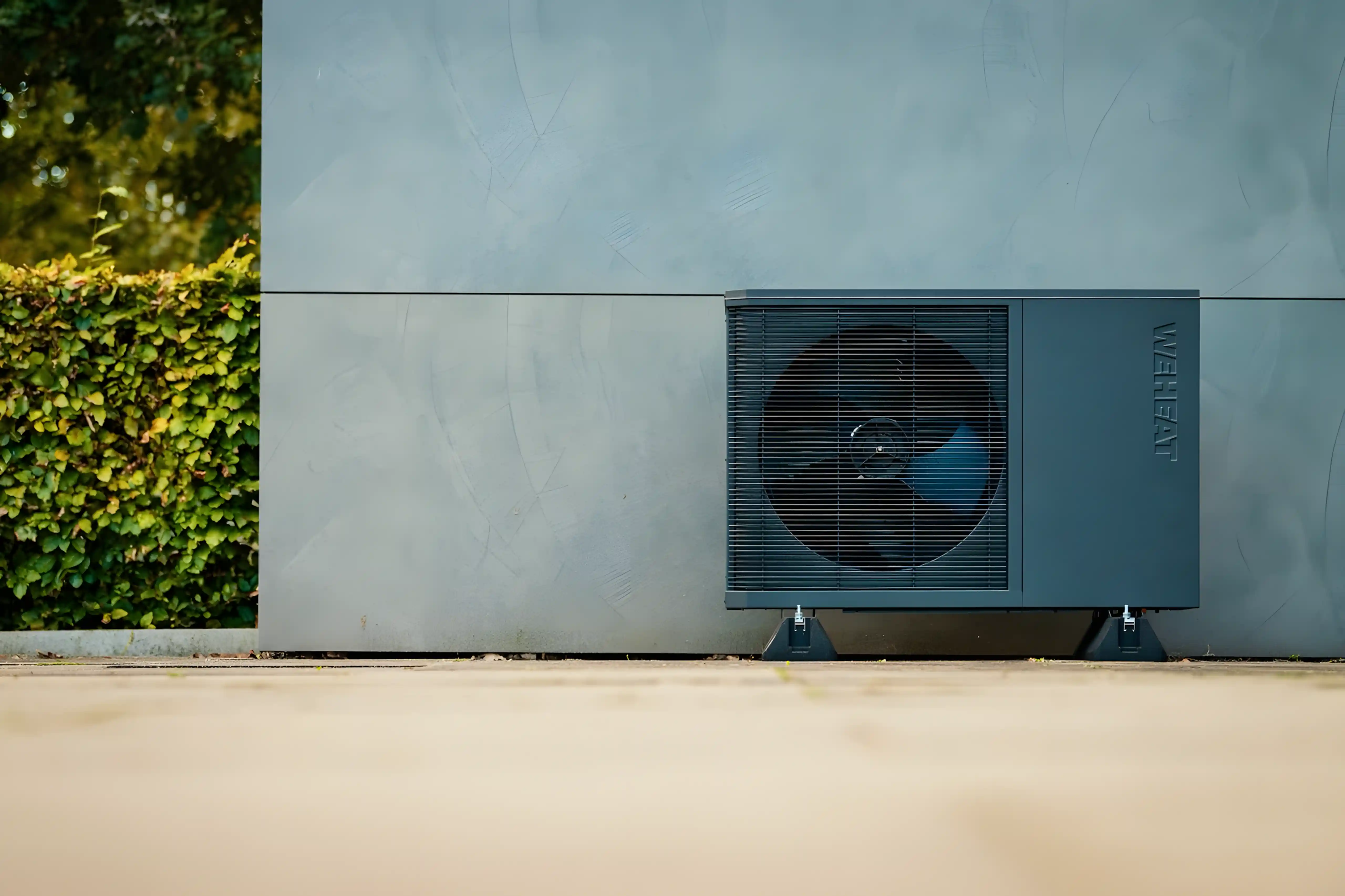
A heat pump draws warmth from the outside air and uses far less gas than a boiler. Your home stays comfortable, summer and winter, while you save on your energy bill.
More about heat pumps
Home charging is the easiest option: leave every morning with a full battery. Pair your charger with solar panels and charge on your own power.
More about EV chargers
On a hot day you just want a room that feels liveable again. A fixed air conditioner cools quickly, and can top up heat in that same room in winter.
More about air conditioningA smart home battery stores the energy from your solar panels until you need it. It charges during the day. In the evening or on a cloudy day you use that stored power at home. With a dynamic energy contract it can also charge when electricity is cheap.
The price of a home battery (thuisaccu) depends on the capacity and your fuse box. You get a tailored quote. Request one with no obligation and we'll run your numbers. Our starting prices per capacity, including VAT and standard installation, are on what a home battery costs.
Especially if you use a lot in the evening or as net metering is phased down. We look at your usage and your solar panels and tell you honestly whether it pays off.
Yes. You can also charge the battery during cheap hours with a dynamic contract. We advise what fits your situation.
With the right setup you keep important appliances running when the grid fails. Ask about it with your quote.
Yes, under conditions since 29 May 2026. The battery must store at least 5 kWh, be permanently connected and you need solar panels; plug-in batteries do not count. Our systems are fixed installations and we size them with that threshold in mind. Your existing label does not update by itself: it only counts once you have a new label drawn up.
Usually within three weeks. Our installers fit the battery neatly and safely by your fuse box.
Want to dig deeper before you buy? Start here with the essentials.
Pair your battery with solar panels or a dynamic contract and you get even more from smart energy at home.
Independently certified