

Buying solar panels: what to look for
Updated on 7 min read
Buying solar panels: quote, inverter, warranty, meter and installer. How to compare quotes fairly.
All articles
When buying solar panels, look beyond price at the whole package: panel, inverter, mounting, warranty and the installer. A good quote spells those out clearly.
Which panels fit your roof?
 Solar panels
Panels differ in power per unit, looks and price per watt-peak. On a small roof you often pick high power per panel so you need fewer modules for enough kilowatt-peak. On a large roof, price per watt-peak matters more. We explain the difference between cell types on the monocrystalline versus polycrystalline comparison page.
Every panel sold in the Netherlands must meet European quality standards. The real difference is in mounting, layout and matching the inverter. A good choice always starts with a roof survey.
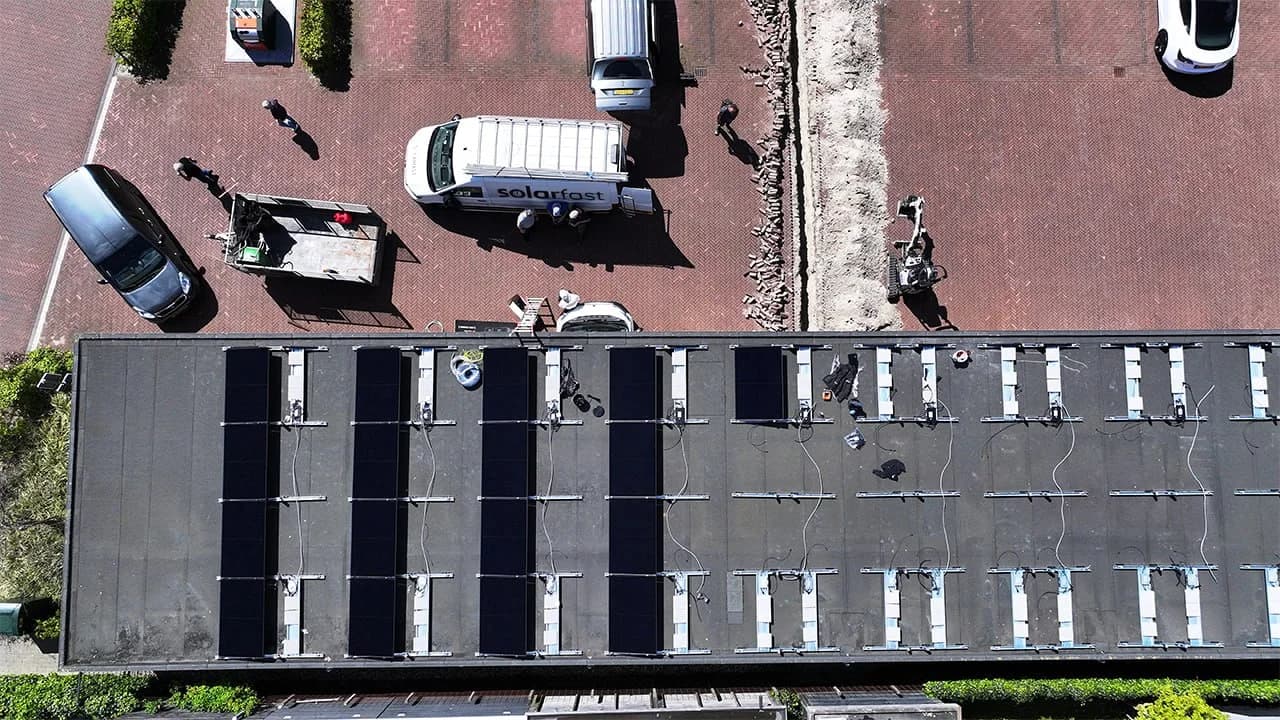
At SolarFast we look at tiled roof, bitumen or a flat roof with ballast. Shade from a chimney or dormer decides whether string or micro-inverters fit. In apartment blocks we also check whether the owners' association agrees and where the cable runs to the fuse box.
Inverter: compatibility and approval
Solar panels produce direct current. An inverter converts that to alternating current for your home and the grid. Inverter quality and power partly determine your yield. Prefer panels and inverter as one matched system, not loose parts from different suppliers.
Inverters in the Netherlands must meet the European grid connection requirements (the RfG network code). On the Netbeheer Nederland list you can check which types have been assessed against them; the list is a verification aid, not exhaustive. Ask explicitly for brand, model and power in your quote.
Look at MPPT trackers: they keep production per string as high as possible. If shade on your roof is unavoidable, micro-inverters are often smarter. We compare string and micro side by side on string inverter versus micro-inverters. More on what an inverter does is on what is an inverter?.
Fuse box, meter and feed-in
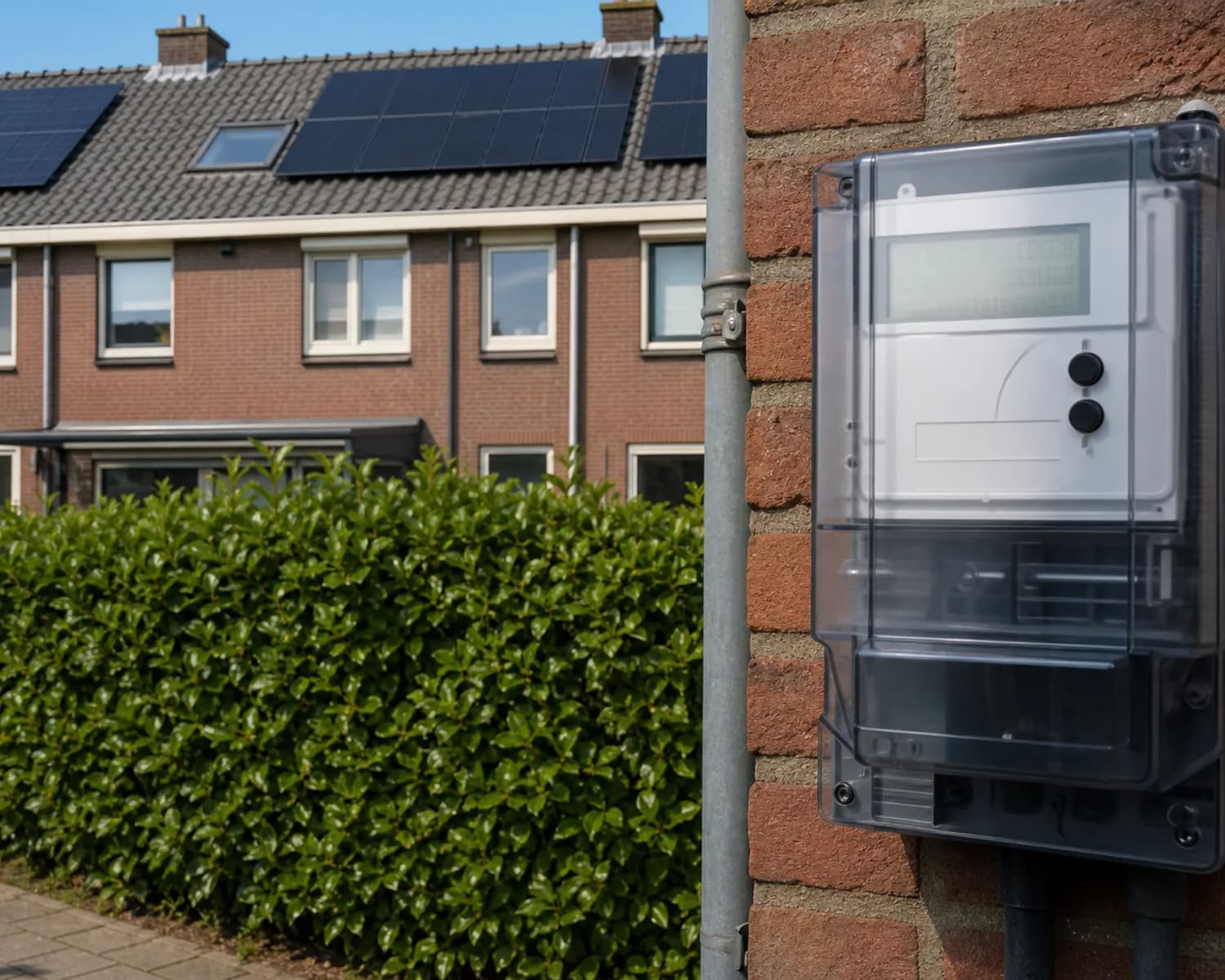
To feed power back to the grid you need a meter that registers consumption and feed-in separately. An old Ferraris meter without feed-in registration cannot do that and must be replaced. If your current meter cannot measure feed-in, your grid operator usually installs a smart meter at no charge, Milieu Centraal explains. If you voluntarily switch from a suitable analogue meter to a smart meter, charges may apply.
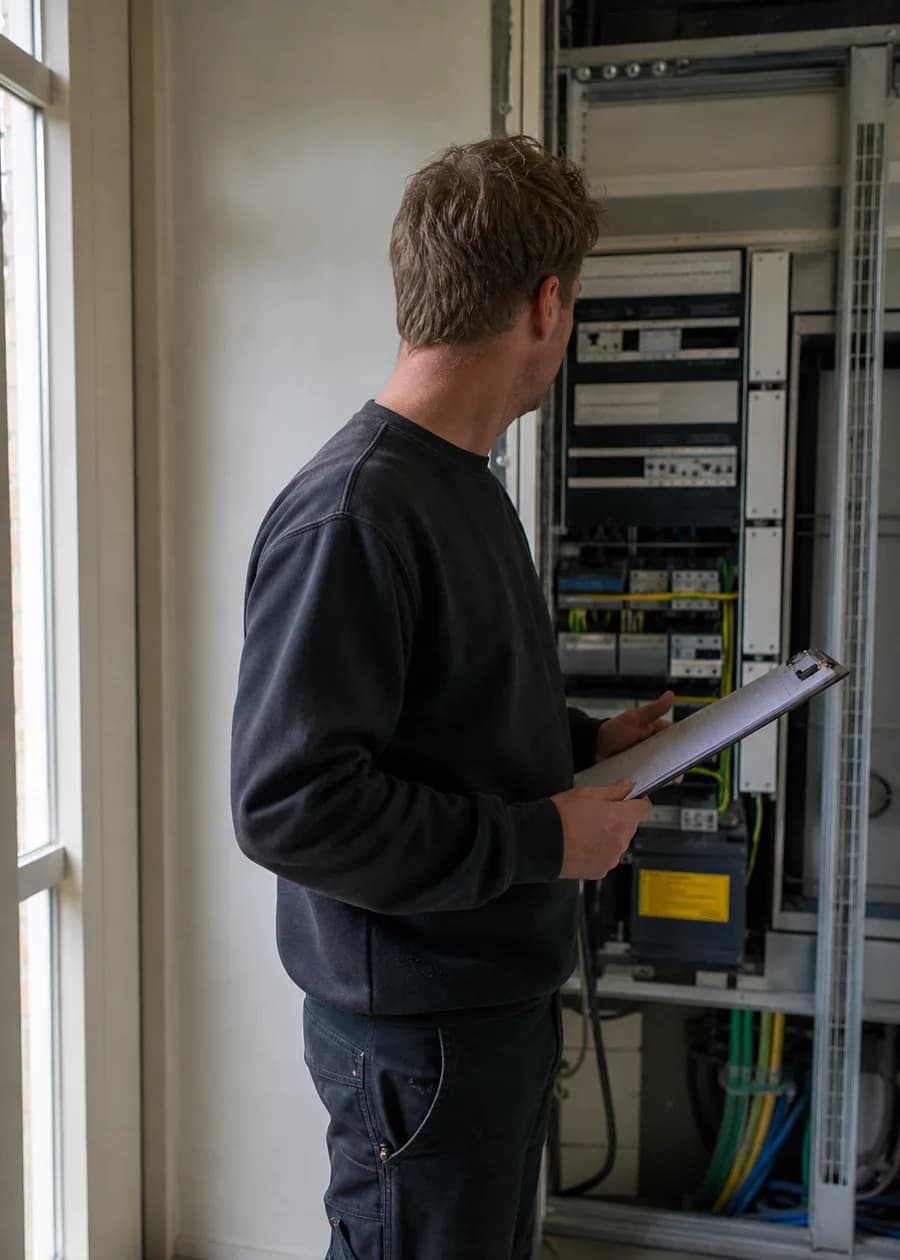
The inverter always connects on a separate circuit in the fuse box. Sometimes wiring, residual-current devices or the main fuse need updating. If you are unsure about your fuse box, raise it in the advisory meeting.
For new connections 3x25 amps is the standard; many existing homes still have a single-phase connection. If you plan solar alongside a heat pump, charger or large system, a heavier connection may be needed. Upgrading costs a one-off fee; moving to a connection above 3x25 amps also raises your fixed grid charges. The ACM explains what to watch before enlarging your connection.
Installer and certification
Choose a skilled installer with its own fitters, clear warranty terms and a fixed contact if something goes wrong. Ask for references, certification and how mounting and finish are done. Those shape your result as much as the panel itself.
SolarFast works with its own fitters from Amstelveen. We are InstallQ certified and work to fixed safety and quality standards. Your quote explains why certain panels and a certain inverter fit, and what happens if something ever fails. No subcontractors you only meet on installation day.
Warranty: which layers and from whom
There are several warranty layers. Product warranty covers manufacturing defects on the panel or inverter. Performance warranty states how much the panel still delivers after 10 or 25 years. Installation warranty covers the fitter's work. Sometimes a system or yield warranty is added.
Check that warranty runs from the manufacturer, not only from the installer. If your supplier goes bankrupt, you still want to reach the manufacturer. Also ask whether warranties transfer when you sell the home.
Our quotes list factory warranties on panel and inverter separately, plus our installation warranty. That way you know upfront what to expect if something goes wrong.
Comparing quotes fairly
Request at least three no-obligation solar panel quotes, as Milieu Centraal advises. We prefer to plan a survey at your home for that: you see more on the roof than over the phone. Line the quotes up on the same points: total watt-peak, brand and model of panels and inverter, mounting materials, all work from start to clean-up, warranties and what is included. The quote checklist helps you miss nothing.
A good quote is an all-in price. That should cover scaffolding, connection to the fuse box, monitoring, waste disposal and sometimes a small recycling fee per panel. You also want a layout sketch on the roof and the inverter location indoors.
The cheapest line is rarely the full bill. Unsure about another supplier's quote? Send it to us and we will review the panels, inverter and terms with you.
After you agree: registration and connection
After signing the quote, a few practical steps come before panels go on the roof. Your grid operator must know you will feed in, and your energy supplier must be able to settle the installation. Often your installer registers with the grid operator; check in your contract who does which step. Milieu Centraal describes the steps before and after installation.
After installation you register the system on Energieleveren.nl. You also enter inverter brand and model; the system checks it against the approved list. Register the panels with your energy supplier too so feed-in can be settled. How that works is in our article on net metering.
Check your buildings insurance as well. Solar panels are not automatically covered. Nail-fixed systems usually are; click systems sometimes are not. Tell your insurer about the installation and read the policy terms.
How a SolarFast quote works
You request a no-obligation quote via our form or by phone. At SolarFast you get a response within 24 hours with a proposal based on your use and roof. After you agree, we schedule installation, usually within three weeks, with no deposit required.
The quote states total power in kWp, the inverter type, the mounting system, all warranties and who handles registrations. No extra lines that only appear on installation day. Want to know how much power you can generate? Read our piece on yield and return.
Solar panels are still a smart investment in 2026. A few things matter if you want the most from your own power.
Your energy use
Planning to drive, cook or heat electrically? Factor that into how many panels you install now.
Spread the yield
Spread panels across roof faces so you generate through the day and use more of your own energy.
Your data
Choose a system with its own 4G connection and data storage in Europe so your information stays secure.
Boost your energy
A smart home battery stores today's power for later, so you use more of your own electricity after sunset.

We install your solar panels in a day
We can often start within three weeks. A day later your panels are on the roof and everything is connected. We leave your home clean and make sure you know exactly how it all works.
- Use more of your own power during the day
- 0% VAT makes the investment even more attractive
Frequently asked questions
Your roof and layout, the inverter, fuse box and feed-in, the installer and certification, warranties and what belongs in a quote. Price alone tells you little.
It depends on your roof, shade and use. There is no single best panel for everyone. Compare cell types on our monocrystalline versus polycrystalline page and let a roof survey decide what fits.
It depends on your yearly use in kWh and your roof. The calculation is in our guide how many solar panels do I need; with your annual statement and a look at your roof, we make a fitting proposal.
Not automatically. It is about the balance between power, price, warranty and how well the panel fits your roof.
Total watt-peak, brand and model of panels and inverter, mounting materials, all work, warranties, a roof layout sketch and an all-in price without surprises later.
Yes. Send it over via our contact form and we will look at the panels, the inverter and the terms with you.
You can do it yourself, but many installers handle it as part of the job. Ask explicitly in your quote so you know who does which step.
That varies by company. Be cautious with large upfront payments to unknown suppliers. At SolarFast no deposit is required.
Only if it measures consumption and feed-in separately. An old Ferraris meter without feed-in registration must be replaced. Your grid operator can tell you which meter you have.
Not automatically. Nail-fixed panels usually fall under buildings insurance, but check your policy and tell your insurer about the installation.

Discover what smart energy can do for you
In about an hour you get insight into your savings, the options for your home and when the investment pays back. Straightforward, honest advice so you know exactly where you stand.
Smart energy at home
- Upgrade your home with our smart battery
- Our solar panels deliver up to 25% more energy
- A heat pump to minimise your energy use
- Charge your electric car easily at home with an EV charger
Booking an advice call is easy
Fill in your details below. Within a day we will contact you to schedule a no-obligation advice call together.
Related articles