
Financing energy upgrades: which options do you have?
Last updated 7 min read
What changed: New article.
Short answer
You can pay for solar panels, a home battery or a heat pump with savings, with the Energiebespaarlening (energy-saving loan) from the Nationaal Warmtefonds, or with extra mortgage room. The loan runs from €1,000 to €29,000 and charges 0% interest at a combined taxable income below €60,000. Extra mortgage is €10,000, €15,000 or €20,000, depending on your energy label.
- Source: Nationaal Warmtefonds (Dutch national heat fund), accessed
- Source: Nationaal Warmtefonds (Dutch national heat fund), accessed
- Source: Rijksoverheid (Dutch central government), accessed
Financing solar panels, a home battery or a heat pump? Compare the Energiebespaarlening, extra mortgage room and savings, with conditions and a worked example.
All articles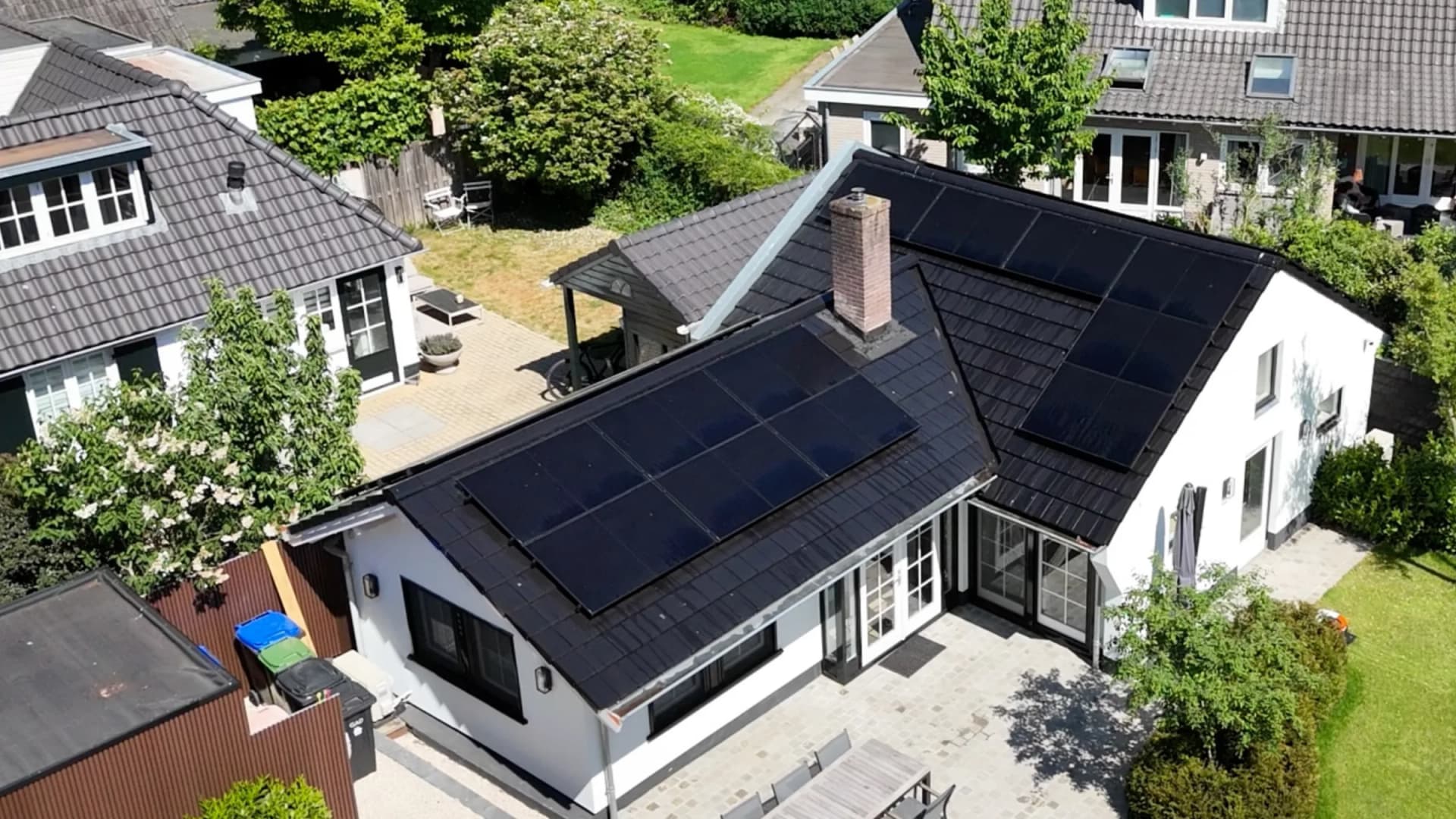
Which route fits depends on your income, your mortgage and the amount. Below, the routes side by side, with a worked example and the cases where borrowing does not fit.
Which financing routes are there?
 Solar panels
There are four routes: savings, the Energiebespaarlening from the Nationaal Warmtefonds, a VvE loan and an extra mortgage for energy saving. Not all four are open to everyone. The table shows who each route is meant for.
| Route | Who it is for | How much | Watch out |
|---|---|---|---|
| Savings | Everyone | What you have | No interest or costs, but your buffer gets smaller. |
| Energiebespaarlening (Nationaal Warmtefonds) | Owner-occupiers of an existing home | €1,000 to €29,000 | 0% interest at a combined verzamelinkomen below €60,000. A contractor or installer carries out the measures. |
| VvE loan (Nationaal Warmtefonds) | Owners' associations (VvE) | Up to €50,000 per apartment | Members pay interest and repayment through the VvE contribution. |
| Extra mortgage for energy saving | Homeowners or home buyers | €20,000 (label E, F, G), €15,000 (C, D), €10,000 (A++, A+, A, B) | No extra room for A+++ and A++++. The money is meant for energy-saving measures. |
As of 25 October 2026. Amounts and conditions can change, so check them at the source under Sources. Indication, not financial advice.
Want to know the cost first? Request your no-obligation quote. You need it for your loan as well.
How does the Energiebespaarlening work?
The Nationaal Warmtefonds lets owner-occupiers and VvEs borrow money to make their home more sustainable. You borrow between €1,000 and €29,000 for an existing home you live in yourself.
The application, step by step
Choose the measures and the amount you need
Ask a contractor or installer for a quote
Start the application online and quickly receive a first offer
Send the documents, such as a payslip and the quote
Receive the final offer and sign if you agree
Pay the contractor or installer from the building deposit
If your verzamelinkomen (the sum of income and assets on your tax return) is below €60,000, you pay 0% interest. If you live together, your income and your partner's count together. You find it on your income statement from the Tax Administration. You do not apply for the 0% separately, the Warmtefonds assesses it itself. With a higher income you do pay interest. You see the current rate in the Warmtefonds calculator.
You choose a term of 7, 10 or 15 years. Borrow more than €15,000 and 20 years is possible too.
Extra mortgage: how much can you borrow on top?
As a homeowner or home buyer you may take out a higher mortgage to make your home more energy efficient. The worse the energy label, the more room:
- €20,000 for energy label E, F or G.
- €15,000 for energy label C or D.
- €10,000 for energy label A++, A+, A or B.
- No extra room for A+++ or A++++, because those homes are already so efficient.
Whether you can use this also depends on your mortgage lender and your situation. Discuss it with your mortgage adviser before you sign.
Worked example: a home battery with a 0% loan
Indication, not financial advice. We use these assumptions:
- A loan of €8,000 for a home battery, installation included.
- 0% interest, because the combined verzamelinkomen is below €60,000.
- A term of 120 months (10 years). That is an assumption.
- No extra costs.
- Monthly payment: €8,000 ÷ 120 = €66.67 per month.
- Total to repay: €8,000, because there is no interest.
Indication, not financial advice. The monthly payment is €8,000 divided by the number of months, with no interest or extra costs. At every term you repay €8,000 in total.
The Warmtefonds lets you choose the term yourself. Check the terms for your own application in the Warmtefonds calculator.
What a home battery earns is a sum of several things: how much solar power you have left over during the day and still use yourself in the evening, what you can do with your energy contract and what you receive for feeding in. That sum is different for every household, so we do not set a saving per month next to the monthly payment here. For the purchase price, read what a home battery costs.
Financing, subsidy and VAT: what is separate?
A loan is not a subsidy: you pay it back. These schemes also play a part:
- Heat pump: the ISDE subsidy exists for it. With the ISDE check you look up the registration code of your heat pump.
- Solar panels: on the supply and installation of solar panels on or near your home you pay 0% VAT.
- Home battery: you pay 21% VAT on it. Under conditions you can reclaim it, and the VAT refund check shows whether that works for you.
When is borrowing not a good idea?
- When the monthly payment stretches your budget. Even at 0% interest you repay the full amount.
- When you are about to move. Ask the Warmtefonds what happens to the loan before you sign.
- When you are not sure the measure suits your home. Only start applying once it is clear what you are having installed, because you send your installer's quote along.
- When you would pay interest and can take the amount from savings without worry. Then borrowing costs you extra money.
Not sure which route fits?
Tell us your situation and we will look at it with you as far as the installation goes. For the financing itself, go to the Warmtefonds or your mortgage adviser. All amounts on this page are an indication, not financial advice.
Sources
- Nationaal Warmtefonds (Dutch national heat fund): With the Energiebespaarlening you borrow between €1,000 and €29,000 for energy-saving measures.
- Nationaal Warmtefonds (Dutch national heat fund): Owner-occupiers with a combined verzamelinkomen (taxable income and assets) below €60,000 pay 0% interest.
- Rijksoverheid (Dutch central government): Extra mortgage for energy saving: €20,000 for labels E, F and G, €15,000 for C and D, €10,000 for A++, A+, A and B. No extra room for A+++ and A++++.
- Owner-occupier, existing home, terms of 7, 10, 15 and 20 years: Nationaal Warmtefonds, Voorwaarden Energiebespaarlening (Dutch, read on 25 October 2026)
- Solar panels, home battery and heat pump are on the list of measures: Nationaal Warmtefonds, Energiebesparende maatregelen (Dutch, read on 25 October 2026)
- Home battery: maximum €8,500, conditions and a term of at most 15 years above 33%: Nationaal Warmtefonds, Thuisbatterij (Dutch, read on 25 October 2026)
- VvE loan up to €50,000 per apartment: Nationaal Warmtefonds, Voorwaarden voor VvE's (Dutch, read on 25 October 2026)
- 0% VAT on the supply and installation of solar panels on or near a home, 21% on a home battery: Belastingdienst, Btw-tarief zonnepanelen (Dutch, read on 25 October 2026)
- Reclaiming VAT on a home battery under conditions: Belastingdienst, Thuisbatterij en btw (Dutch, read on 25 October 2026)
- ISDE subsidy for heat pumps for homeowners: RVO, ISDE (Dutch, read on 25 October 2026)
Get more out of your own power. Four things to watch for, even as net metering ends
Your energy use
Planning to drive, cook or heat electrically? Factor that into how many panels you install now.
Spread the yield
Spread panels across roof faces so you generate through the day and use more of your own energy.
Your data
Ask your installer where your system's data is stored and which parties have remote access.
Boost your energy
A smart home battery stores today's power for later, so you use more of your own electricity after sunset.

We install your solar panels in a day
We can often start within three weeks. A day later your panels are on the roof and everything is connected. We leave your home clean and make sure you know exactly how it all works.
- Use more of your own power during the day
- 0% VAT on solar panels on or at your home
The zero rate applies to the supply and installation of solar panels on or at a home. Exception: solar panels integrated into the roof of a new-build home and supplied together with the home. Source: Belastingdienst (Dutch Tax Authority).
Book an appointmentFrequently asked questions
Yes. Solar panels, a home battery and a heat pump are on the list of measures the Warmtefonds finances. You borrow €1,000 to €29,000 for an existing home you live in yourself, and a contractor or installer does the work. Each measure has its own conditions, which are set out by the Warmtefonds.
At the Nationaal Warmtefonds when your combined verzamelinkomen is below €60,000. You do not apply for the 0% separately, the Warmtefonds assesses it itself. With a higher income you pay interest. You see the current rate in the Warmtefonds calculator.
€20,000 for label E, F or G, €15,000 for C or D and €10,000 for A++, A+, A or B. There is no extra room for A+++ and A++++. Whether you can use it also depends on your mortgage lender.
Yes. For the Energiebespaarlening you send your contractor's or installer's quote along. For a home battery the brand and type must be on it.
Yes. With the Energiebespaarlening from the Nationaal Warmtefonds you borrow at most €8,500 for a home battery, installation and incidental costs included. You are an owner-occupier and have solar panels, or you have them installed at the same time as the battery. An installer connects the battery behind the meter on your own property; you cannot borrow for a plug-and-play battery. If the battery amount is more than 33% of your loan, the term is at most 15 years. Do you live in Flevoland? Then also read about the provincial subsidy.
Yes, a heat pump is on the list of measures you finance with the Energiebespaarlening. The ISDE subsidy is a separate scheme, read about it at heat pump subsidy.

Discover what smart energy can do for you
In about an hour you get insight into your savings, the options for your home and when the investment pays back. Straightforward, honest advice so you know exactly where you stand.
Smart energy at home
- Upgrade your home with our smart battery
- Solar panels matched to your roof and usage
- A heat pump to minimise your energy use
- Charge your electric car easily at home with an EV charger
Booking an advice call is easy
Fill in your details below. Within a day we will contact you to schedule a no-obligation advice call together.
Related articles