
Home battery subsidies 2026: the October state of play
Posted on Updated on 6 min read
No national subsidy and no zero VAT rate in the 2027 Tax Plan. Flevoland is full for 2026. The October 2026 state of play, with sources.
All articles
Ever since it became clear that the Dutch net metering scheme ends on 1 January 2027, we get the question almost weekly: is there a subsidy for a home battery? The short answer is still no, nationally there is nothing. But a lot happened in recent months. The cabinet took a clear position, Flevoland opened a provincial subsidy fund of its own, and the House of Representatives asked the cabinet to consider cutting the VAT on home batteries to zero. This article is the state of play as of October 2026 (first published July 2026), with amounts, dates and official sources. The evergreen explainer of every route, from VAT refunds to Warmtefonds loans, lives in our knowledge base under home battery subsidies.
Nationally: the cabinet says no, and explains why
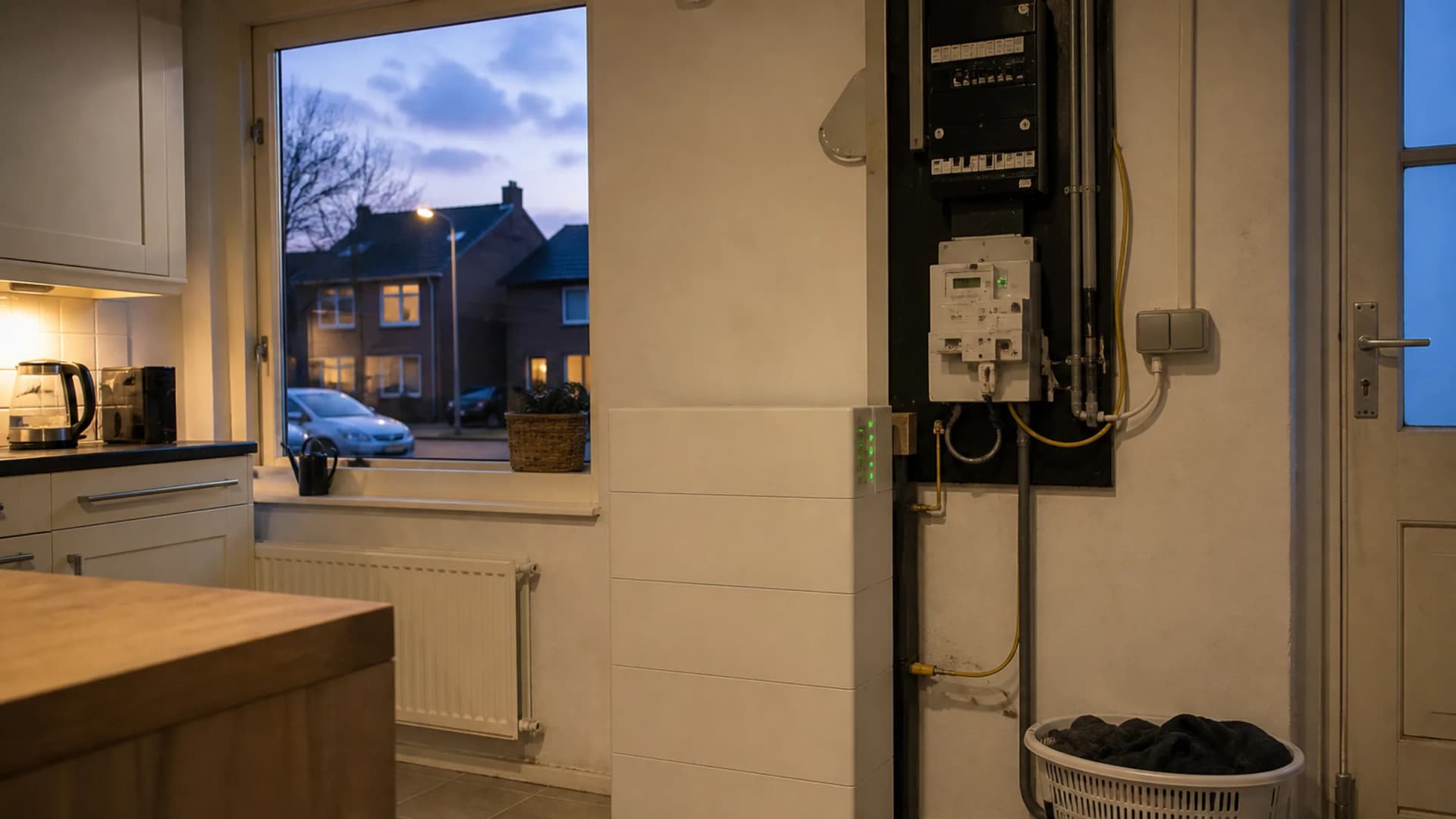
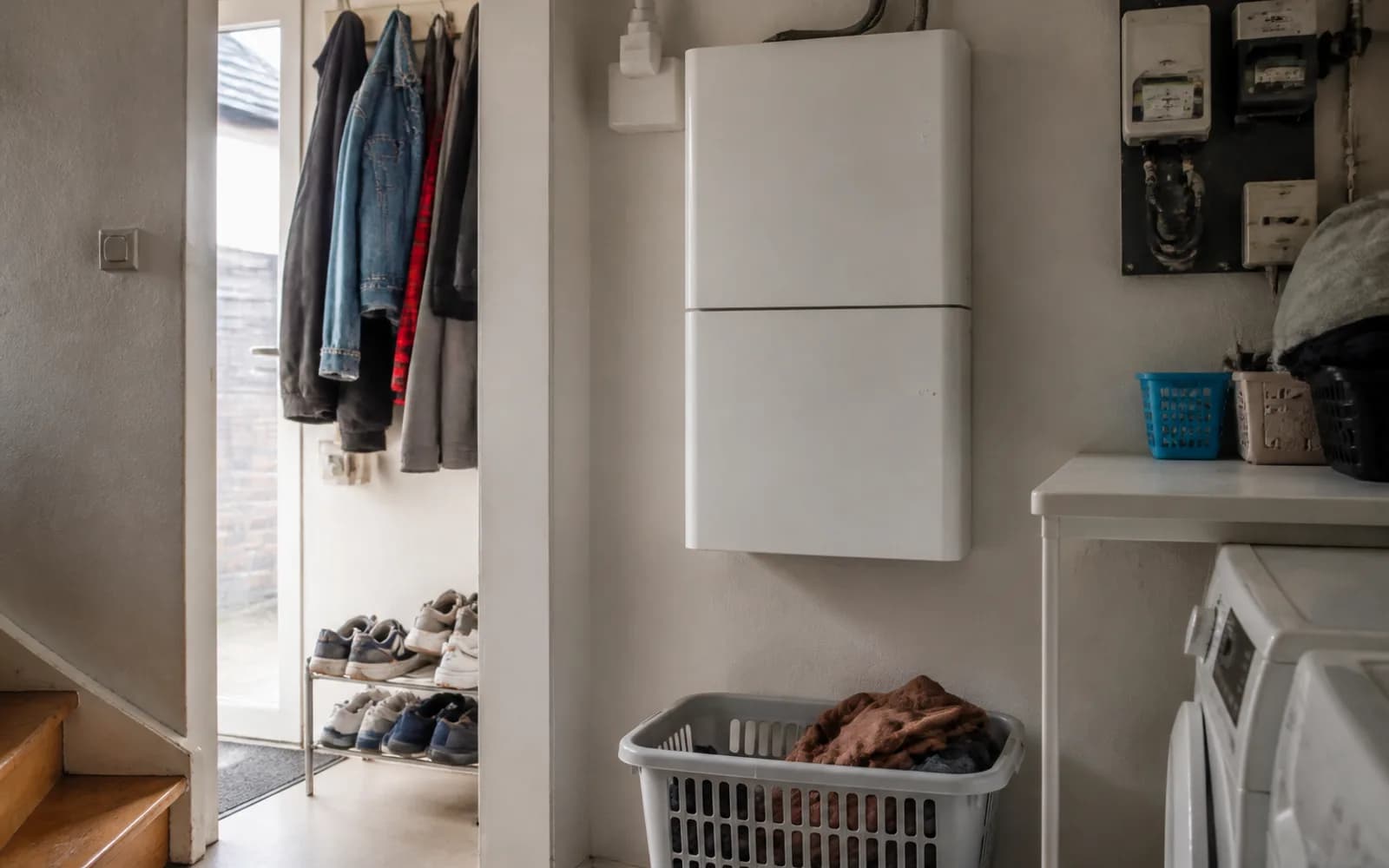
 Smart home battery
“The home battery is thus seen as a useful and necessary provider of flexibility, but from the grid's perspective it holds no preferential position over other devices that can also provide flexibility.”
Minister for Climate and Green Growth, answers to the Dutch Senate, 31 March 2026 (translated from Dutch)
The ISDE, the national subsidy for insulation and heat pumps among other things, does not cover home batteries. And that is not about to change. A national subsidy approach for home batteries is not on the table. The cabinet does consider the battery useful for the power grid, but does not want to give it a head start over other devices that can shift their load, such as EV chargers and heat pumps.
There is a substantive reason behind that position which battery owners should know. In the same answers, the cabinet warns that batteries all reacting to the same low power price can jointly create a new peak on the grid; a purchase subsidy that mainly adds more batteries could then worsen congestion rather than relieve it. Policy therefore focuses on a market for flexibility, in which a well-steered battery earns money rather than collecting a subsidy.
Flevoland: a provincial subsidy fund of its own
While The Hague says no, Flevoland runs its own home battery subsidy scheme (Dutch), as far as we know the only province with such a scheme running right now. Since 12 January 2026, residents of Flevoland can get back 25 percent of the purchase costs (excluding VAT), with a minimum of 750 and a maximum of 1,250 euros per home. The fund holds 1.75 million euros in total, split evenly between 2026 and 2027. The scheme runs until 1 October 2027, or until the budget runs out.
The conditions are exactly what you would expect from a grid-aware scheme. The battery has a storage capacity between 5 and 20 kWh, you have solar panels (or bought them recently and they are not yet installed), the battery is registered at energieleveren.nl and a fixed battery is connected by a certified installer. The most striking condition: trading on the power market is allowed, but not at peak times. From April through September the battery may not feed back to the grid between 12:00 and 15:00; from October through March it may not charge from the grid between 17:00 and 21:00.
A nice detail: the subsidy can be combined with the VAT refund, because the subsidy is calculated on the price excluding VAT. How that VAT route works is covered in our step-by-step guide on reclaiming VAT on a home battery; our VAT refund check tells you in a few questions whether that route fits you.
As of October: applications for 2026 are full
Interest was immediate and large. Until 30 September the 2026 budget was split evenly between homeowners and renters; from 1 October the remainder became available to both groups, as laid down in the official regulation on overheid.nl (Dutch).
That has now run out as well. The province reports that the maximum number of applications (Dutch) for 2026 has been reached: you can no longer apply this year. From early 2027 you can submit a new application, from that year's budget of 875,000 euros. If you live in Flevoland and are considering a battery, keep an eye on the province's website.
For us this is close to home: Almere lies in our service area, so for quotes in Flevoland we factor this scheme in as standard. Mind the timing rules: you can apply before or after installation, but a battery that was paid for or installed before 1 January 2026 does not qualify.
The Hague: no zero VAT rate in the 2027 Tax Plan
The Hague is not entirely quiet, though. On 9 June 2026 the House of Representatives adopted a motion by MP Grinwis (Dutch) asking the cabinet to examine whether home batteries, like solar panels, could fall under a zero VAT rate, following the German example. The motion drew broad support, 117 of the 150 votes, and asked the cabinet to inform parliament on Budget Day.
On Budget Day, 15 September 2026, the cabinet presented the 2027 Tax Plan. The overview of that tax package (Dutch) contains no zero VAT rate for home batteries. So you pay the normal 21 percent VAT on a home battery.
An adopted motion is a request, not a decision. Our advice therefore stays sober: buy a battery because the numbers add up today, not because a VAT break might come one day.
What you can already use today
Apart from Flevoland and the plans in The Hague, several routes apply right now, wherever you live. The VAT refund: if you trade power with the battery on a dynamic contract, you can reclaim the 21 percent VAT on purchase and installation. The Warmtefonds energy-saving loan: up to 8,500 euros, at 0 percent interest below a household income of 60,000 euros. The energy label: since 29 May 2026 a fixed battery of at least 5 kWh counts, as we explained in our article on home batteries and the energy label. And in designated congestion areas you get paid when your battery helps relieve the grid; how that works is covered in the grid congestion payment.
| Route | Status |
|---|---|
| National purchase subsidy | No. A national approach is not on the table. |
| Flevoland | 25 percent of the purchase (ex VAT), 750 to 1,250 euros. Applications for 2026 are full; possible again from early 2027. |
| VAT zero rate | Not included in the 2027 Tax Plan. You pay 21 percent VAT. |
All conditions and pitfalls of those routes are lined up in our knowledge base explainer on home battery subsidies. This blog post deliberately sticks to the news of the moment.
Conclusion
The October 2026 position in one paragraph: there is no national subsidy and the cabinet does not intend to introduce one. Flevoland has a provincial fund of its own, but applications for 2026 are full; from early 2027 you can apply again. And the 2027 Tax Plan contains no zero VAT rate for home batteries. So base your purchase on the schemes that actually apply today, not on promises. What a home battery costs with us, per capacity, is in what a home battery costs; which size suits you is in choosing a home battery.
Want to know what applies at your address, from the VAT route to the Flevoland subsidy? Put your situation to us and we will line up the schemes for your address in the quote.
Read more
- Province of Flevoland: home battery subsidy (amounts, conditions and status: 2026 applications full, possible again early 2027, Dutch)
- Overheid.nl: official Flevoland home battery subsidy regulation (budget split until 30 September and lapse of the split on 1 October, Dutch)
- House of Representatives: Grinwis motion on studying a zero VAT rate for home batteries (adopted, 117 votes in favour, Dutch)
- Official publications: answers by the Minister for Climate and Green Growth on the consumer energy market, 31 March 2026 (Dutch)
- Dutch government: factsheet bundle for the 2027 Tax Plan package (Budget Day 2026; no zero VAT rate for home batteries, Dutch)
Solar panels are still a smart investment in 2026. A few things matter if you want the most from your own power.
Your energy use
Planning to drive, cook or heat electrically? Factor that into how many panels you install now.
Spread the yield
Spread panels across roof faces so you generate through the day and use more of your own energy.
Your data
Choose a system with its own 4G connection and data storage in Europe so your information stays secure.
Boost your energy
A smart home battery stores today's power for later, so you use more of your own electricity after sunset.

We install your home battery
Usually within three weeks. Our installers fit the battery neatly and safely by your fuse box. We leave your home clean and make sure you know exactly how it all works.
- Charge smart when power is cheap
- Keep power until you need it

Discover what smart energy can do for you
In about an hour you get insight into your savings, the options for your home and when the investment pays back. Straightforward, honest advice so you know exactly where you stand.
Smart energy at home
- Upgrade your home with our smart battery
- Our solar panels deliver up to 25% more energy
- A heat pump to minimise your energy use
- Charge your electric car easily at home with an EV charger
Booking an advice call is easy
Fill in your details below. Within a day we will contact you to schedule a no-obligation advice call together.
Related articles