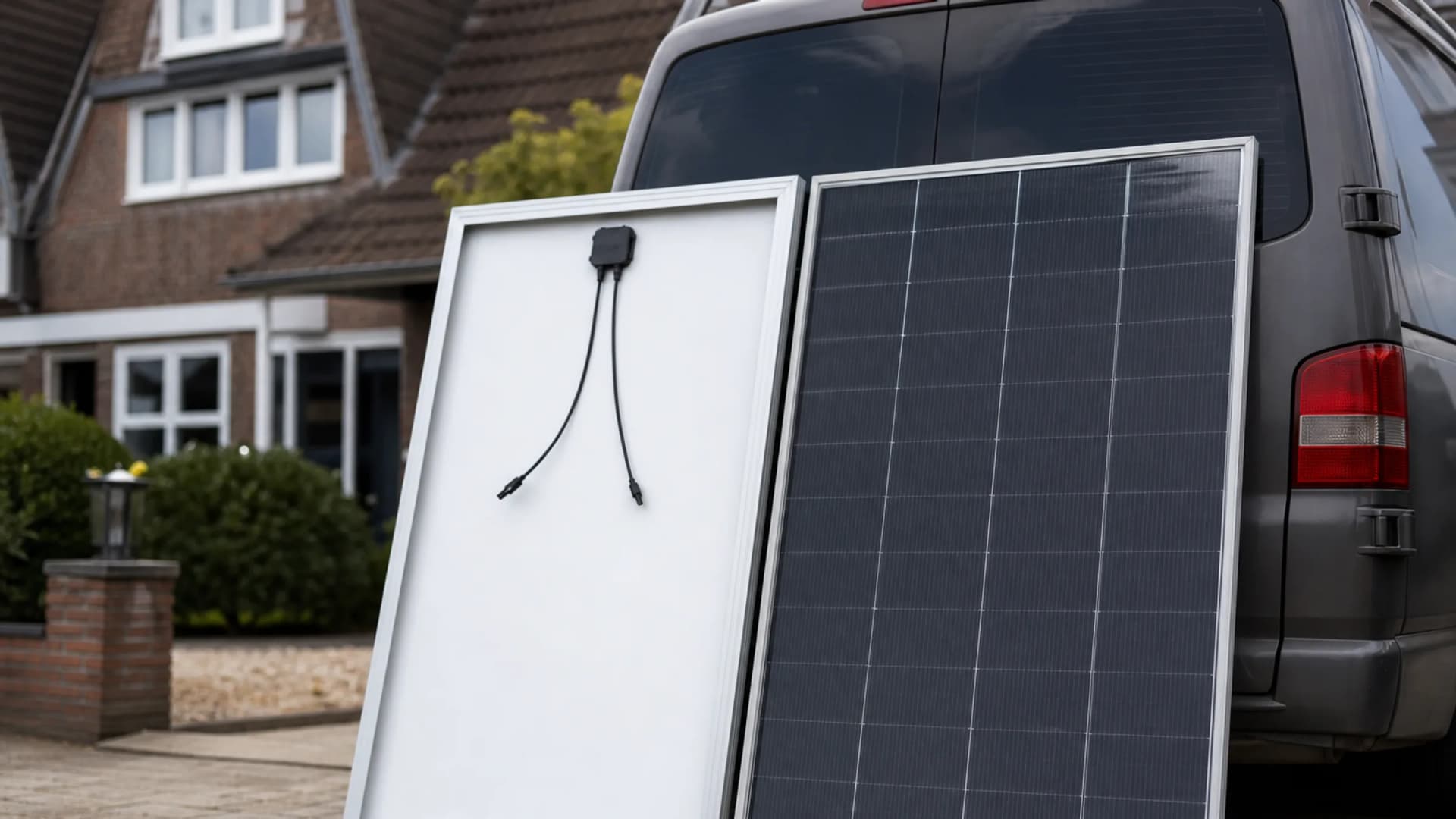
Monocrystalline vs polycrystalline panels
5 min read
Monocrystalline or polycrystalline: why almost every new panel is mono, where the difference still matters and what SolarFast installs.
All comparisons
Almost every new solar panel for home roofs is monocrystalline: slightly more yield per square metre and a uniform dark look. Polycrystalline panels are slightly cheaper per unit but are rarely installed on homes anymore.
Introduction
 Solar panels
Monocrystalline or polycrystalline: for years this was the standard solar panel question. By now the market has largely answered it. Below we put both cell types side by side, explain why almost everything we install is mono, and show where the difference still matters, for example in watt-peak per panel on a small roof.
The options side by side
Monocrystalline
Pros
- Slightly higher yield per m²
- Uniform dark look
- The standard on new installations
Cons
- Slightly more expensive per panel
- Small real-world gap on spacious roofs
Polycrystalline
Pros
- Slightly lower price per panel
- Proven technology
- Good yield on spacious roofs
Cons
- Lower yield per m² than mono
- Bluer, mottled cell appearance
- Hardly available for home roofs anymore
Why almost everything is monocrystalline now
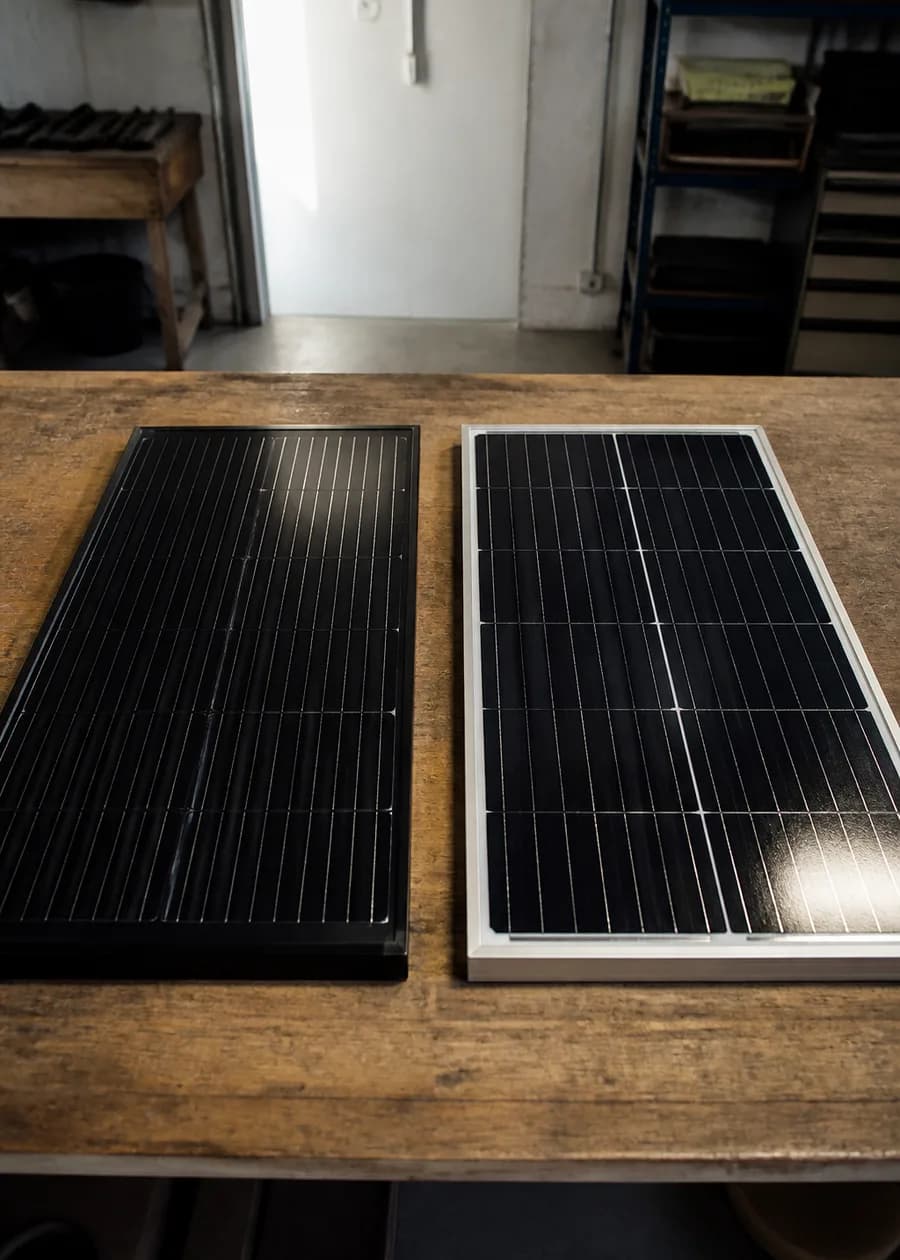
More than 95 percent of solar panels on the market are silicon-based, and that market now consists mainly of black, monocrystalline panels. According to Milieu Centraal (Dutch), many homeowners pick them for their looks, and black panels also yield slightly more than blue ones. Polycrystalline panels are recognisable by their blue, mottled cells.
The shift has a simple explanation. A monocrystalline cell is made from a single silicon crystal and converts sunlight slightly more efficiently than a cell made of multiple crystals. Manufacturers have geared their production lines accordingly, which has shrunk the price gap with poly over recent years. Request a quote for a home roof today and you will almost always be offered monocrystalline panels.
Yield, power and looks side by side
The practical difference is mostly yield per square metre. On the same roof area, mono generates a bit more. Common monocrystalline panels in 2026 sit between 400 and 450 watt-peak per unit. What that means per year is explained on our page about the yield of solar panels.
| Monocrystalline | Polycrystalline | |
|---|---|---|
| Cell structure | Single silicon crystal | Multiple crystals |
| Appearance | Uniform black or dark | Blue, mottled |
| Yield per m² | Slightly higher | Slightly lower |
| Price per panel | Usually slightly higher | Usually slightly lower |
| Availability for home roofs | The standard | Increasingly scarce |
Market picture and yield difference based on Milieu Centraal on how solar panels work (Dutch).
When does the difference still really matter?
On a small or irregular roof every square metre counts. You want as much watt-peak per panel as possible, and that favours mono. On a spacious roof it is different: a lower power per panel can be offset with an extra panel, and price per watt-peak weighs more than the cell type.
Two things apply to both types. Heat cuts output: for every 10 degrees of temperature rise, production drops by roughly 3.5 percent, so good airflow under the panels does more for your yield than the mono-versus-poly choice. And panels age slowly: manufacturers typically guarantee that a panel still delivers 80 percent of its original output after 25 years, regardless of cell type.
What does SolarFast install as standard?
We install monocrystalline A-brand panels as standard. Not because poly is bad, but because mono yields more per square metre, looks sleeker and is simply what manufacturers build for home roofs today. Your quote shows exactly which panel and which power we propose for your roof.
To be fair: the mono-versus-poly choice is rarely the decision that determines your return anymore. Orientation, shading and the right inverter weigh more. How to handle those, you can read in our comparison string inverter vs micro-inverter and the guide to buying solar panels. Want to know what fits your roof? Request a no-obligation quote.
Verdict
For almost every home roof, monocrystalline is the logical choice today: more yield per square metre, a sleek look and the widest supply. Polycrystalline can still work on a spacious roof, but is hardly offered for homes anymore. More important than the cell type: orientation, shading and a matching inverter. We look at the whole picture and calculate what your roof can deliver.
Solar panels are still a smart investment in 2026. A few things matter if you want the most from your own power.
Your energy use
Planning to drive, cook or heat electrically? Factor that into how many panels you install now.
Spread the yield
Spread panels across roof faces so you generate through the day and use more of your own energy.
Your data
Choose a system with its own 4G connection and data storage in Europe so your information stays secure.
Boost your energy
A smart home battery stores today's power for later, so you use more of your own electricity after sunset.

We install your solar panels in a day
We can often start within three weeks. A day later your panels are on the roof and everything is connected. We leave your home clean and make sure you know exactly how it all works.
- Use more of your own power during the day
- 0% VAT makes the investment even more attractive
Frequently asked questions
For most roofs monocrystalline is the logical choice, thanks to higher yield per square metre and wider availability. On a spacious roof poly can work well at a lower price per panel, if you can still get it.
Less and less. The market for home roofs now consists mainly of black, monocrystalline panels. You still see poly in existing installations and sometimes in large-scale projects.
Yes. Mono looks uniformly dark, poly has a bluer, mottled colour. Many people find mono sleeker, which is one reason the market moved that way.
With limited space mono pays off: you generate more per panel and per square metre. You get more from the same roof area.
Not meaningfully. Both cell types age slowly; manufacturers typically guarantee 80 percent of original output after 25 years. When buying, look at the warranty terms per brand instead.

Discover what smart energy can do for you
In about an hour you get insight into your savings, the options for your home and when the investment pays back. Straightforward, honest advice so you know exactly where you stand.
Smart energy at home
- Upgrade your home with our smart battery
- Our solar panels deliver up to 25% more energy
- A heat pump to minimise your energy use
- Charge your electric car easily at home with an EV charger
Booking an advice call is easy
Fill in your details below. Within a day we will contact you to schedule a no-obligation advice call together.
Related articles