

Solar panel inverter: which one fits your roof?
Updated on 5 min read
The inverter converts your solar panels' power into usable alternating current. String, micro and hybrid compared, plus sizing, placement and warranty.
All articles
An inverter converts the direct current from your solar panels into alternating current, the power your home and the grid run on. Without one you cannot use the power you generate.
What does an inverter do?
 Solar panels
Solar panels produce direct current (DC). Your sockets and the grid run on alternating current (AC). The inverter sits in between and turns DC into AC. That makes it the heart of your system.
Most inverters also track your output. Through an app or display you see how much your panels generate each day, and you spot problems quickly. Estimate how much you can generate annually on our page about solar panel output.
Where is it mounted and what do you notice?
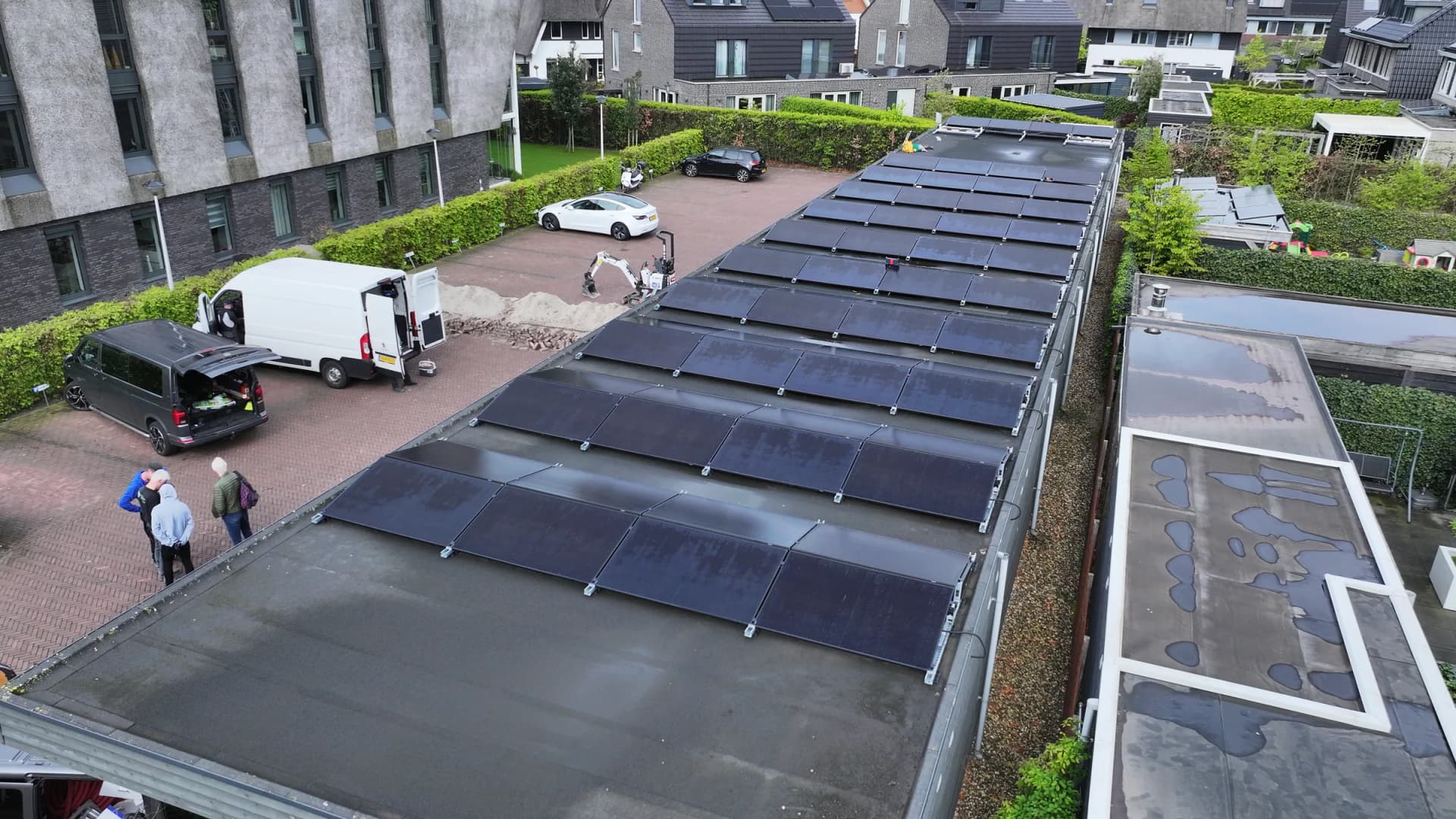
A string inverter is usually mounted indoors, in the attic, garage or a utility room. Micro-inverters sit behind each panel on the roof. Outdoor inverters exist too; they withstand weather but need good ventilation.
At full load an inverter can give a soft hum. So do not mount it right next to a bedroom. Heat and airflow affect how long it lasts: a cool, dry spot is ideal.
String, micro or hybrid
A string inverter connects several panels to one central unit. Micro-inverters sit on each panel and work well with shade or multiple roof sections. A hybrid inverter can also work with a home battery, so you store surplus instead of feeding it back.
| String | Micro | Hybrid | |
|---|---|---|---|
| Placement | Central indoors | Per panel on roof | Central indoors |
| Shade | Whole string affected | Per panel separate | Depends on type |
| Home battery | Separate battery inverter needed | Separate battery inverter needed | Often ready directly |
| Monitoring | Whole system | Per panel | System + battery |
For a full A-vs-B comparison see our page string inverter vs micro-inverter.
Matching power to your panels
The inverter must match the power of your panels. In practice the installer chooses an AC rating slightly below the total DC rating on your roof. That is the DC/AC ratio: the inverter runs efficiently without unnecessary oversizing.
Too small and you leave output on the table on sunny days. Too large and you pay for capacity you rarely need. At SolarFast we calculate this in the quote based on your roof, orientation and any shading. Deliberately no fixed price or brand ranking here: that depends too much on your situation.
Lifespan, warranty and replacement
An inverter usually lasts less long than the panels themselves. In practice expect around 10 to 15 years, depending on type, environment and use. During the life of your system you usually replace the inverter once.
With solar panels you often get different warranties per component. Panels have a longer expected lifespan than the inverter, so warranty terms differ. Always ask exactly what is covered, as the ACM advises for home upgrades.
Factory warranty is what the supplier or manufacturer promises on paper; it often runs longer than statutory warranty, depending on brand and component. Statutory warranty also applies: with normal use you can expect an inverter to last several years even if factory warranty is shorter. For expensive appliances the ACM says statutory warranty can be six to ten years or longer. Ask which warranty applies per component, as the ACM advises for home upgrades. See the ACM on warranty.
Curtailment under grid pressure
Sometimes your inverter temporarily limits output, for example when the local grid is full. That is not a fault: when many nearby systems feed in at once, grid voltage rises, and above roughly 253 volts the inverter switches itself off through its mandatory voltage protection. No signal from the grid operator is involved. Once the voltage drops it switches back on by itself and your panels carry on as normal.
Grid operators and the homeowners' association have tips on these situations. See the publication on curtailing inverters with solar panels. Unsure whether your output really drops? Check your app first; if low output persists ask us.
Inverter in your SolarFast quote
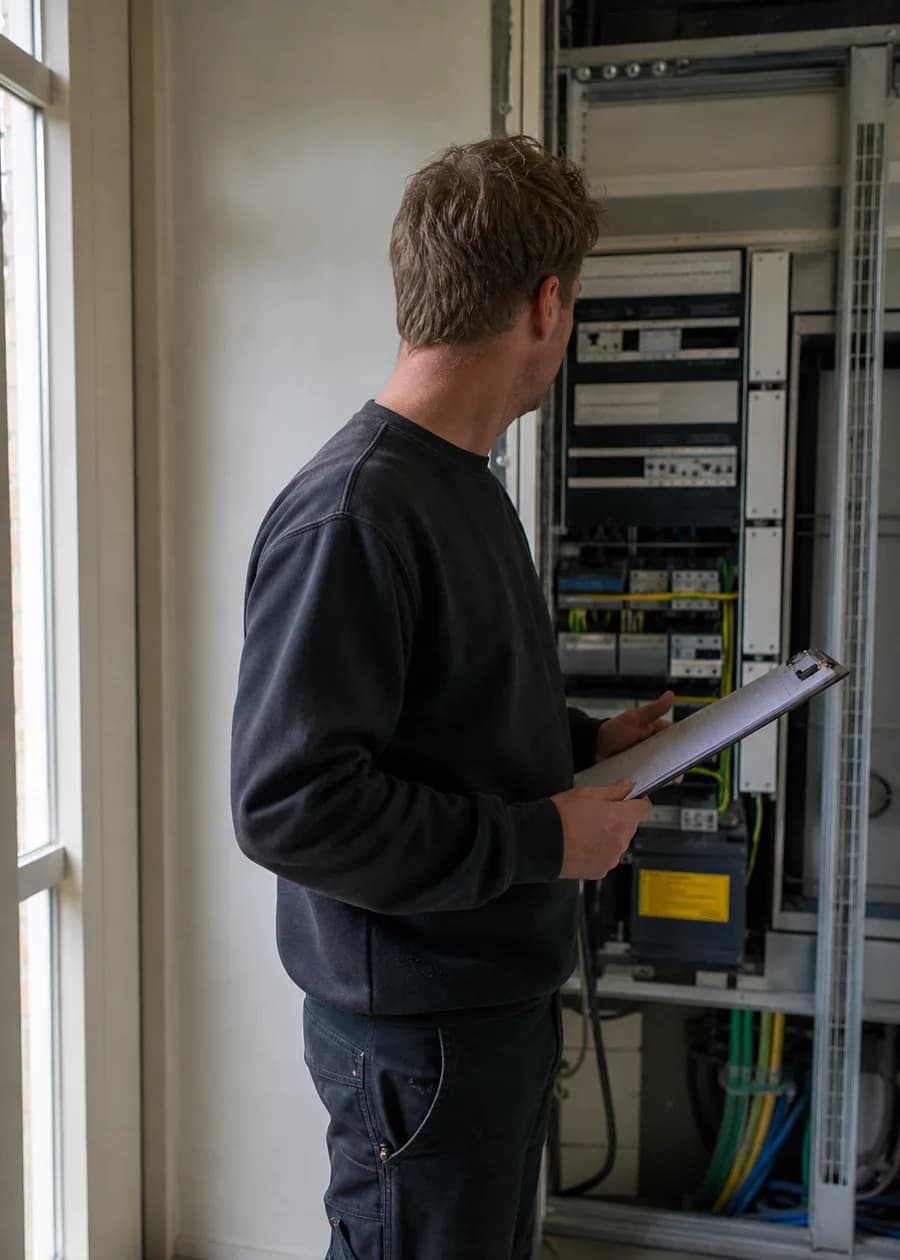
At the survey we look at your roof, shading, fuse box and whether you want a battery later. Then we choose string, micro or hybrid and the right power rating. The quote states which type fits and whether your system is battery-ready.
Read more about the buying process in our guide buying solar panels. Ready for a concrete proposal? See solar panels and request a quote.
Solar panels are still a smart investment in 2026. A few things matter if you want the most from your own power.
Your energy use
Planning to drive, cook or heat electrically? Factor that into how many panels you install now.
Spread the yield
Spread panels across roof faces so you generate through the day and use more of your own energy.
Your data
Choose a system with its own 4G connection and data storage in Europe so your information stays secure.
Boost your energy
A smart home battery stores today's power for later, so you use more of your own electricity after sunset.

We install your solar panels in a day
We can often start within three weeks. A day later your panels are on the roof and everything is connected. We leave your home clean and make sure you know exactly how it all works.
- Use more of your own power during the day
- 0% VAT makes the investment even more attractive
Frequently asked questions
Matched to the total power of your panels, with a sensible DC/AC ratio. Too small limits output, too large costs unnecessarily. We calculate this for your roof in our quote.
A string or hybrid inverter is usually mounted indoors, in the attic or garage. Micro-inverters sit behind each panel on the roof. Choose a cool spot with enough ventilation.
Often less long than the panels: expect around 10 to 15 years, depending on type and conditions. During the life of your system you usually replace it once.
Factory warranty is what the supplier or manufacturer promises on paper; terms vary by brand. Statutory warranty can last longer with normal use. See the ACM on warranty (Dutch). Ask which warranty applies per component.
A string inverter serves several panels together. Micro-inverters work per panel. With shade or multiple roof sections, micros are often the better fit. See our comparison page for the full trade-off.
For storage a hybrid inverter is handy, or a separate battery inverter. We check in advance whether your system is ready to expand.
Some give a soft hum at full load. Mounting it in a sensible spot, not right next to a bedroom, avoids any nuisance.

Discover what smart energy can do for you
In about an hour you get insight into your savings, the options for your home and when the investment pays back. Straightforward, honest advice so you know exactly where you stand.
Smart energy at home
- Upgrade your home with our smart battery
- Our solar panels deliver up to 25% more energy
- A heat pump to minimise your energy use
- Charge your electric car easily at home with an EV charger
Booking an advice call is easy
Fill in your details below. Within a day we will contact you to schedule a no-obligation advice call together.
Related articles