Cleaning solar panels: when is it worth it?
Updated on 6 min read
Cleaning solar panels? Usually unnecessary: rain does the work. When it pays off (flat roofs, bird droppings), how to clean safely and the upkeep that matters.
All articles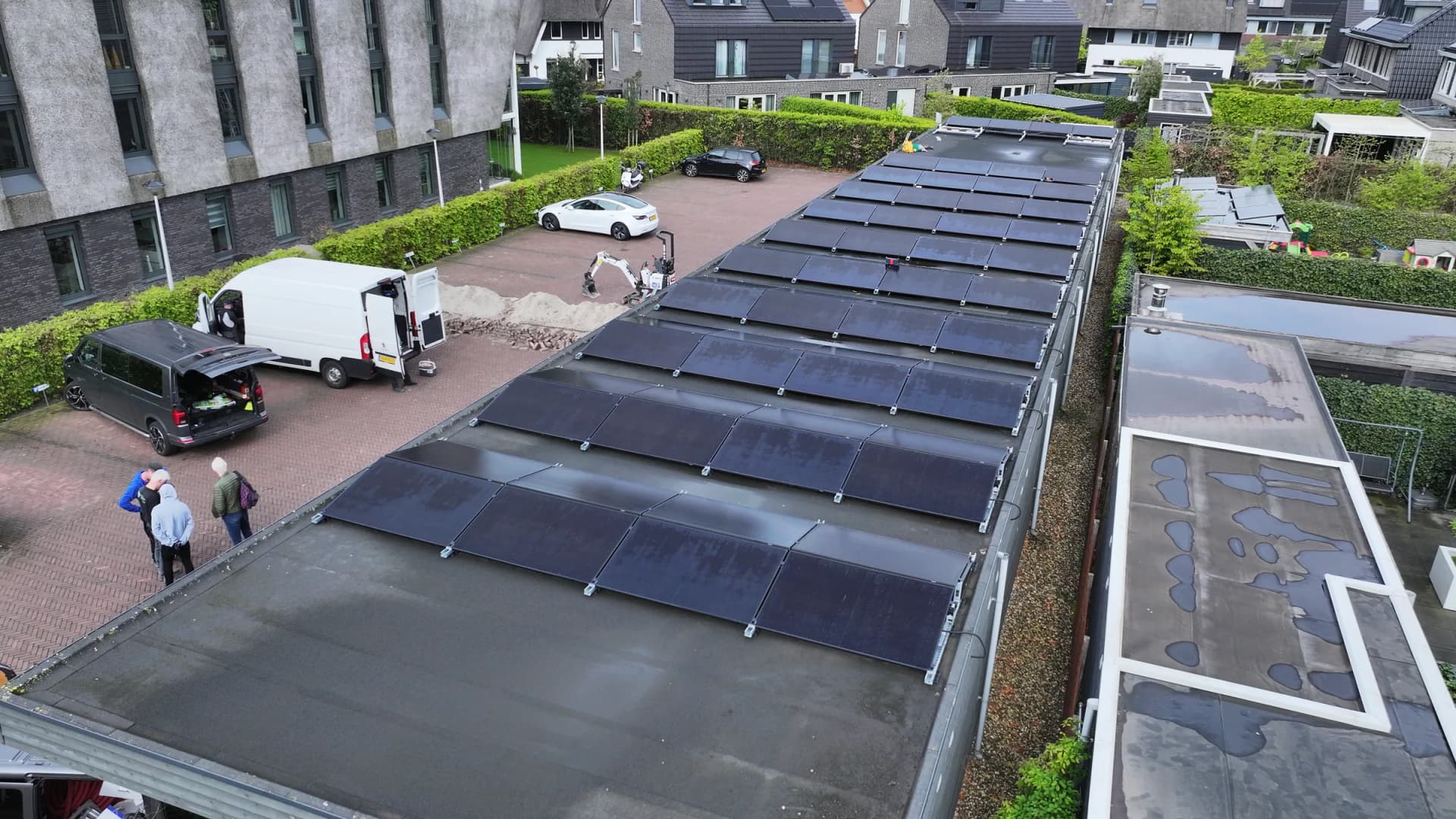
If your solar panels sit at an angle of roughly 20 degrees or more, rain usually keeps them clean. Cleaning mainly pays off for flat installations and local dirt such as bird droppings. Check your monitoring app first to see whether output is genuinely lagging before booking a clean.
Do solar panels need cleaning?
 Solar panels
Solar panels are built to get dirty outdoors and to shed that dirt again. The glass is smooth, most panels sit at an angle and the Netherlands has no shortage of rain. Dust, pollen and Saharan sand largely wash away with the next good shower.
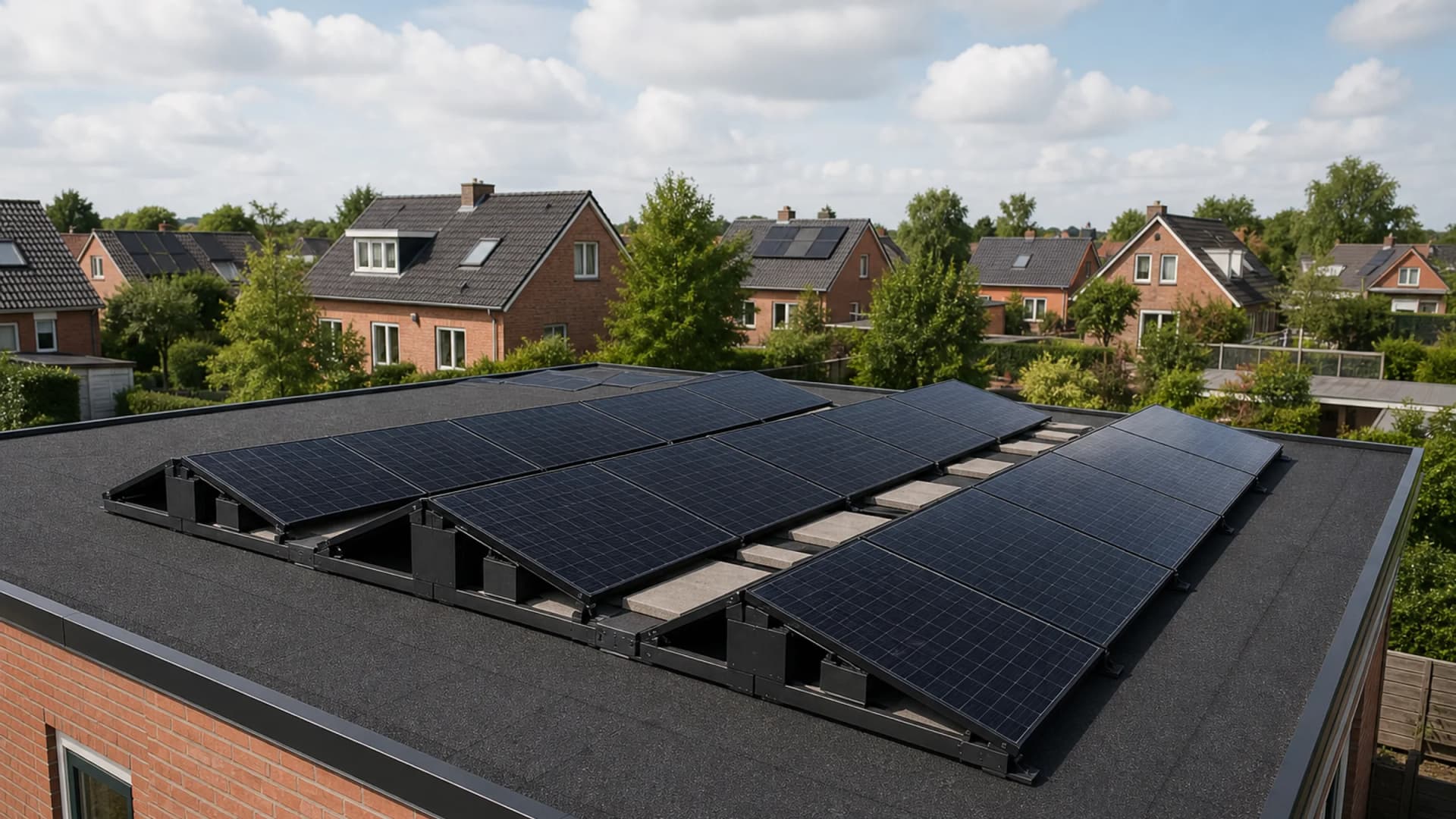
The rule of thumb: panels at an angle of more than 20 degrees rinse themselves clean in the rain, so you only step in for stubborn stains. Panels that sit (almost) flat do hold on to dirt, and cleaning them at least once a year is sensible. That is how Milieu Centraal explains solar panel maintenance (Dutch) as well.
When is cleaning worth it?
On the roofs we install around Amsterdam, Amstelveen and Haarlem, the same kinds of dirt keep coming back: bird droppings, near the coast mostly from gulls, pollen and leaf residue under trees, and a green band of algae along the bottom edge of panels that sit flat.
Local dirt is the real culprit. A thin layer of dust across the whole panel costs little, but a thick blob in one spot blocks that patch of cells completely and can noticeably drag down the whole panel. If you see stains like that, cleaning pays off right away. In doubt? First check whether your output lags behind what your panels should produce.
Your surroundings matter too. Near a busy road, a railway line or industry, panels get dirty faster than average. And the standard mounting on a flat roof sits at around 10 to 15 degrees: just too flat for everything to rinse off by itself, so a yearly check simply belongs there.
How to clean panels without damage
Can you reach them safely, for example on an extension or carport you can reach from a stepladder? Then use lukewarm demineralised water and a soft brush or sponge. Ordinary tap water leaves limescale streaks, which block exactly the light you want to let through. Pick a cool moment, early in the day or towards the evening: on a hot panel water dries too fast and cold water increases the temperature contrast in the glass.
What you should never use: a pressure washer, scouring pads or aggressive cleaning agents. They can damage the coating, the edge seal and the connections, and self-inflicted damage generally falls outside the warranty. Stay away from plugs and cabling too: as long as light hits the panels they carry voltage, even with the system switched off.
For panels on a pitched roof the rule is simple: do not climb up yourself. Working at height without fall protection is the biggest mistake you can make here. Leave it to a specialist company with climbing gear and an osmosis-water system, or ask your installer who they recommend.
Dirt, a fault or grid pressure? How to tell
Lower output does not automatically mean dirty panels. This table helps you tell the difference before you send anyone up the roof.
| What you see | Likely cause | What to do |
|---|---|---|
| Output drops slowly, over weeks or months | Soiling, especially at a low tilt angle | Inspect the panels; clean (or have them cleaned) if dirt is visible |
| One panel consistently lags behind | Local dirt such as bird droppings, or new shade | Check that one panel and remove the stain |
| Production cuts out on sunny afternoons | Inverter switches off at high grid voltage | Not a fault and not dirt; it comes back by itself |
| App reports a fault or error code | Inverter or installation fault | Contact your installer |
Panel-level monitoring is only possible with micro-inverters or optimisers. Why an inverter temporarily switches off at high grid voltage is covered under inverter.
The maintenance that actually matters
The most important maintenance takes no bucket of water, just a minute a month: open your monitoring app and compare output with the same month last year. Seasons differ enormously, so never put November next to June. Does output drop unexplainably by more than 10 percent? Have the system checked; Milieu Centraal uses that same rule of thumb.
After a storm, walk around your house and look up: are all panels sitting straight, is no cabling hanging loose? Also have the system inspected periodically by a professional; the Dutch homeowners' association Vereniging Eigen Huis advises once every two to five years (Dutch). Such a check also covers the inverter, usually the first component to wear out.
How SolarFast handles this
During the survey we look at more than the panel count: shade, overhanging branches and your roof's tilt all factor into the layout plan. Going for a flat-roof mounting? Then count on a yearly clean. That way you know what to expect up front.
After installation you follow your output in the app and see for yourself when a clean genuinely adds something. Not sure whether your panels are due a clean or an inspection? Send us your question; a photo plus your output data usually tells us enough. Ready to expand or replace your system? Have a look at our solar panels.
Solar panels are still a smart investment in 2026. A few things matter if you want the most from your own power.
Your energy use
Planning to drive, cook or heat electrically? Factor that into how many panels you install now.
Spread the yield
Spread panels across roof faces so you generate through the day and use more of your own energy.
Your data
Choose a system with its own 4G connection and data storage in Europe so your information stays secure.
Boost your energy
A smart home battery stores today's power for later, so you use more of your own electricity after sunset.
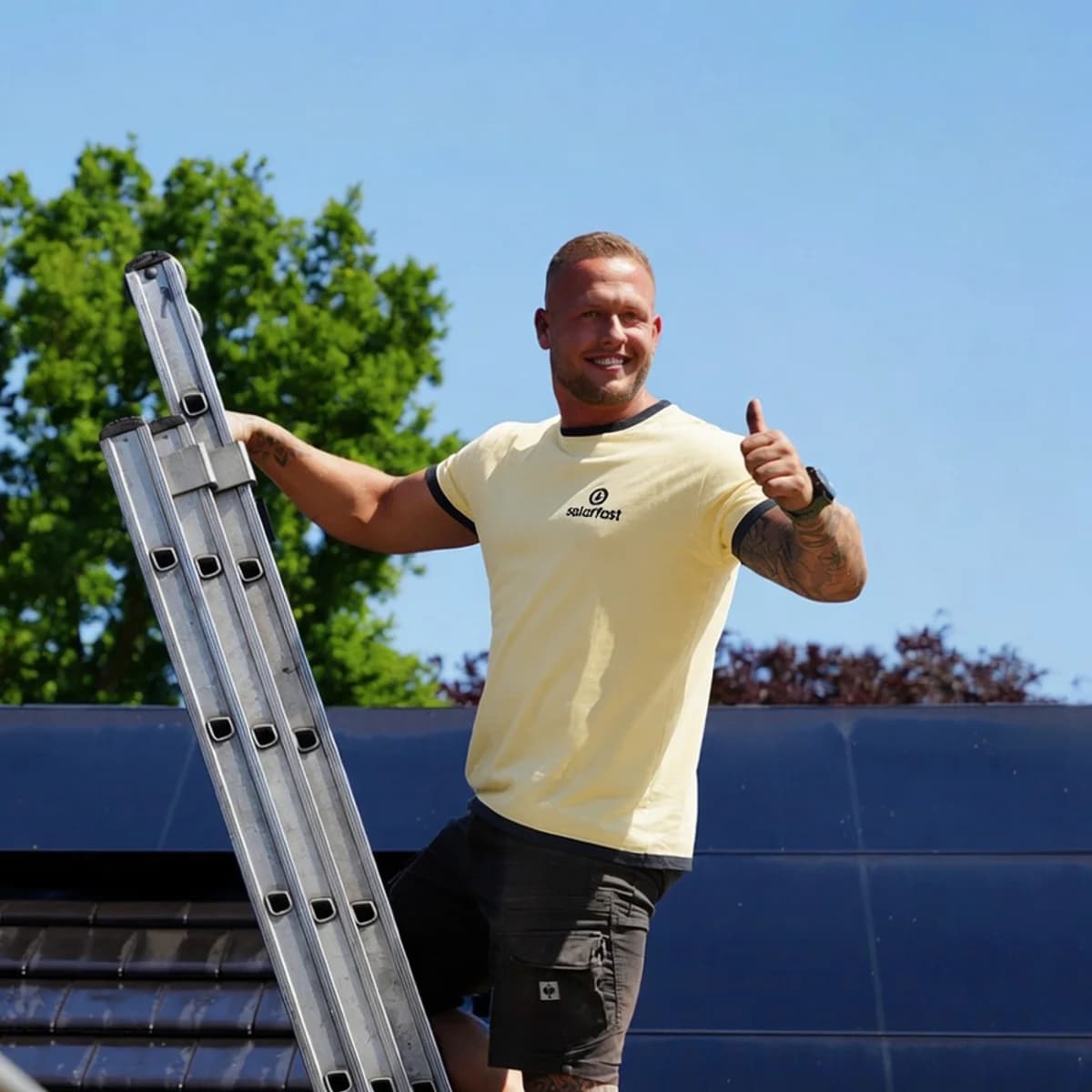
We install your solar panels in a day
We can often start within three weeks. A day later your panels are on the roof and everything is connected. We leave your home clean and make sure you know exactly how it all works.
- Use more of your own power during the day
- 0% VAT makes the investment even more attractive
Frequently asked questions
At a tilt above 20 degrees there is no fixed schedule: rain does the work and you only clean when you see stains or falling output. If your panels sit (almost) flat, count on roughly once a year.
No. The high pressure can damage the coating, the edge seal and the connections, and self-inflicted damage generally falls outside the warranty. Use lukewarm demineralised water and a soft brush or sponge.
On pitched roofs largely yes: dust and sand wash off with the next shower. Local dirt such as bird droppings and a green algae band along the bottom edge do stay put, and on (almost) flat panels rain rinses off too little.
Tap water contains limescale, which stays behind as streaks on the glass once the water dries. Demineralised water dries without streaks, so the panel keeps letting all the light through.
Don't. Working at height without fall protection is dangerous, even for a ten-minute job. Bring in a specialist company with climbing gear or ask your installer for advice.
No. Don't climb onto the roof in winter weather and don't scrape the glass, as that can scratch it. Winter output is low anyway and on a pitched roof snow usually slides off by itself.
Compare output in your monitoring app with the same month last year and glance at the roof now and then. If output drops unexplainably by more than 10 percent, have the system checked.
With visible, local soiling such as bird droppings or an algae band, yes. A thin, even layer of dust costs little output. So look at your output data and the roof first, and only then clean.

Discover what smart energy can do for you
In about an hour you get insight into your savings, the options for your home and when the investment pays back. Straightforward, honest advice so you know exactly where you stand.
Smart energy at home
- Upgrade your home with our smart battery
- Our solar panels deliver up to 25% more energy
- A heat pump to minimise your energy use
- Charge your electric car easily at home with an EV charger
Booking an advice call is easy
Fill in your details below. Within a day we will contact you to schedule a no-obligation advice call together.
Related articles