
Solar panels on a flat roof: ballast, layout and yield
Updated on 7 min read
How much ballast you need on a flat roof depends on wind zone and the roof, not a fixed kilo figure. South or east-west sets the layout.
All articles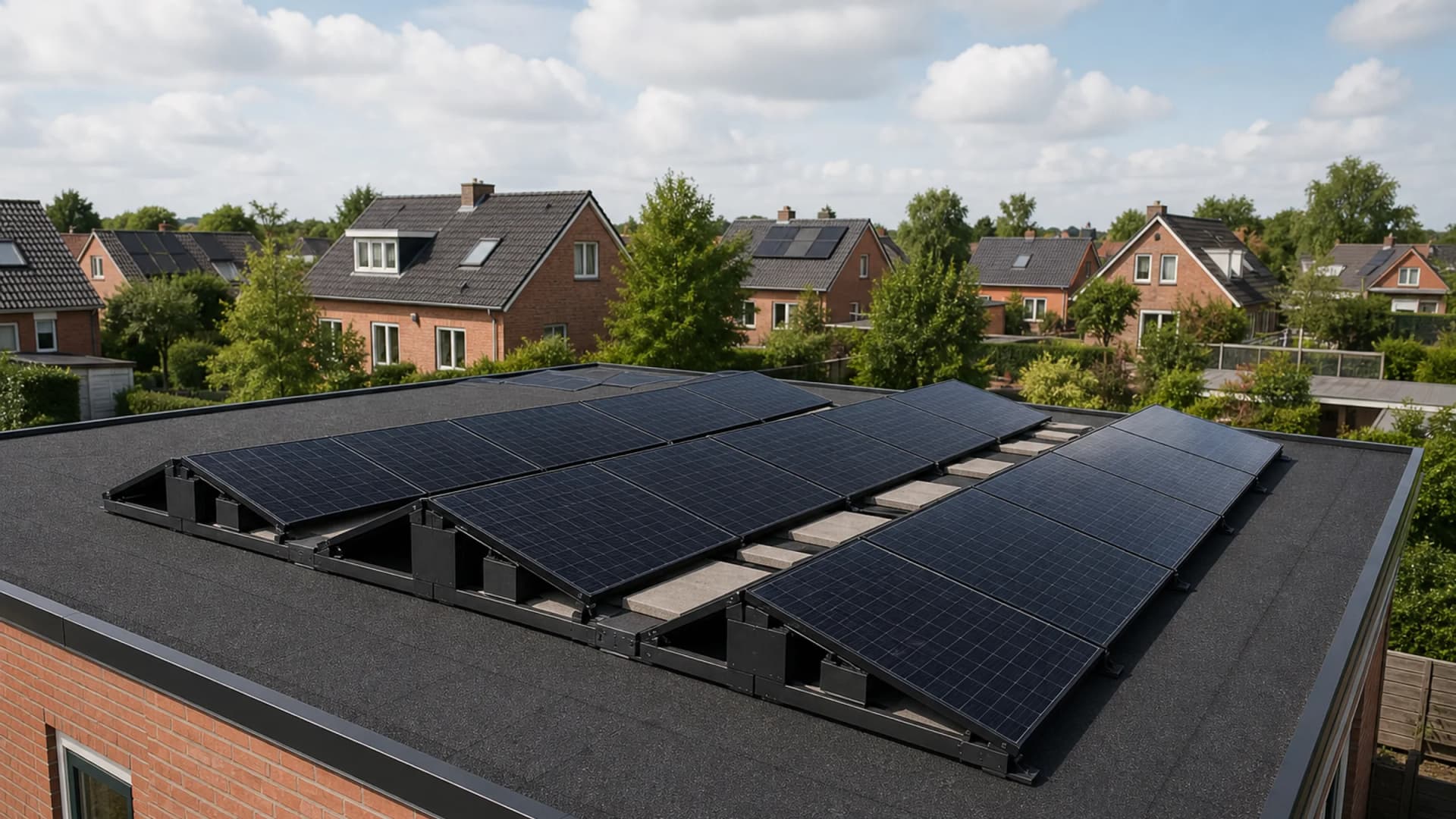
A flat roof is well suited to solar panels. The panels sit in ballasted frames, usually at an angle of 10 to 15 degrees. How much ballast you need is not a fixed figure: we calculate it per roof. The real choice is the layout: south yields the most per panel, east-west fits more panels and spreads generation across the day.
How do panels sit on a flat roof?
 Solar panels
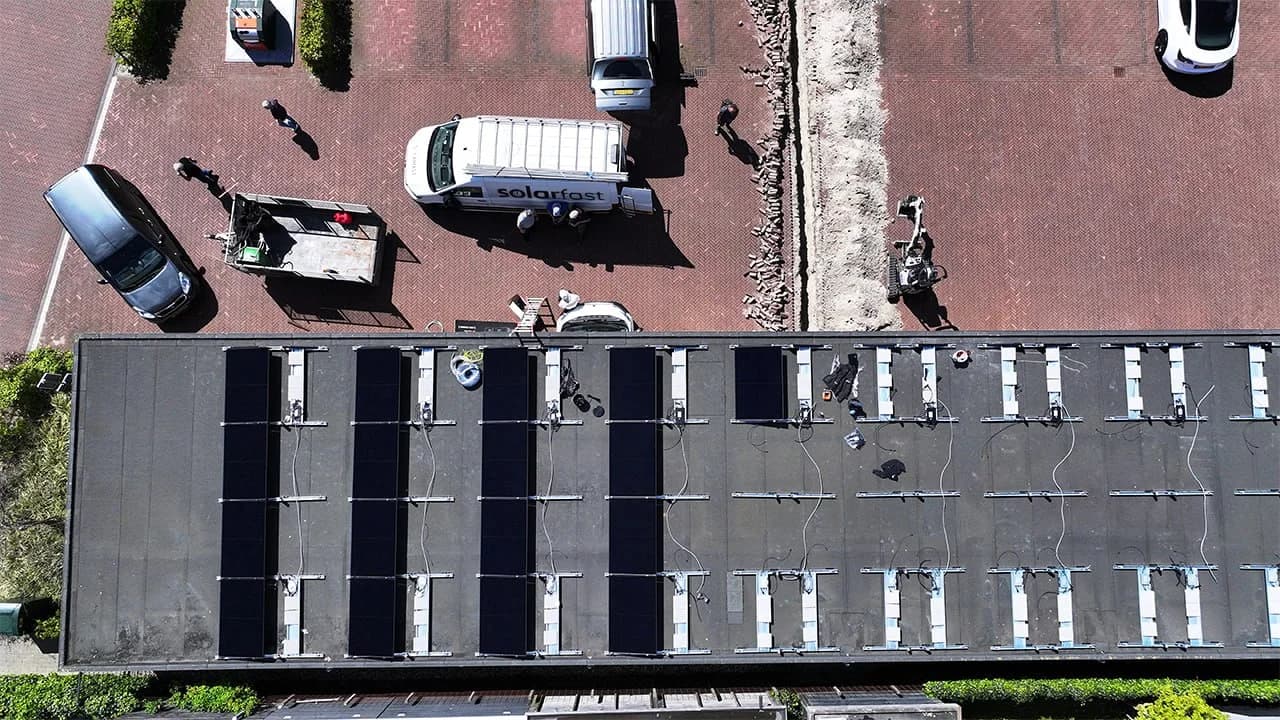
On a pitched roof, panels hook onto the roof itself. A flat roof works differently: the panels sit in plastic or aluminium frames held in place by ballast, usually concrete tiles in the frame tray. Nothing has to pierce the roofing membrane, which reduces the risk of leaks. Only on roofs too light for ballast do we choose mechanical anchoring, and only with a properly detailed connection into the roofing.
We usually set the frames at an angle of 10 to 15 degrees. That is flatter than the ideal pitch of a sloped roof, but it keeps wind load and the required ballast manageable and the rows compact. Under the frames we lay protective mats, so the ballast and frame do not damage the bitumen or EPDM layer.
South or east-west: the key choice
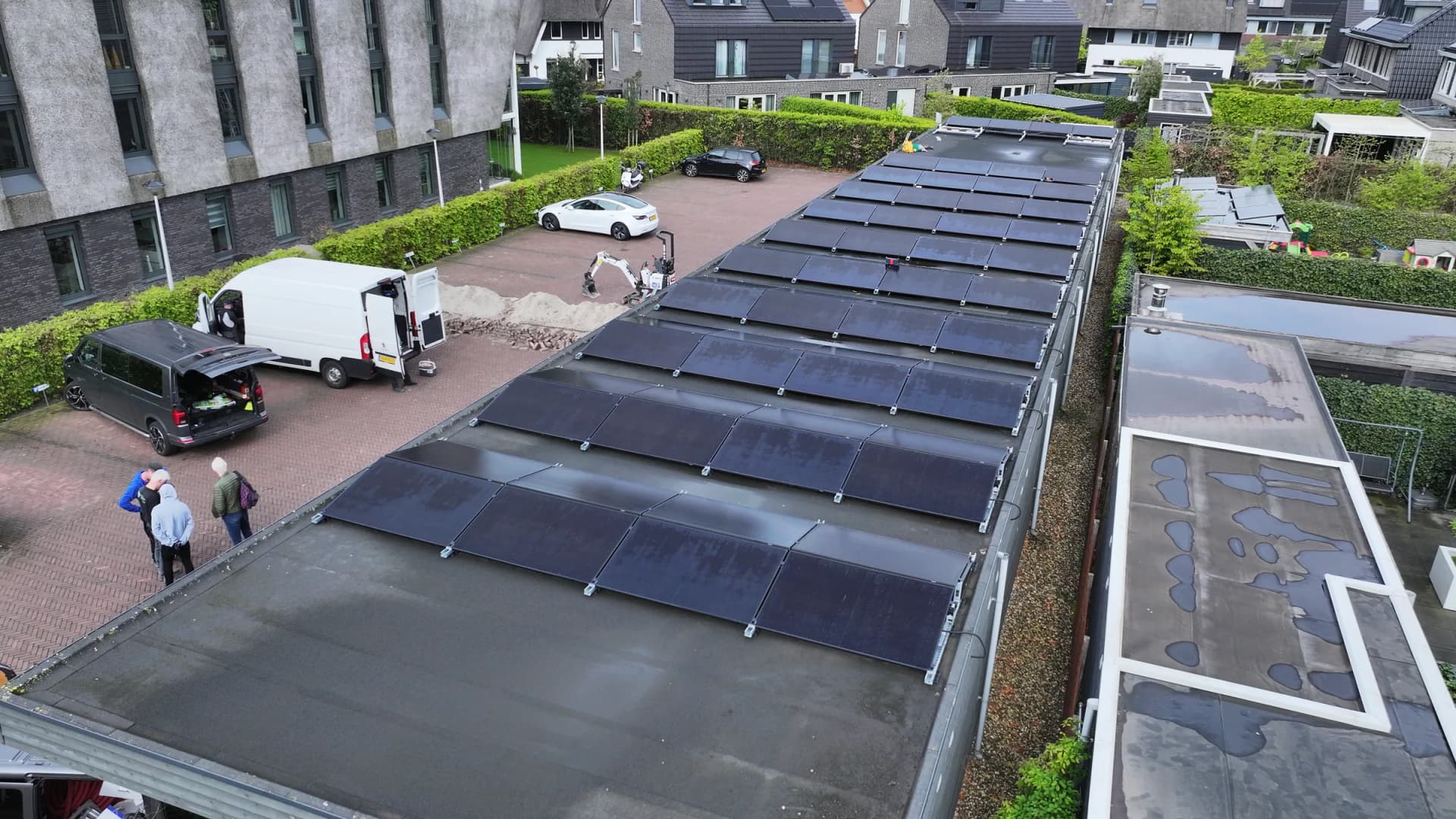
On a flat roof you are free to choose the orientation, and that is the main design decision. A south-facing layout catches the most sun per panel, but the rows shade each other and need spacing: count on about 2.3 square metres of roof per square metre of panel, according to Milieu Centraal (Dutch). In an east-west layout the panels lean against each other like a small roof. You give up roughly 10 percent yield per panel, but you fit more of them and generation spreads better across morning and afternoon.
| South layout | East-west layout | |
|---|---|---|
| Yield per panel | Highest | About 10 percent lower |
| Panels on the roof | Fewer (spacing needed) | More (rows connect) |
| Generation across the day | Peak around midday | Spread over morning and afternoon |
| Visibility from the street | Rows stand out sooner | Calmer, lower profile |
Which layout wins depends on your roof size, when you use power and how much you want to generate in total. We draw out both variants when the roof calls for it.
In practice we recommend east-west as soon as the roof is the limiting factor: if you want to use your roof surface to the full, more panels facing east-west often beat fewer panels facing south on total yield. How many panels you need is worked out in our guide how many solar panels do I need; what a panel yields per orientation is covered under solar panel yield.
How much ballast do flat-roof solar panels need?
There is no single kilo figure. How much ballast you need depends on the spot on the roof, the building height, the frame angle and whether the structure can take the weight. Corners and edges need more than the middle; we work it out with the frame manufacturer's wind calculation.
Wind does not hit a flat roof evenly. Along the edges and especially on the corners the forces are highest; the middle of the roof gets off lightly. A four-storey roof catches more wind than an extension, so those zones get more ballast.
For the same reason we keep distance from the roof edge. That avoids the heaviest wind zone and has a side effect many homeowners appreciate: a free strip along the edge makes the installation much less visible from the street. A panel sticking out over the edge or pushed right against it is asking for trouble in a storm.
Can your roof carry the weight?
Panels, frames and ballast together quickly add up to tens of kilos per panel. A concrete roof can almost always take that. With timber roofs, such as on many extensions, garages and sheds, we look more critically: what is the span, how old is the structure and is there already gravel or decking on it? When in doubt we request a structural check before placing anything. Better a calculation upfront than a sagging roof afterwards.
Also look at the age of your roofing. An installation sits there for 25 years; if your bitumen or EPDM is due for replacement within a few years, renovating the roof first and installing panels after is the logical order. Otherwise you pay for mounting work twice. These points belong in a good quote; what else to check is covered in buying solar panels: what to look for.
Yield and maintenance at a low tilt
A 10 to 15 degree setup yields slightly less per panel than the ideal tilt, but the difference is smaller than many people think and the flatter angle keeps wind and ballast manageable. The Netherlands also generates a lot from diffuse light, where the angle matters less.
One honest note: at a low tilt, rain washes dirt away less effectively than on a steep tiled roof. So count on roughly a yearly cleaning check, especially along the bottom edge of the panels where algae can build up. How to do that safely is covered in cleaning solar panels.
How SolarFast approaches a flat roof
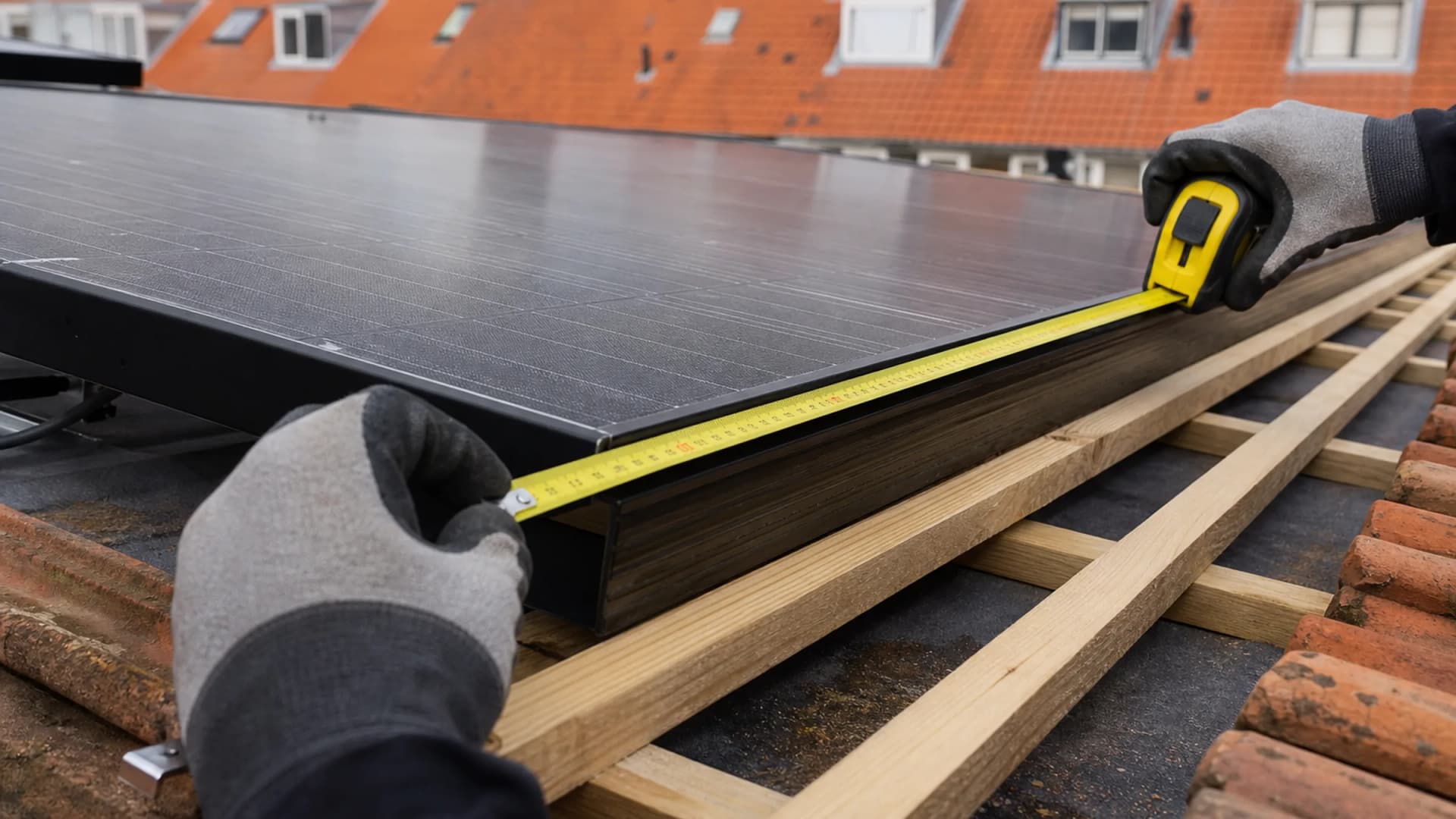
During the site survey we measure the roof surface, check the roofing and load capacity, and look at the cable route to the fuse box. Then we draw a layout plan with the setup that fits your roof and consumption, including the ballast calculation per zone and the distance to the roof edge.
You get a no-obligation quote within 24 hours, no deposit required, and after approval we usually install within three weeks. Not sure whether your flat roof qualifies? Put your roof to us or start on our solar panels page.
Solar panels are still a smart investment in 2026. A few things matter if you want the most from your own power.
Your energy use
Planning to drive, cook or heat electrically? Factor that into how many panels you install now.
Spread the yield
Spread panels across roof faces so you generate through the day and use more of your own energy.
Your data
Choose a system with its own 4G connection and data storage in Europe so your information stays secure.
Boost your energy
A smart home battery stores today's power for later, so you use more of your own electricity after sunset.

We install your solar panels in a day
We can often start within three weeks. A day later your panels are on the roof and everything is connected. We leave your home clean and make sure you know exactly how it all works.
- Use more of your own power during the day
- 0% VAT makes the investment even more attractive
Frequently asked questions
No. Per panel you give up a little compared to the ideal tilt, but you gain freedom in orientation and can often fit more panels east-west. Total yield per roof regularly comes out higher.
No fixed figure. Corners and edges catch more wind than the middle, and a taller building needs more. We calculate it with the frame manufacturer's wind calculation.
Not if the ballast calculation is right and edge distances are respected. The frames are designed for Dutch wind loads. Problems mainly arise with DIY setups without a calculation or panels placed too close to the roof edge.
Not with proper mounting: protective mats under the frames spread the load and protect the bitumen or EPDM layer. A ballasted system also pierces nothing, so the leak risk stays small.
South gives the highest yield per panel, east-west uses the roof surface better and spreads generation across the day. If your roof is small or you want maximum output, east-west often wins. We draw out both variants when useful.
Usually not. Rules only apply to monuments and protected town or village views. Check upfront via your municipality's Omgevingsloket; we think along when this applies to your property.
Often yes, but we always check. Panels, frames and ballast add real weight. With timber structures or doubts about the roof's condition we request a structural check, and a roof due for replacement gets renovated first.
Yes, count on roughly a yearly check. At 10 to 15 degrees rain washes dirt away less well than on a steep roof, and algae can build up along the bottom edge. On pitched roofs cleaning is usually not needed.

Discover what smart energy can do for you
In about an hour you get insight into your savings, the options for your home and when the investment pays back. Straightforward, honest advice so you know exactly where you stand.
Smart energy at home
- Upgrade your home with our smart battery
- Our solar panels deliver up to 25% more energy
- A heat pump to minimise your energy use
- Charge your electric car easily at home with an EV charger
Booking an advice call is easy
Fill in your details below. Within a day we will contact you to schedule a no-obligation advice call together.
Related articles