
Solar panel sizes and weight
Updated on 6 min read
Solar panel weight on roof tiles: about 20 to 25 kilos each. Common sizes and how many genuinely fit on your roof.
All articles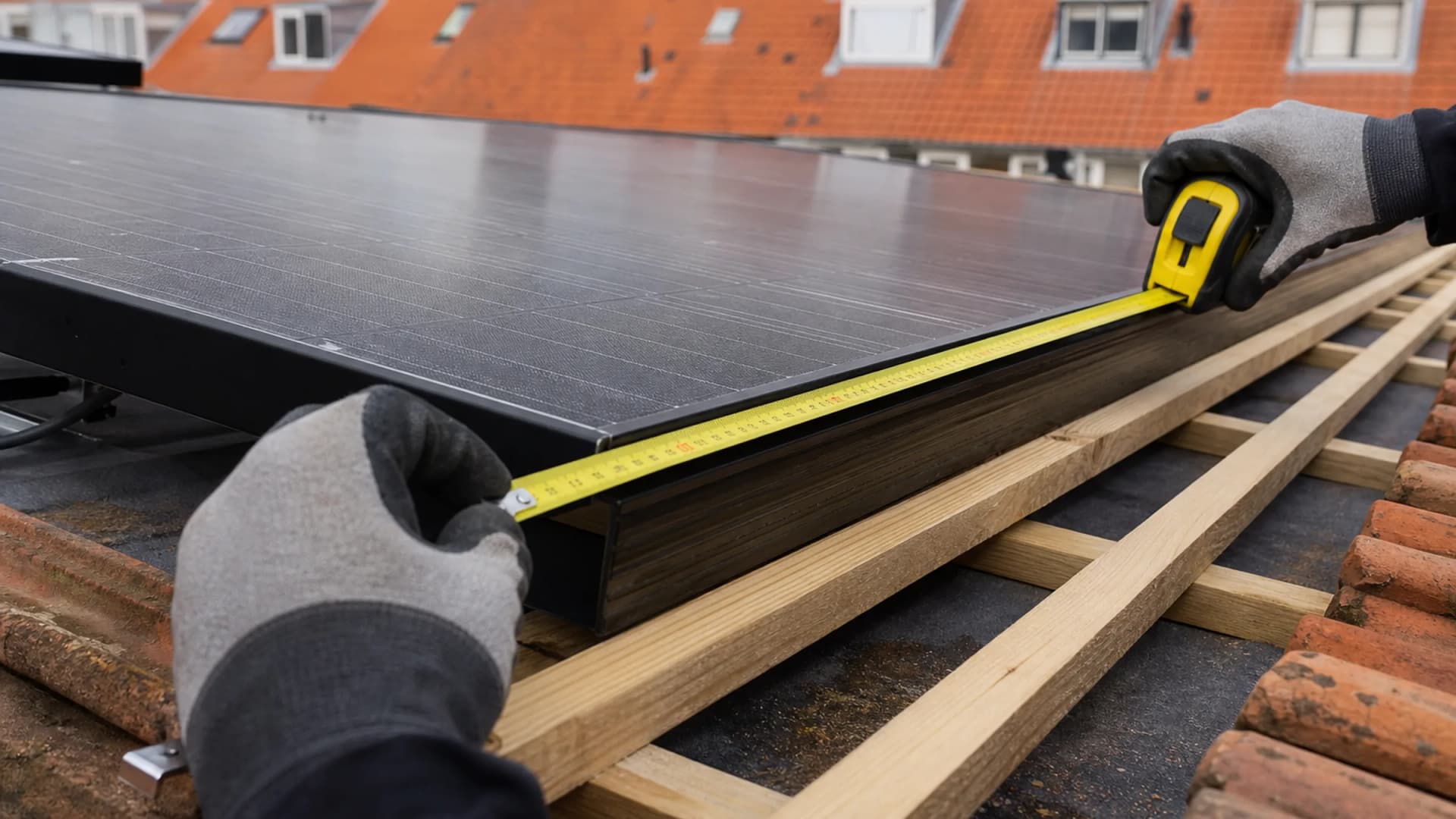
A common residential solar panel measures about 1.75 by 1.15 metres, is 3 to 4 centimetres thick and weighs some 20 to 25 kilos. Count on roughly 2 square metres of roof per panel on a pitched roof, and well over double that on a flat roof with a south-facing layout.
The common sizes at a glance
 Solar panels
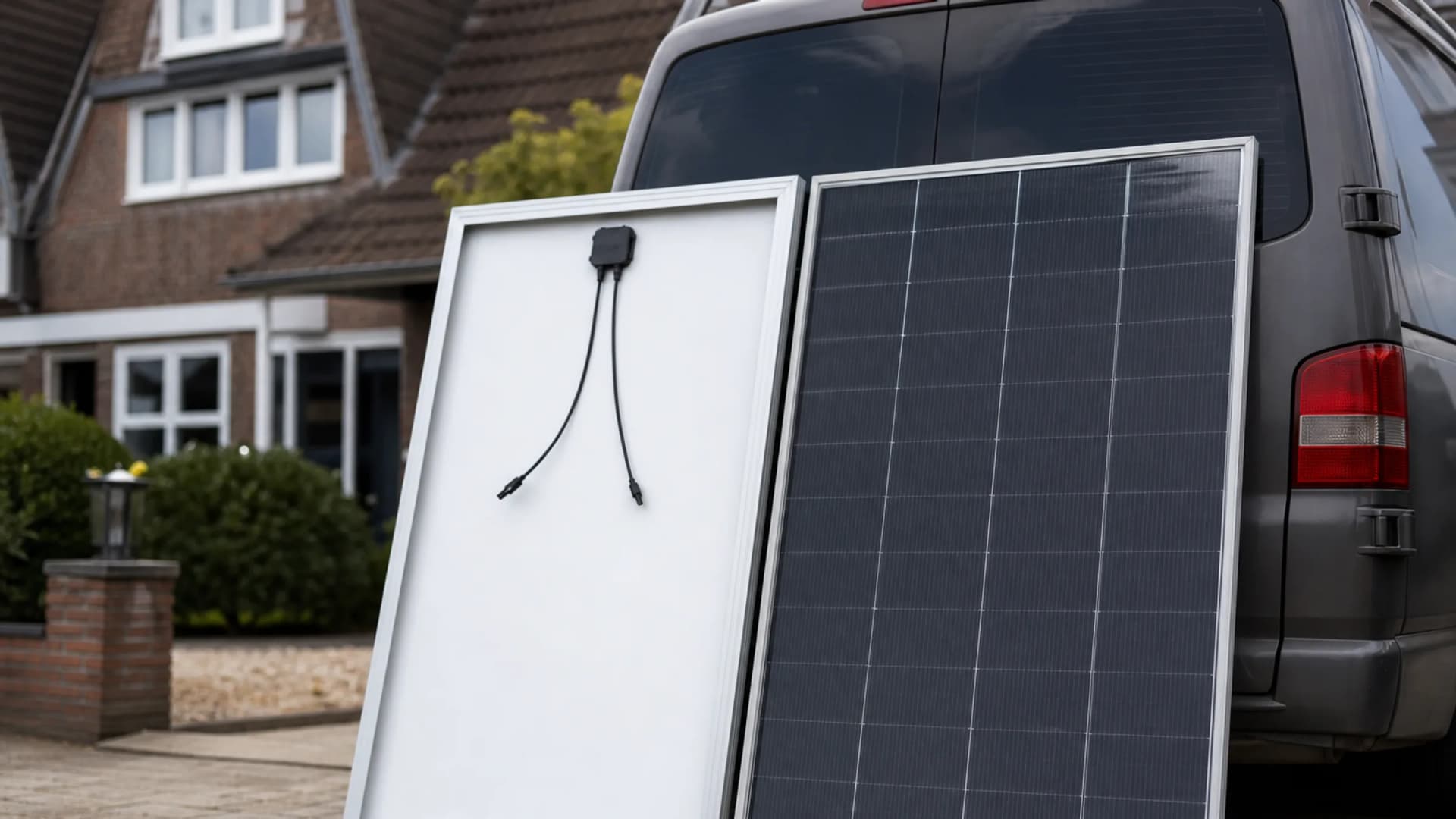
Residential solar panels have grown slightly over the years. The older standard format of about 1.65 by 1 metre still covers plenty of roofs, but new panels usually measure around 1.75 by 1.15 metres. That is almost exactly 2 square metres per panel, at a thickness of 3 to 4 centimetres. The power of such a panel typically sits between 400 and 450 watt-peak.
| Format | Size (indicative) | Where you see it |
|---|---|---|
| Standard residential panel | approx. 1.75 x 1.15 m, 400-450 Wp | The size we install almost every time |
| Older standard format | approx. 1.65 x 1.00 m | Existing installations from earlier years |
| Smaller panel | e.g. 1.60 x 0.80 m or 1.25 m tall | Tight roof faces, dormers, awkward corners |
| Large format | approx. 2.40 x 1.30 m, around 700 Wp | Large commercial roofs; impractical on homes |
Sizes vary by brand and series; this is the common picture, see also the overview by the Dutch consumer association on panel sizes (Dutch).
Those large panels of over 2 metres sound attractive for their power, but they rarely work on a home roof. They are heavier, harder to handle on scaffolding and leave you less room to puzzle around roof windows and chimneys. For homes, the standard format is almost always the logical pick.
Weight: what ends up on your roof?
A standard residential panel weighs some 20 to 25 kilos. Versions with glass on both sides sit at the top of that range; the difference between those builds is covered in glass-glass vs glass-foil. On a pitched roof the mounting system comes on top: rails and roof hooks. All in, you are looking at roughly 12 to 15 kilos per square metre of roof.
That sounds like a lot, but in proportion it is modest: the roof tiles already up there usually weigh more per square metre than the entire installation adds. The structure of a normal tiled roof can therefore almost always take solar panels. A flat roof is a different story, because ballast tiles hold the frames in place and the weight per panel quickly adds up to several dozen kilos. On light timber roofs, such as extensions and garages, we run the numbers beforehand.
How that ballast works and when a structural check is sensible is covered in our piece on solar panels on a flat roof.
How much roof area do you need per panel?
On a pitched roof the maths is simple: about 2 square metres per panel, contiguous and free of obstacles. Panels are not laid right up to the edge; keep about 20 centimetres of distance from the ridge and the roof edges, in line with the layout guidance from Milieu Centraal on roof suitability (Dutch). A roof window or chimney breaks up the face and in practice often costs you one or two panels.
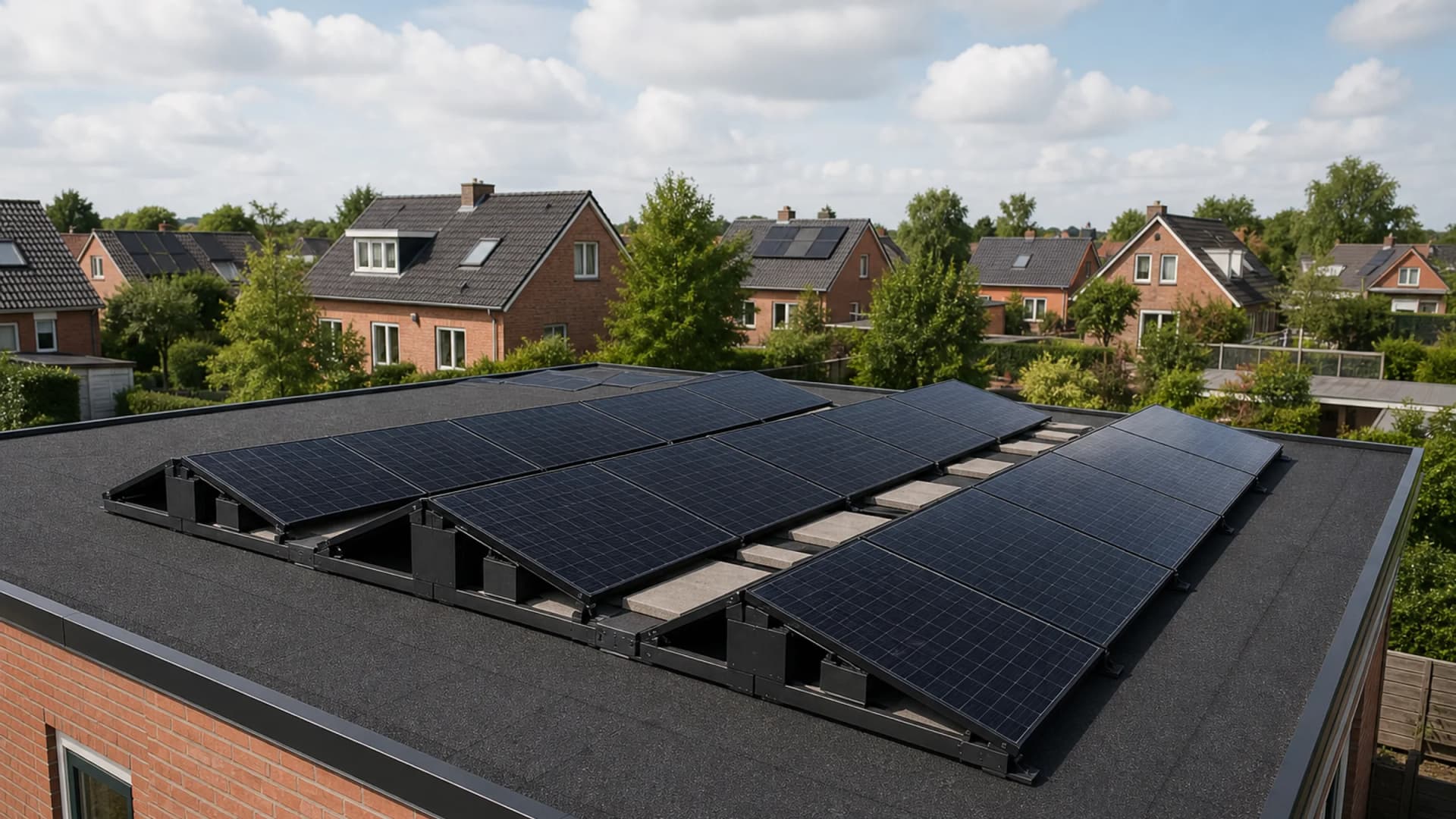
On a flat roof a south-facing layout needs about 2.3 square metres of roof per square metre of panel, because the rows would otherwise shade each other. Per panel that is well over double what a pitched roof needs. An east-west layout packs tighter and uses the roof better.
Want to go from roof area to an actual panel count, including your consumption? That step-by-step plan lives in how many solar panels do I need.
Portrait or landscape placement matters
Panels can go on the roof portrait (upright) or landscape (sideways). On pitched roofs portrait is most common, but landscape sometimes works out better around a dormer or on a low roof face above a gutter. It changes the rail direction and the number of roof hooks, and sometimes a rotated bottom row fits exactly one panel more.
On flat roofs wind comes into play: at the same tilt, a landscape panel catches less wind than a portrait one, which improves the ballast calculation. In the layout plans we draw, we try both orientations before the final count goes into the quote.
If an awkward gap remains, filler options exist: smaller panels or non-connected dummy panels that visually complete the layout. The latter is purely cosmetic, but it does make a roof calmer to look at.
How we measure it up
We draw a layout plan for every quote based on your roof dimensions, obstacles and shading. During the survey we re-measure the roof, check the state of the tiles or roofing and, on flat and lightweight roofs, assess the load capacity. So you know in advance exactly how many panels are coming, how they will sit and what the installation will deliver.
Not sure whether your roof can take the size and weight? Send us your roof dimensions or a photo and we will do the maths. What else to look for when buying is covered in buying solar panels.
Solar panels are still a smart investment in 2026. A few things matter if you want the most from your own power.
Your energy use
Planning to drive, cook or heat electrically? Factor that into how many panels you install now.
Spread the yield
Spread panels across roof faces so you generate through the day and use more of your own energy.
Your data
Choose a system with its own 4G connection and data storage in Europe so your information stays secure.
Boost your energy
A smart home battery stores today's power for later, so you use more of your own electricity after sunset.
We install your solar panels in a day
We can often start within three weeks. A day later your panels are on the roof and everything is connected. We leave your home clean and make sure you know exactly how it all works.
- Use more of your own power during the day
- 0% VAT makes the investment even more attractive
Frequently asked questions
New residential panels usually measure around 1.75 by 1.15 metres, about 2 square metres per panel, at a thickness of 3 to 4 centimetres. The older standard format of 1.65 by 1 metre still sits on many existing roofs.
A common residential panel weighs some 20 to 25 kilos. Glass-glass versions sit at the top of that range. Including mounting hardware, a pitched roof comes out at roughly 12 to 15 kilos per square metre.
A normal tiled roof almost always can: the tiles themselves usually weigh more per square metre than the installation adds. Flat roofs with ballast and light timber roofs on extensions or garages deserve more scrutiny. There we assess the structure beforehand and request a structural check when in doubt.
On a pitched roof about 20 to 22 square metres of contiguous surface, with some 20 centimetres of margin to the ridge and roof edges. On a flat roof with a south-facing layout you need well over double that per panel; east-west packs tighter.
Rarely on a home roof. Panels of over 2 metres with power around 700 watt-peak are made for large commercial roofs: they are heavier, more awkward to mount and you lose the flexibility to puzzle around roof windows and chimneys.
Often yes, if the dormer roof is sturdy enough. Sometimes a landscape panel or a smaller format fits better there than the standard size. We include the dormer in the layout plan and assess the structure during the survey.
Standard panels are 3 to 4 centimetres thick. On a pitched roof the mounting height of rails and hooks comes on top, so the panel sits a few centimetres above the tiles. That gap is functional: ventilation underneath keeps the panel cooler, which is good for yield.

Discover what smart energy can do for you
In about an hour you get insight into your savings, the options for your home and when the investment pays back. Straightforward, honest advice so you know exactly where you stand.
Smart energy at home
- Upgrade your home with our smart battery
- Our solar panels deliver up to 25% more energy
- A heat pump to minimise your energy use
- Charge your electric car easily at home with an EV charger
Booking an advice call is easy
Fill in your details below. Within a day we will contact you to schedule a no-obligation advice call together.
Related articles