Keep solar energy for later
Use a larger share of the energy you generate at another moment of the day.

Leave your details for an advice call. We will look at what suits your home and needs together, with no obligation.
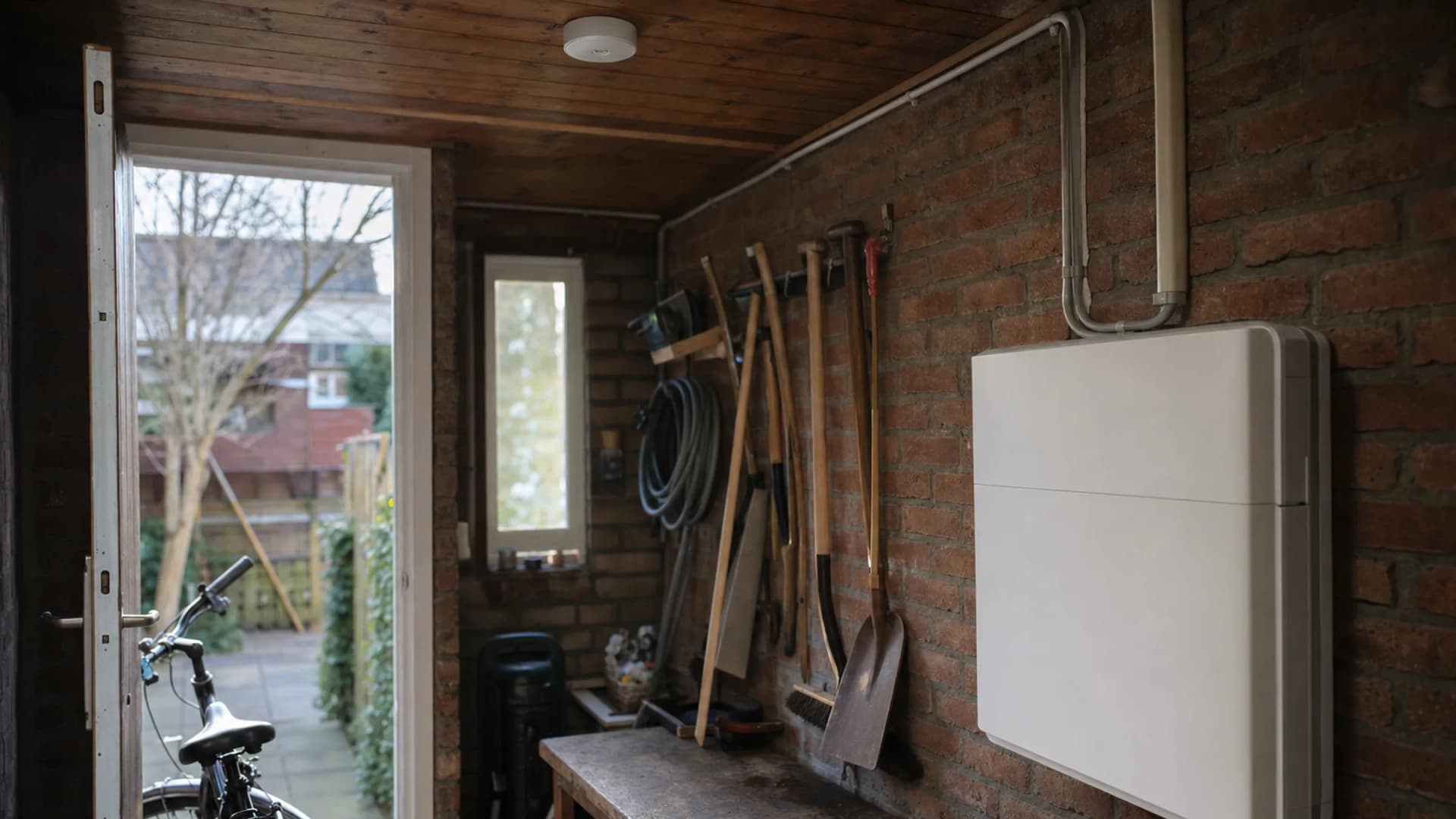
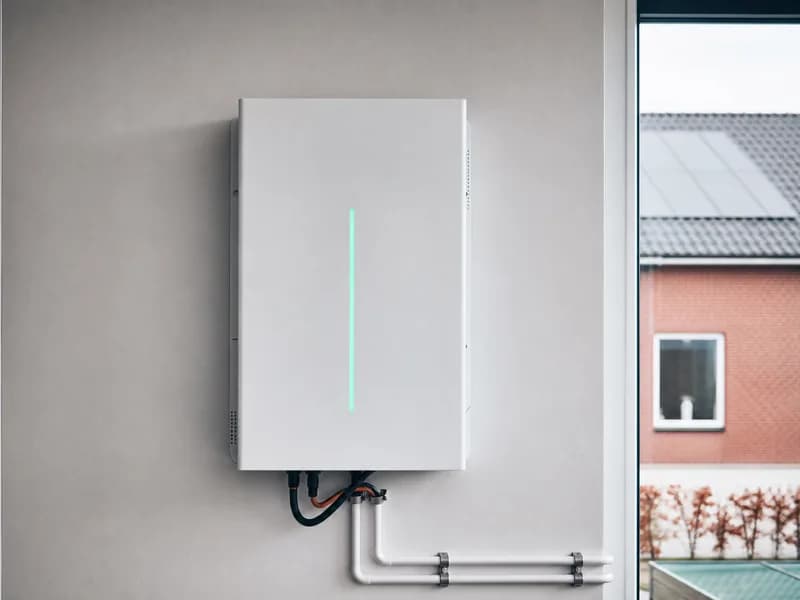
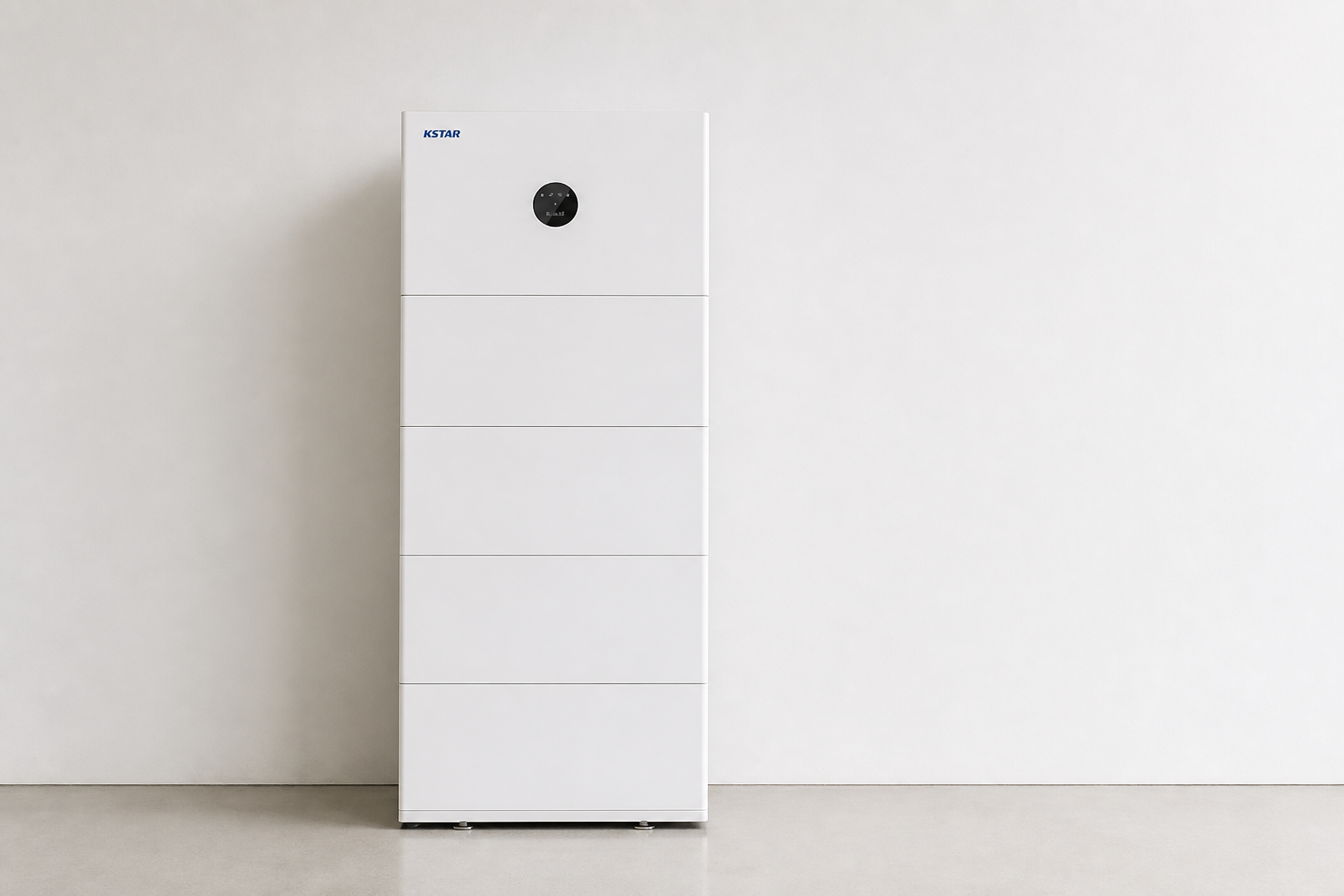
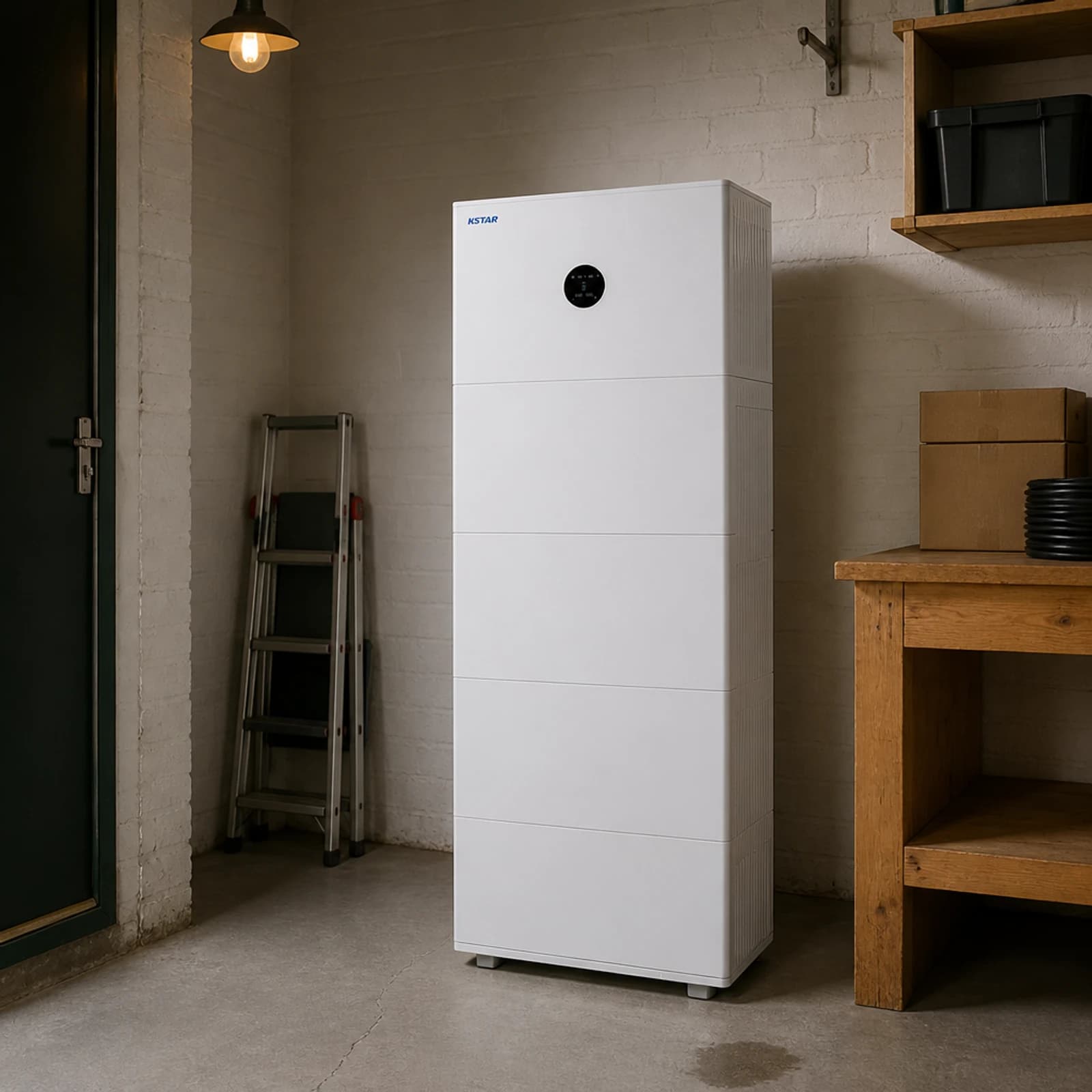
Store energy compactly. Use it smartly when you need it. The KSTAR BlueSpark is a compact home battery where the hybrid inverter and stackable battery modules form one system. Choose the storage that fits your home: SolarFast supplies BlueSpark with one to three battery modules, up to 15.36 kWh total battery capacity. Growing to a fourth module (20.48 kWh) later is possible too. Meanwhile BlueSpark automatically manages the energy flows between your solar panels, battery, home and the grid.
A good product is not yet a good energy system. You can buy a good battery and still size it wrong. Too small can mean you hit the limit quickly. Too large can mean you pay for capacity that is barely used. The wrong power rating can mean the system does not match what your home asks. That is why SolarFast does not only sell KSTAR. We look at the energy system around it: well chosen, well installed, well arranged.
There is quite a bit of technology behind a home battery. As a user you do not have to deal with that every day. BlueSpark is designed to store energy automatically and make it available again when your home needs it. We start with one to three modules, and the system can grow to four. That does not mean every home needs the maximum right away.
Use a larger share of the energy you generate at another moment of the day.
Inverter and battery are designed to work as one whole.
The battery is modular: we fit one to three battery modules, and you can expand to four later.
Watch through monitoring what the battery and your energy system are doing.

We first look at your energy profile, solar panels, and which module count plus 3.68 / 5 / 6 kW inverter fits. Then we mount, connect and configure the system, and walk you through the monitoring. No battery by gut feel. A configuration that matches your energy.
Each BlueSpark module is 5.12 kWh total and 4.6 kWh usable. We supply one to three modules: up to 15.36 kWh. Expanding to four modules (20.48 kWh) is possible later. Inverters 3.68, 5 or 6 kW. Larger is not automatically better.
| Capacity | Line | Connection | Backup | Steering | Price incl. VAT |
|---|---|---|---|---|---|
| 5.12 kWh1 module, 4.6 kWh usableInverter 3.68 / 5 / 6 kW | All-in-One | Single-phase | Depends on the install | Time-of-Use | from €5,990 |
| 10.24 kWh2 modules, 9.2 kWh usableInverter 3.68 / 5 / 6 kW | All-in-One | Single-phase | Depends on the install | Time-of-Use | from €7,200 |
| 15.36 kWh3 modules, 13.8 kWh usableInverter 3.68 / 5 / 6 kW | All-in-One | Single-phase | Depends on the install | Time-of-Use | from €9,075 |
| Capacity | Line | Connection | Backup | Steering |
|---|---|---|---|---|
| 3.68 kWE3.68KS-D22 | All-in-One | Single-phase | Depends on the install | Time-of-Use |
| 5 kWE5KS-D22 | All-in-One | Single-phase | Depends on the install | Time-of-Use |
| 6 kWE6KS-D22 | All-in-One | Single-phase | Depends on the install | Time-of-Use |
Starting prices include standard installation and 21% VAT, price level September 2026. If your meter cupboard needs work, that is listed separately in your quote. If you trade power with your battery, you can reclaim the VAT under conditions. Whether that works for you, you can see with the VAT refund check.
The BlueSpark is All-in-One: hybrid inverter on top, stackable battery modules below. The inverter handles energy from the solar panels and manages the link to battery, home and grid. Each module adds 5.12 kWh total battery capacity.
The BMS watches voltage, current and temperature, among other things. KSTAR says no external wiring is needed between modules. Cloud monitoring, local Bluetooth setup and remote firmware updates are included. The technology is in there. You mainly need to see what the system is doing.
Each BlueSpark battery module has 5.12 kWh total capacity and 4.6 kWh stated usable capacity. SolarFast supplies one to three modules: 5.12 / 10.24 / 15.36 kWh total. From two modules the usable figures are a direct sum of that 4.6 kWh per module. The Dutch product documentation specifies a maximum of four battery packs per system: start smaller and you can expand to four modules later, 20.48 kWh total.
Larger is not automatically better. A home battery has to match how much power you generate and use. We look at your solar panels, consumption, when you use power, your connection, any heat pump or EV, and what you want the battery to do.
Besides capacity you choose a hybrid inverter: E3.68KS-D22 (3.68 kW), E5KS-D22 (5 kW) or E6KS-D22 (6 kW). Capacity tells you how much energy you can store. Power rating tells you how much energy the system can handle or deliver at a given moment. Those are two different choices.
That is why we do not only advise how many kWh you need. We also look at which power rating makes sense for your home. SolarFast picks the combination of power and storage that technically fits the house.
Your energy goes where it is useful at that moment. By day your home uses the solar energy that is available right away. A surplus can go into the battery. In the evening, when your panels no longer produce enough, stored energy from the battery can be used.
With a suitable energy setting the battery can also charge at another chosen moment. KSTAR supports Time-of-Use for that, among other modes. During an outage, which circuits can be fed depends on how the install is set up. That is not a promise the whole house keeps running. More: backup power with a home battery.
From solar now to later
By day your home uses the solar that is there
A surplus can go into the battery
In the evening, power can come from the battery
KSTAR names Self Consumption, Peak Shaving, Time-of-Use and Battery Priority, among others. Self Consumption: solar energy to the home, a surplus can wait. Time-of-Use: the battery can follow set charge and discharge windows. Peak Shaving: catch short spikes in your use. Battery Priority: temporarily put charging first when the battery needs filling.
On a dynamic energy contract the electricity price changes through the day. With Time-of-Use, BlueSpark can charge or discharge on pre-set windows. The battery gives the technical basis to plan when to charge and discharge. Not: the battery always automatically buys the cheapest power and always sells it at the dearest moment. That depends on energy steering, settings, supplier and any extra software.
If you take a dynamic contract with Frank Energie, or already have one, we can link the battery to it. Frank is not the default on this page.
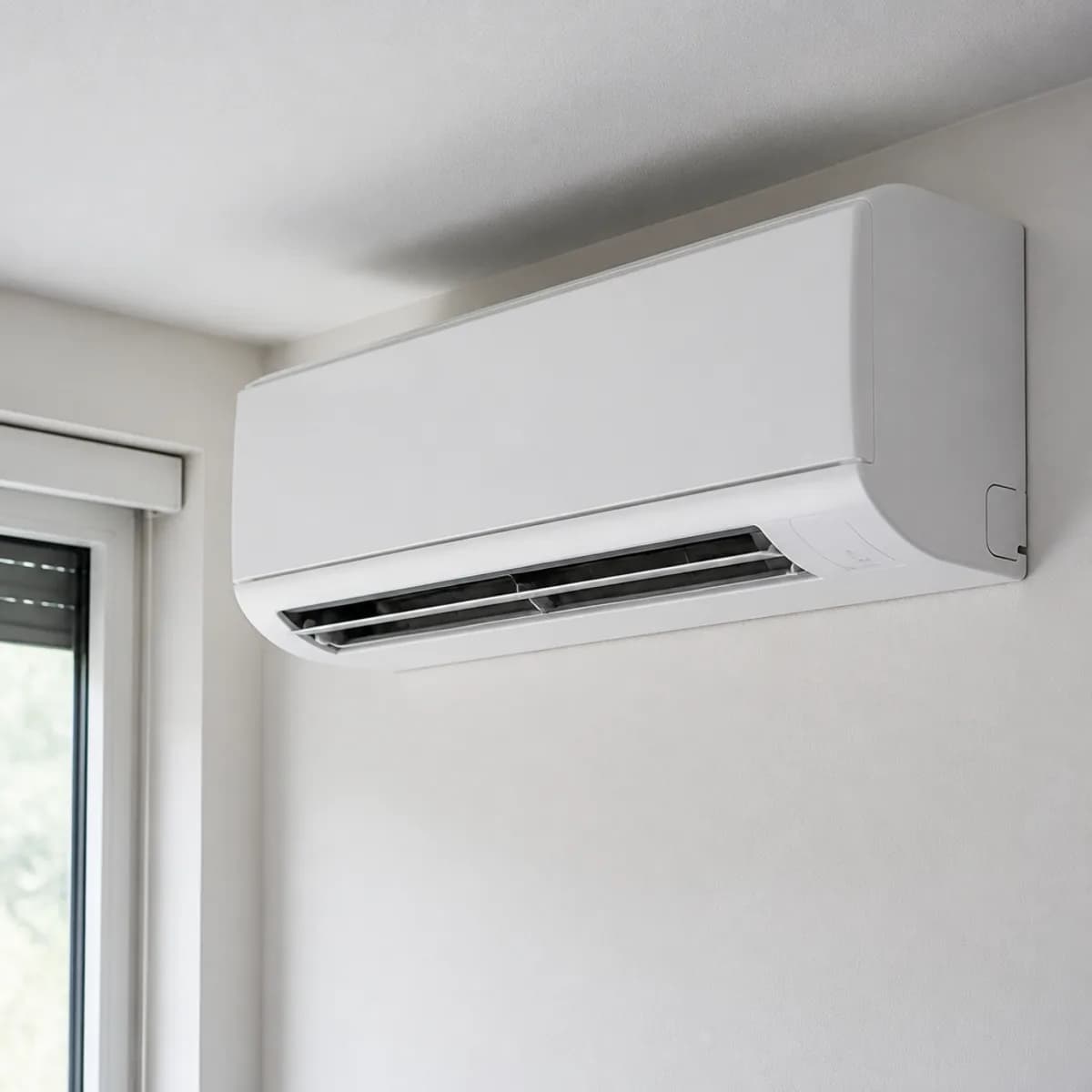
KSTAR states BlueSpark is SG Ready Heat Pump compatible. A heat pump can be one of the larger electricity users in a home. With a suitable SG Ready link, an energy system and heat pump can exchange information to organise energy use more smartly.
Compatibility depends on the heat pump model, the configuration and the install. Not every heat pump works automatically with KSTAR.
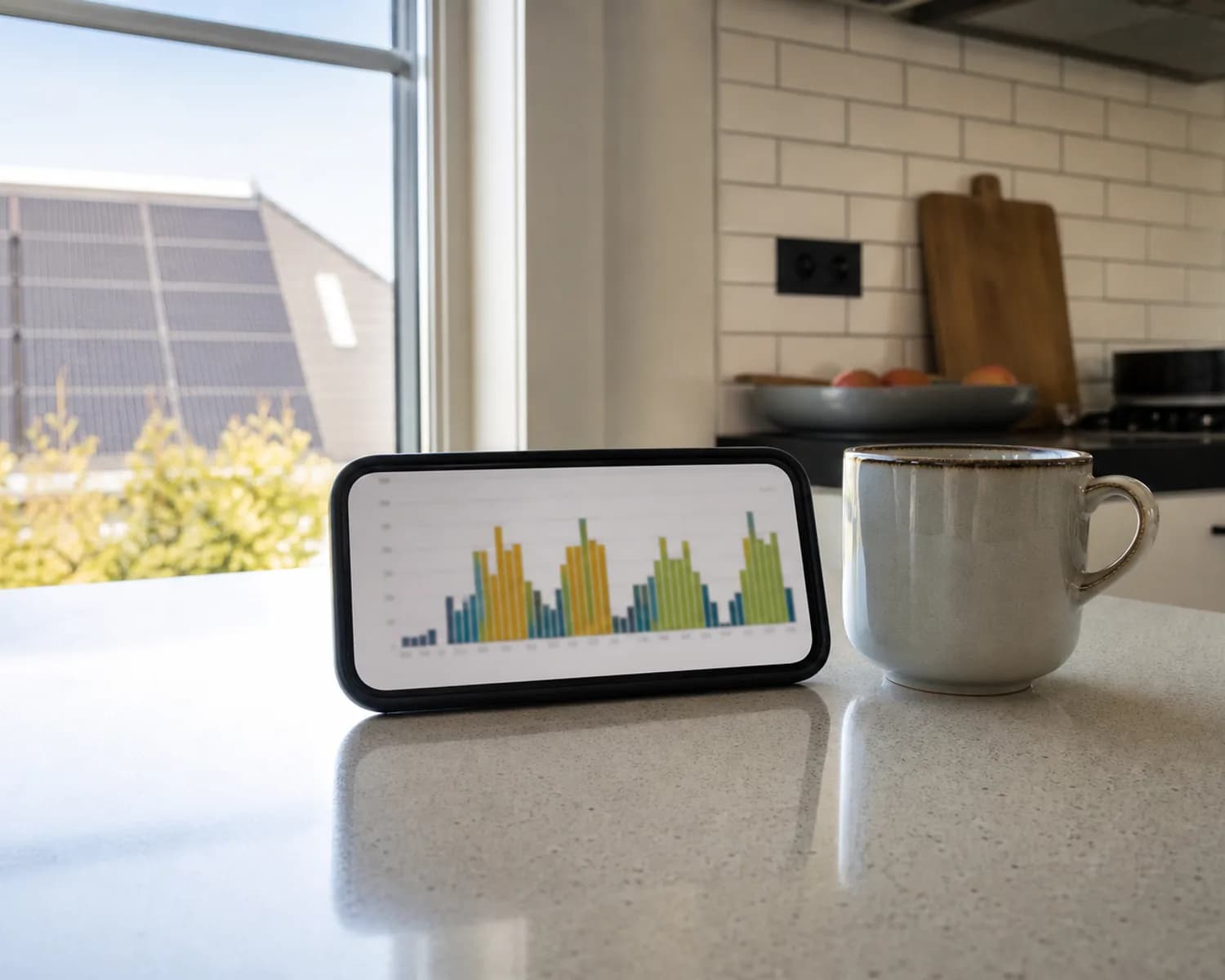
With KSTAR monitoring you can follow the energy system digitally: how full the battery is, what your panels produce, what the home uses, and whether everything is running normally. KSTAR names 24/7 cloud monitoring, Bluetooth commissioning and remote firmware updates. That runs through KSTAR Sync, not an invented SolarFast app.
BlueSpark uses LFP / LiFePO4. In the datasheet SolarFast received, KSTAR names EVE and CATL as used or optional cell brands. The BMS measures system voltage, current, battery voltage, battery temperature and electronics temperature, among other things. Per the datasheet the battery is IP65, the hybrid inverter IP66.
The inverter can be fitted with optional AFCI protection to detect arc faults on the PV side.
A well-installed home battery normally needs little periodic maintenance. BlueSpark has no traditional motor that needs yearly servicing, no oil to change and no standard wear part that needs a fitter every year. That is why SolarFast does not require a yearly maintenance contract for the home battery.
Keep the install clean, the area clear, and do not block ventilation or clearance. Glance now and then for visible damage or alerts. The BMS watches continuously. A software update is not a maintenance visit: a fitter does not normally need to come for that. If a problem appears, that is service, not periodic maintenance.
For battery module BP48100P1-G2 / BP48100PF1-G2, KSTAR names 5 years product warranty and 10 years performance warranty. Exact cover, performance conditions, use limits and exclusions follow the applicable KSTAR warranty terms. That is not 10 years full warranty on everything.
Inverter warranty is not in the BlueSpark datasheet we received. We confirm that via the Dutch supplier or the current warranty terms, not as a figure on this page.
Per the maker, BlueSpark supports on-grid and off-grid uses. That does not automatically mean every standard install keeps the whole house running. Up front we decide which circuits matter, how much power those appliances ask and which configuration that needs.
Think internet, lighting, fridge and other selected appliances. A whole house with heat pump, induction cooking and other large loads asks for a different backup strategy. We design backup beforehand. Not only when the power drops. Explainer: backup power with a home battery.
The datasheet names IEC/EN 62619, UN38.3 and UL1973 for the cells, among others. Inverter documentation names European grid and safety standards. Current BlueSpark datasheets, manuals, warranty terms and KSTAR Sync documentation sit in KSTAR's Dutch download centre.
Each battery module has a total capacity of 5.12 kWh. SolarFast supplies this version with one to three modules: 5.12, 10.24 or 15.36 kWh total. Expanding to four modules (20.48 kWh) later is possible.
KSTAR states 4.6 kWh usable capacity per battery module.
The BlueSpark system is modular and, per the Dutch product documentation, supports a maximum of four battery packs. At SolarFast you start with one to three modules and can expand later, up to four modules (20.48 kWh). Whether an existing install can be expanded later must always be checked technically before extra modules are fitted.
The version this SolarFast page covers is a single-phase All-in-One system with 3.68, 5 and 6 kW inverters.
Yes. KSTAR also has a separate three-phase BlueSpark product family. We only add that to the SolarFast range once it is confirmed SolarFast actually sells it.
BlueSpark uses LiFePO4 / LFP battery technology.
The datasheet we received names EVE / CATL.
BlueSpark supports a Time-of-Use operating mode. Charge and discharge windows can be set that way. Exact automation with dynamic tariffs depends on the configuration and links in use. If you take a dynamic contract with Frank Energie, or already have one, we can link it. Frank is not the default.
KSTAR states BlueSpark is SG Ready Heat Pump compatible. The actual link depends on the heat pump model and the install.
Yes. BlueSpark supports cloud monitoring and KSTAR uses its KSTAR Sync platform and app for that.
A well-installed BlueSpark normally needs little periodic maintenance. Keep the install clean and clear and watch for visible issues. The battery is also watched continuously by the BMS.
No. SolarFast does not require you to pay yearly for standard battery maintenance when that is not technically necessary.
Then it is service. SolarFast can assess what is going on and start the warranty or service path where needed.
Per KSTAR the battery module has 5 years product warranty and 10 years performance warranty, under the applicable terms. That is not 10 years full warranty on everything. We do not put an inverter warranty figure on this page until the Dutch supplier confirms it.
Per the datasheet the battery is IP65 and the inverter IP66. Actual placement must always meet the installation instructions and the conditions on site.
Want to read more on this topic? Go deeper in our knowledge base.
Pair your battery with solar panels or a dynamic contract and you get even more from smart energy at home.
Independently certified