
Buy a home battery in 2026 or wait until 2027?
Posted on 10 min read
Should you buy a home battery before 2027? A date table of what changes on 1 January 2027, what is still a proposal, and when waiting makes more sense.
All articlesThere is no need to rush. With solar panels you can still use net metering up to and including 31 December 2026: what you export, you offset against what you draw. A home battery adds little to that. After that net metering ends and every kWh you use yourself counts. On a home battery you pay 21 percent VAT and there is no national subsidy. Pick the moment that suits your situation. This article is about timing, not about what a battery costs or earns. For that, read what a home battery costs and which home battery suits your usage. The date table below lists per topic what changes and when. What else changes on your energy bill in 2027 is in Energy bill 2027: what changes.
Does a home battery still earn anything before 1 January 2027?
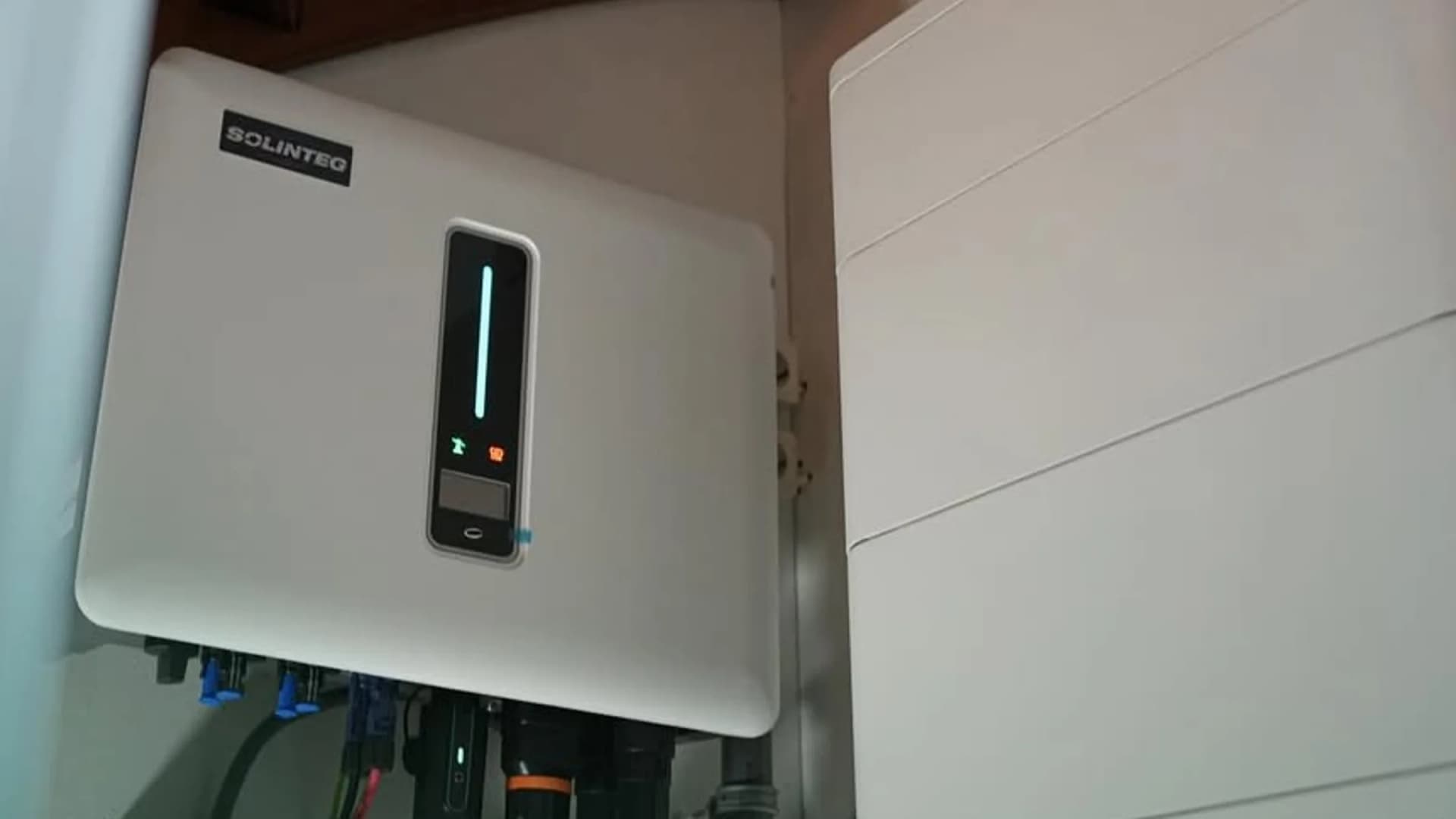
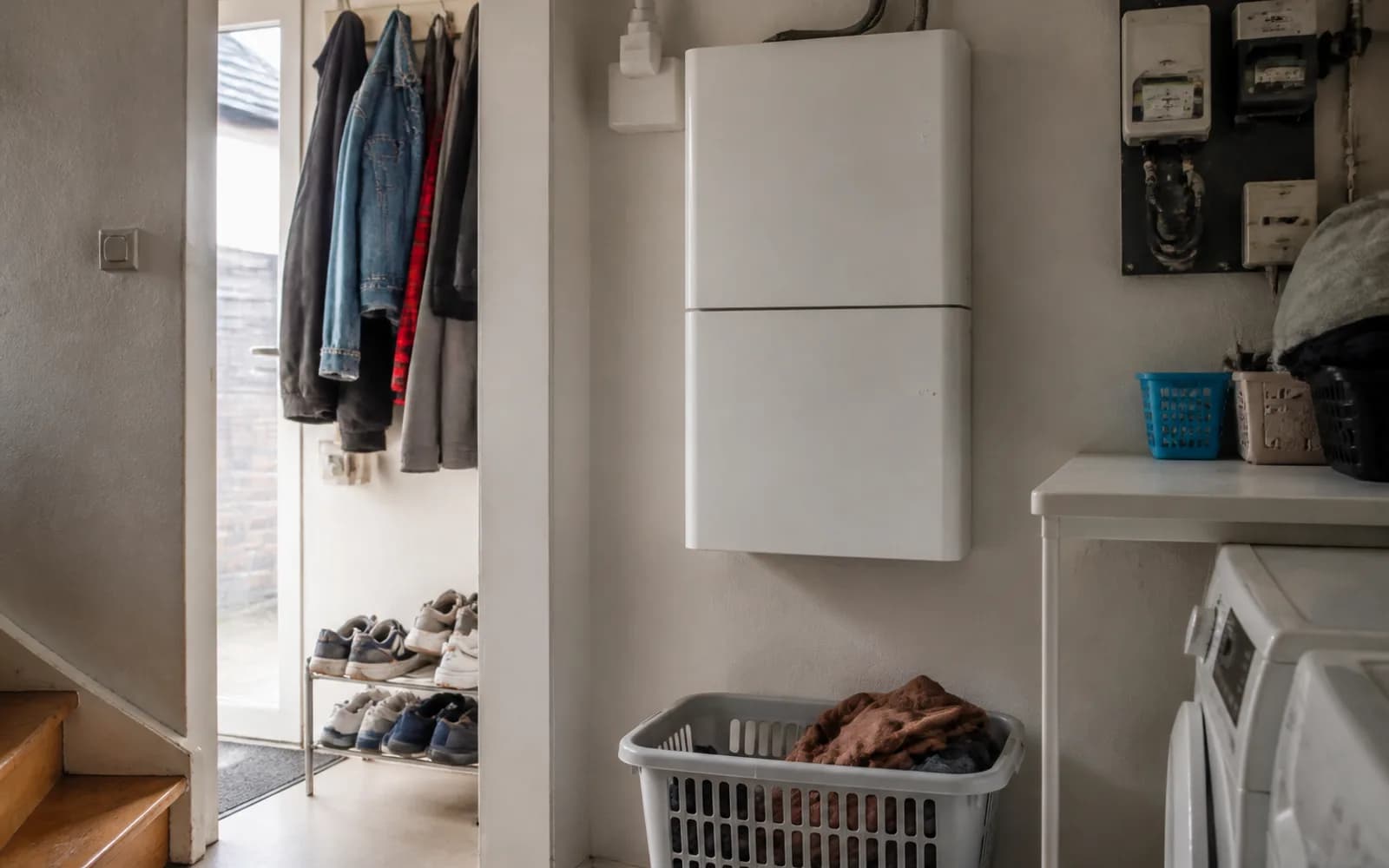
 Smart home battery
With solar panels: little. Net metering applies up to and including 31 December 2026. What you export, you offset on your annual bill against what you draw, and for that offset power you pay no energy supply costs, grid costs or energy tax. A kWh you export is then worth about the same to you as a kWh you store and use later. That holds as long as you do not export more than you draw in a year: for the surplus you receive a payment. What a battery can still save is the feed-in costs many suppliers charge. This is our reading of the rule, not a figure from the source.
In winter there is little to store: 10 solar panels generate about 2.5 kWh on an average December day, while an average home battery stores about 6 kWh. That is far too little to fill it.
If you have no solar panels, you have no own generation to offset. What a battery earns then mainly depends on your contract and on price differences. If it feeds grid power back, double energy tax also plays a part (see the table). That is covered in battery without panels: what changes in 2027.
What changes on 1 January 2027? The date table
Position on 25 October 2026. Proposals and announcements are labelled as such in the table; the sources are listed at the bottom.
| When | What changes | Status | What it means for your battery |
|---|---|---|---|
| Up to and including 31 December 2026 | Net metering: what you export, you offset against what you draw, with no tax on the offset part. | Applies now | With solar panels a battery adds little. |
| 1 January 2027 | Net metering ends in one go, the cabinet decided not to phase it out earlier. For export you receive a payment of at least 50 percent of the bare supply tariff, until 2030. Feed-in costs may only be costs the supplier actually incurs to process the power. | Decided, takes effect on 1-1-2027 | Every kWh you use yourself counts. Read net metering ends in 2027. |
| 1 January 2027 | Your bill must also show feed-in costs in euro per exported kWh. This applies to households and micro-enterprises. | Adopted (Staatscourant, 1 September 2026), takes effect on 1-1-2027 | That lets you check what exporting costs you. More on feed-in costs. |
| From 1 January 2027 | If your battery charges power from the grid and later feeds it back to the grid, you pay energy tax when charging and do not get it back when feeding in: double energy tax. If you charge with your own solar power, or use stored grid power yourself, this does not happen. | Applies from 1-1-2027. The cabinet is looking into whether the double charge can be removed and will inform the House of Representatives on progress before the end of 2026. A fix has not been promised. The 2027 Tax Plan bill (proposal, not yet law) contains no measure for it. | Mainly affects you if you trade grid power. Read when you pay energy tax twice. |
| VAT | On a home battery you pay 21 percent VAT. Reclaiming it is only possible if you buy and sell power with the battery and meet the conditions of the Dutch tax authority. On 5 October 2026 the cabinet wrote that a zero rate for home batteries would require a change to the EU VAT directive. The 2027 Tax Plan bill (proposal, not yet law) contains no zero rate for home batteries. | Applies now | On this position the bill contains no VAT cut. See VAT refund on a home battery. |
| ISDE (national subsidy) | The ISDE covers heat pumps, solar boilers, insulation and ventilation, among others. A home battery is not on the list, and the intended changes for 2027 do not mention one either. | Applies now. ISDE 2027 is intended, not final. | There is no national subsidy to wait for. See subsidy for a home battery. |
| Province of Flevoland, early 2027 | Flevoland reopens applications for its own home battery subsidy in early 2027. The maximum number of applications for 2026 has been reached. | Scheme applies. Opening date not yet known. | Do you live in Flevoland? See below for what to know. |
| Grid tariffs | The ACM is assessing the grid operators' tariff proposals for 2027 and will decide in November 2026. For time-dependent grid tariffs for small connections the ACM wants 1 January 2029 as the start date, and takes a final decision in early 2027. | 2027: proposals, decision in November 2026. 2029: draft decision, a proposal. | The cabinet writes that time-dependent grid tariffs improve the earning options for home batteries. Read the new grid tariffs from 2029. |
A proposal or announcement means nothing has been decided yet. Check the sources at the bottom for the current position.
Will a home battery get cheaper if I wait?
Probably a bit, but nobody can say how much. On 5 October 2026 the cabinet wrote that the market is developing strongly partly thanks to rapidly falling battery prices. Purchase costs will probably fall in the coming years. We did not find a neutral forecast of how much cheaper and when, so we name no percentage.
Whether a home battery pays for itself depends on more than the purchase price. The sum works out more often when several things count: own use after net metering, less export at a lower payment and fewer feed-in charges, a dynamic contract or trading, and sometimes the VAT refund. On savings on your power bill alone, an average battery rarely pays for itself. Waiting for a lower price can be an honest choice if your sums do not work today. Put your own numbers side by side: how much power you generate in the daytime and use in the evening, what your supplier charges in feed-in charges and which type of contract you have. Then decide.
Will there still be a subsidy or lower VAT?
Nationally there is no subsidy and no lower VAT, according to the sources of 25 October 2026.
- VAT: on a home battery you pay 21 percent. The cabinet writes that a zero rate would require a change to the EU VAT directive, which the Netherlands cannot introduce alone. The 2027 Tax Plan bill contains no zero rate for home batteries. It is a proposal, not yet law; that can change during parliamentary debate.
- National subsidy: no national subsidy is given on a home battery, and the ISDE does not list it.
- Province of Flevoland: its own scheme, with a new round in early 2027. See the next heading.
- Municipalities: we could not check municipal schemes, because there is no national source for them. Look on your municipality's website.
More on the current state of play in home battery subsidy: state of play.
I live in Flevoland: what should I know?
The province gives a subsidy on a home battery. The maximum number of applications for 2026 has been reached. In early 2027 you can apply again. The province has not named an opening date yet. Under the detailed rules (Dutch):
- you receive 25 percent of the costs excluding VAT, with a minimum of €750 and a maximum of €1,250 per application;
- those costs excluding VAT must be at least €3,000;
- the meter cupboard, a change to your connection, solar panels and VAT do not count;
- the battery must store between 5 and 20 kWh gross and you have solar panels, or recently bought them;
- €875,000 is available for applications in 2027, split equally between homeowners and tenants up to and including 30 June 2027, and it goes in order of complete applications;
- you can apply up to and including 1 October 2027, or until the money runs out;
- your invoice and proof of (down) payment must not be dated before 1 January 2026.
An application is complete with, among other things, a quote and proof of (down) payment. You can apply before or after installation. After approval the battery must be installed within six months, and it must mainly serve your own use of solar power. Trading is allowed, but not in the peak hours the scheme names. Have your documents ready when the province opens.
Is there a reason to decide before 1 January after all?
For the battery itself we found no scheme with a cut-off date of 31 December 2026. For a heat pump there is one, if you are considering that too. In its intended changes RVO writes that the subsidy amount for air-to-water heat pumps falls from €225 to €120 per kW from 2027. If you buy the heat pump by 31 December 2026 and have it installed in 2027, a transitional rule with the 2026 amount applies under that intention. That is still a proposal and not final. Read more in ISDE subsidy for a heat pump.
If you plan both, decide on the heat pump first and then choose the battery size on your new usage.
Milieu Centraal also names reasons that are not about money: becoming a bit more independent of the grid and using more of your solar power yourself. A battery does not make you self-sufficient, though, because you still need a grid connection.
When is waiting smarter?
- Your usage is going to change. A battery should cover your evening and night usage, and not be too big. If you add a heat pump or an electric car, that usage changes. Choose the size once you know what your usage looks like.
- You mainly want to trade grid power. Then wait for the cabinet's progress report on double energy tax, due before the end of 2026. A fix has not been promised: the cabinet first looks at whether it is technically possible and whether it is worth the extra complexity.
- You live in Flevoland. You can only apply once the province opens the 2027 round. Keep an eye on the province's website.
How to take it from here
- Look up your usage. Your energy bill shows what you have exported. You measure evening and night usage with a P1 meter in your meter cupboard.
- Choose the size on that usage. Not too big. Read which home battery suits your usage.
- Put your numbers side by side. What a battery costs is in what a home battery costs. Want to think it through for your situation? Book an advice call.
Conclusion
For the battery itself there is no deadline on 31 December 2026. What changes is what your own stored power is worth: from 1 January 2027 net metering ends. There is no lower VAT and no national subsidy to wait for, and a fix for double energy tax has not been promised. Pick the moment that suits your usage and your planning.
Not sure which size suits you? Read which home battery suits your usage, have a look at our home batteries or book your advice call.
Read more
- Net metering until 31 December 2026, then a payment of at least 50 percent of the bare supply tariff until 2030: Dutch government, net metering ends in 2027 (Dutch)
- Feed-in costs also in euro per exported kWh on the bill from 1 January 2027: Staatscourant 2026, 28208 (Energieregeling amendment) (Dutch)
- When double energy tax arises and when not, research and progress report before the end of 2026, time-dependent grid tariffs: House of Representatives, answer to parliamentary questions (23 September 2026) (Dutch)
- Solution for double energy tax after 2026, weighing burdens and feasibility: House of Representatives, cabinet letter on the 500-rule approach, point 13 (8 October 2026) (Dutch)
- Progress report to the House before the end of 2026 on double energy tax research: House of Representatives, written answers on the 2027 Tax Plan debate (16 October 2026) (Dutch)
- Zero VAT rate for home batteries needs a change to the VAT directive, rapidly falling battery prices: House of Representatives, annex on motions on grid congestion (5 October 2026) (Dutch)
- No home battery, no zero VAT rate, no double energy tax measure in the proposal: Dutch government, 2027 Tax Plan bill (15 September 2026, proposal) (Dutch)
- 21 percent VAT on a home battery: Dutch tax authority, VAT rate for solar panels (Dutch)
- Conditions to reclaim VAT on a home battery, energy tax from 1 January 2027: Dutch tax authority, home battery and VAT (Dutch)
- ISDE measures for homeowners (no home battery): RVO, ISDE for homeowners (Dutch)
- Intended ISDE changes from 2027, heat pump €225 to €120 per kW and transitional rule: RVO, ISDE: what changes from 2027? (Dutch)
- Subsidy amounts, conditions, budget and application period Flevoland: Province of Flevoland, detailed rules for the home battery subsidy (CVDR750157) (Dutch)
- Applications for 2026 no longer possible, reopening in early 2027: Province of Flevoland, home battery subsidy (Dutch)
- Decision on 2027 grid tariffs in November 2026: ACM, tariff proposals of grid operators for 2027 (7 October 2026) (Dutch)
- Time-dependent grid tariffs from 1 January 2029, final decision in early 2027: ACM, draft code decision for small connections (8 October 2026) (Dutch)
- No national subsidy, average battery 6 kWh, December yield, payback, sizing: Milieu Centraal, home battery (last changed 28 September 2026) (Dutch)
- Slim Handelen steers a home battery automatically on a dynamic contract: Frank Energie (partner), Slim Handelen (Dutch)
Get more out of your own power. Four things to watch for, even as net metering ends
Your energy use
Planning to drive, cook or heat electrically? Factor that into how many panels you install now.
Spread the yield
Spread panels across roof faces so you generate through the day and use more of your own energy.
Your data
Ask your installer where your system's data is stored and which parties have remote access.
Boost your energy
A smart home battery stores today's power for later, so you use more of your own electricity after sunset.

We install your home battery
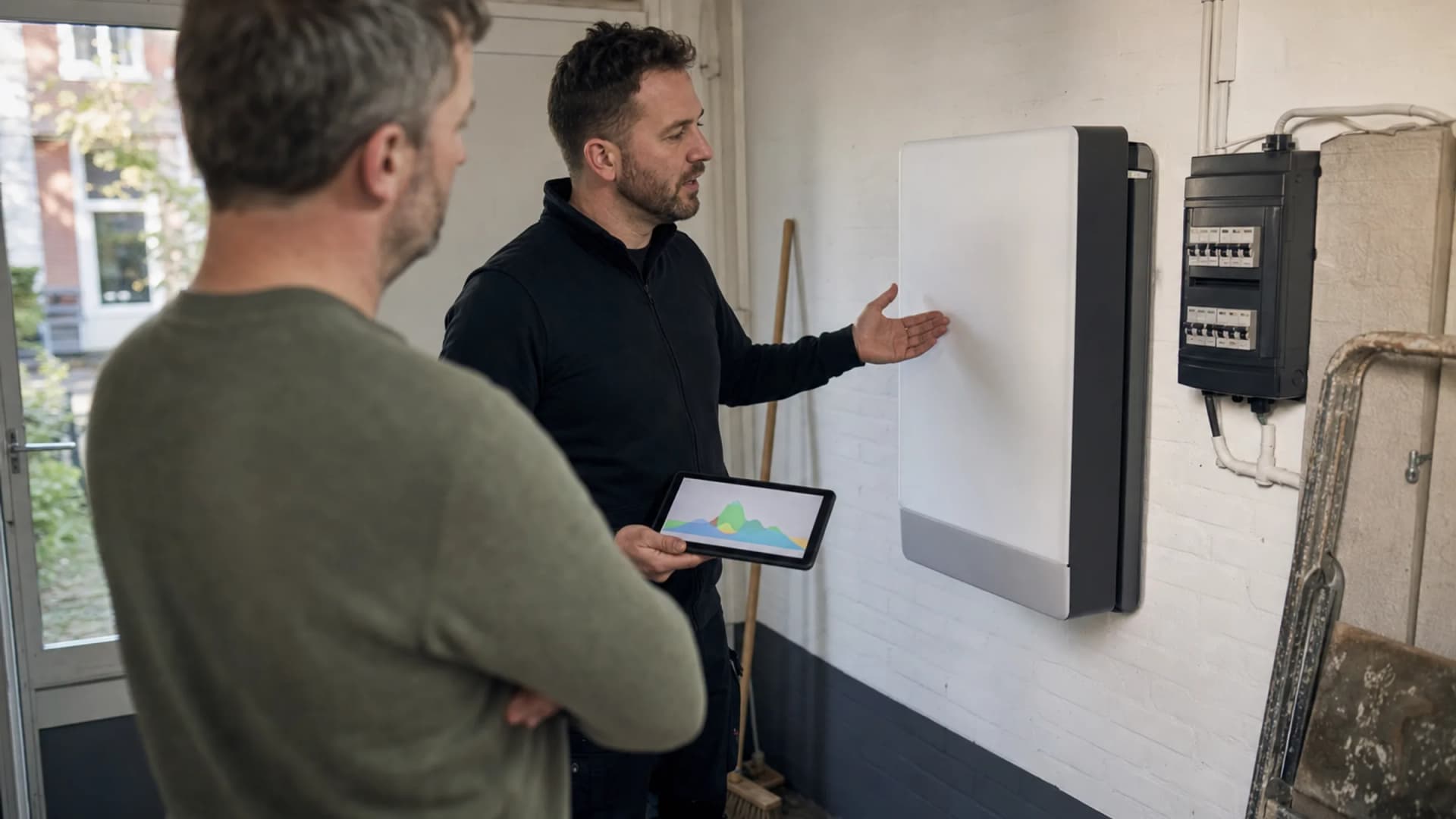
Usually within three weeks. Our installers fit the battery neatly and safely by your fuse box. We leave your home clean and make sure you know exactly how it all works.
- Charge smart when power is cheap
- Keep power until you need it
Frequently asked questions
No, we found no reason to. Up to and including 31 December 2026 you can use net metering, and with solar panels a battery then adds little. A VAT or subsidy deadline that affects your battery is not in the sources of 25 October 2026. Plan the installation for the moment that suits your situation.
With solar panels, little. With net metering your exported power is offset against your use, with no tax on the offset part, so storing earns about the same as exporting. What a battery can still save is the feed-in charges and, with a dynamic contract, the gap between a low and a high power price. On savings on your power bill alone, an average battery rarely pays for itself.
Maybe a bit. The cabinet writes about rapidly falling battery prices and Milieu Centraal expects purchase costs to probably fall in the coming years, but nobody knows how much or when. According to the sources of 25 October 2026, lower VAT is not part of it.
Not on 25 October 2026. On a home battery you pay 21 percent VAT. The cabinet writes that a zero rate would require a change to the EU VAT directive, which the Netherlands cannot introduce alone, and the 2027 Tax Plan bill (a proposal, not yet law) contains no zero rate for home batteries. You can only reclaim VAT if you buy and sell power with the battery and meet the conditions of the Dutch tax authority.
Not nationally: the ISDE does not list a home battery, nor do the intended changes for 2027. The province of Flevoland reopens applications in early 2027, with a maximum of €1,250 per application. For a municipal scheme, look on your municipality's website.
Only if your battery charges power from the grid and later feeds it back to the grid. Then from 1 January 2027 you pay energy tax when charging and do not get it back when feeding in. If you charge with your own solar power, or use stored grid power yourself, you do not pay twice. The cabinet is looking into whether the double charge can be removed and will inform the House of Representatives on progress before the end of 2026. A fix has not been promised.

Discover what smart energy can do for you
In about an hour you get insight into your savings, the options for your home and when the investment pays back. Straightforward, honest advice so you know exactly where you stand.
Smart energy at home
- Upgrade your home with our smart battery
- Solar panels matched to your roof and usage
- A heat pump to minimise your energy use
- Charge your electric car easily at home with an EV charger
Booking an advice call is easy
Fill in your details below. Within a day we will contact you to schedule a no-obligation advice call together.
Related articles