Net metering ends 1 January 2027: what now
Posted on Updated on 5 min read
Net metering ends, what now? On 1 January 2027 you can no longer offset export against draw. You get a feed-in payment; this is what changes on your bill.
All articles
Net metering ends on 1 January 2027. Until then your supplier still offsets exported solar against what you draw on the annual bill. For everyone with solar panels the maths change noticeably after that. No reason to panic: below is what you can still arrange now. In this article we cover when that is, what your annual bill looks like until the end of 2026, what changes from 2027 and what you can still arrange smartly this year. The full explanation of the scheme itself is in our knowledge base on net metering.


When does net metering end?
 Solar panels
Net metering ends on 1 January 2027. Up to and including 31 December 2026 you still net meter in full: every kilowatt-hour you export is offset on the annual bill against a kilowatt-hour you draw, up to at most your annual draw. Including energy tax and VAT.
The government deliberately chose not to phase it down gradually: full net metering until end 2026, none after. From 1 January 2027 you pay for everything you draw from the grid, and receive a feed-in payment from your supplier for everything you export.
Until end 2026: how your annual bill works now
An example makes it concrete. Say you use 2,200 kWh per year and your panels generate 3,400 kWh. You use 1,100 kWh directly while the sun shines; that power never passes the meter. So you draw 1,100 kWh from the grid and export 2,300 kWh.
While the net metering scheme applies, your supplier offsets that 1,100 kWh of draw entirely against your export. For the 1,200 kWh you export beyond that, you receive a feed-in payment. On balance you pay almost nothing for power: only standing charges and any feed-in charges.
From 2027: what changes on your bill
From 1 January 2027 you will see three differences on your annual bill:
| Item | Until end 2026 | From 2027 |
|---|---|---|
| Draw | Offset against export, up to your annual draw | Pay in full, including tax |
| Export | Offset first, then a payment for the surplus | Everything via a feed-in payment, with a legal floor |
| Feed-in charges | Separate, if your supplier charges them | Stay allowed as a separate item |
The floor of 50 percent of the bare supply rate applies at least until 2030.
1. You pay for your draw in full. The 1,100 kWh from the example is no longer offset; you pay your normal supply rate on it, including energy tax and VAT. 2. Your export is paid separately. For all 2,300 kWh you receive a feed-in payment. From 2027 a legal floor applies: at least 50 percent of the bare supply rate, until at least 2030. Per kilowatt-hour that payment is well below what drawing power costs you, because your draw also carries taxes. 3. Feed-in charges remain a separate item. Many suppliers charge costs for processing exported power, and that remains allowed after 2027. How those charges work and what to do about them is in our explainer on feed-in charges.
The core: from 2027, exporting earns much less than drawing costs. Every kilowatt-hour you use yourself instead of exporting is then worth the difference between your full supply rate and the net payment.
Do solar panels become unprofitable now?
No. The power you use directly while your panels generate never passes the meter, so it remains worth your full electricity rate, also after 2027. What changes is the centre of gravity: the gain will no longer sit in exporting, but in self-consumption.
If you align your usage well with the sun, your return holds up fine. Payback does take longer without net metering than in the old situation, but how much depends on your usage pattern, your tariff and your system. That is why our quotes calculate with your figures, not last year's assumptions.
Net metering ends, what now?
You can still prepare your household. Four steps that make the difference:
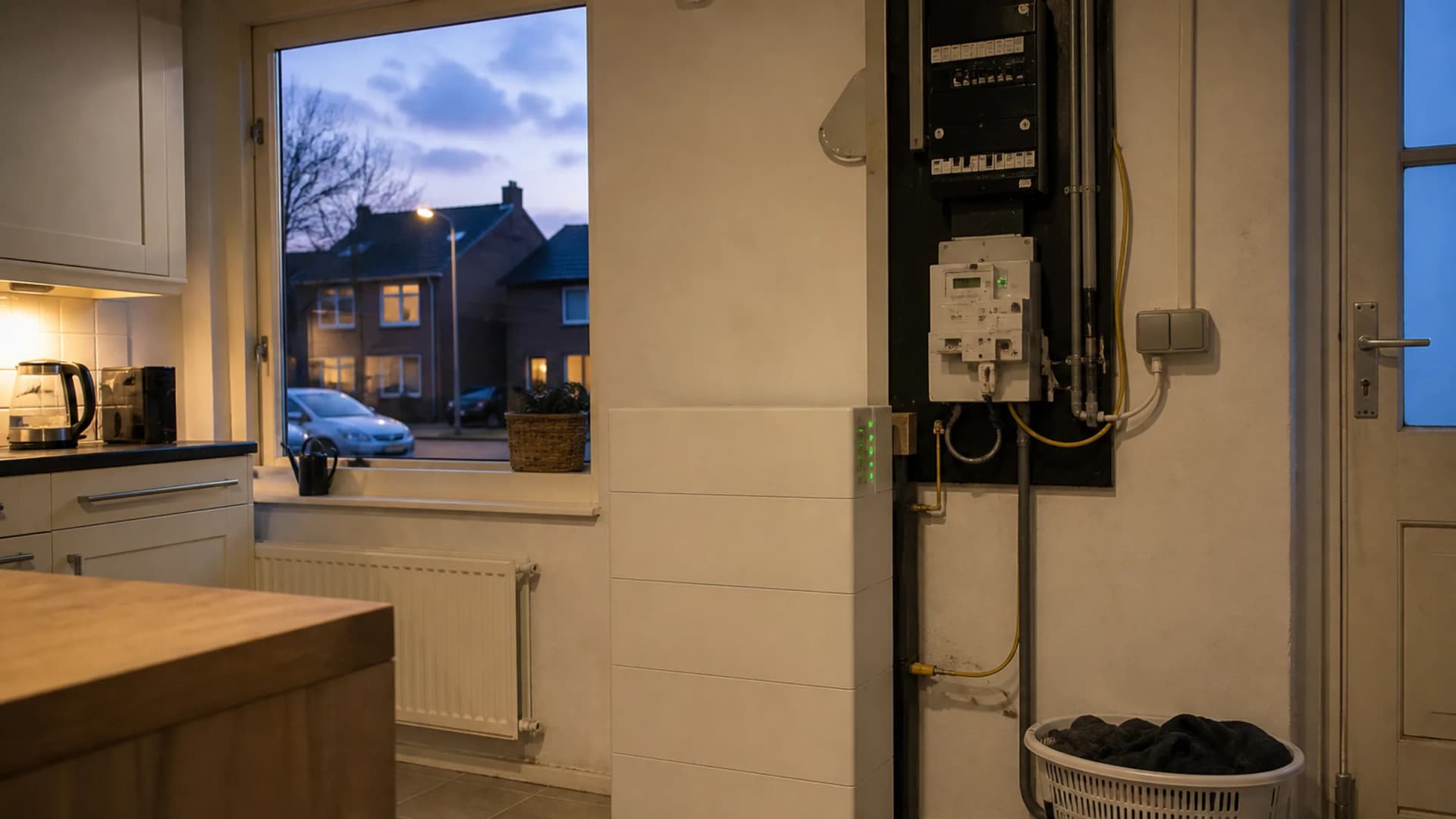
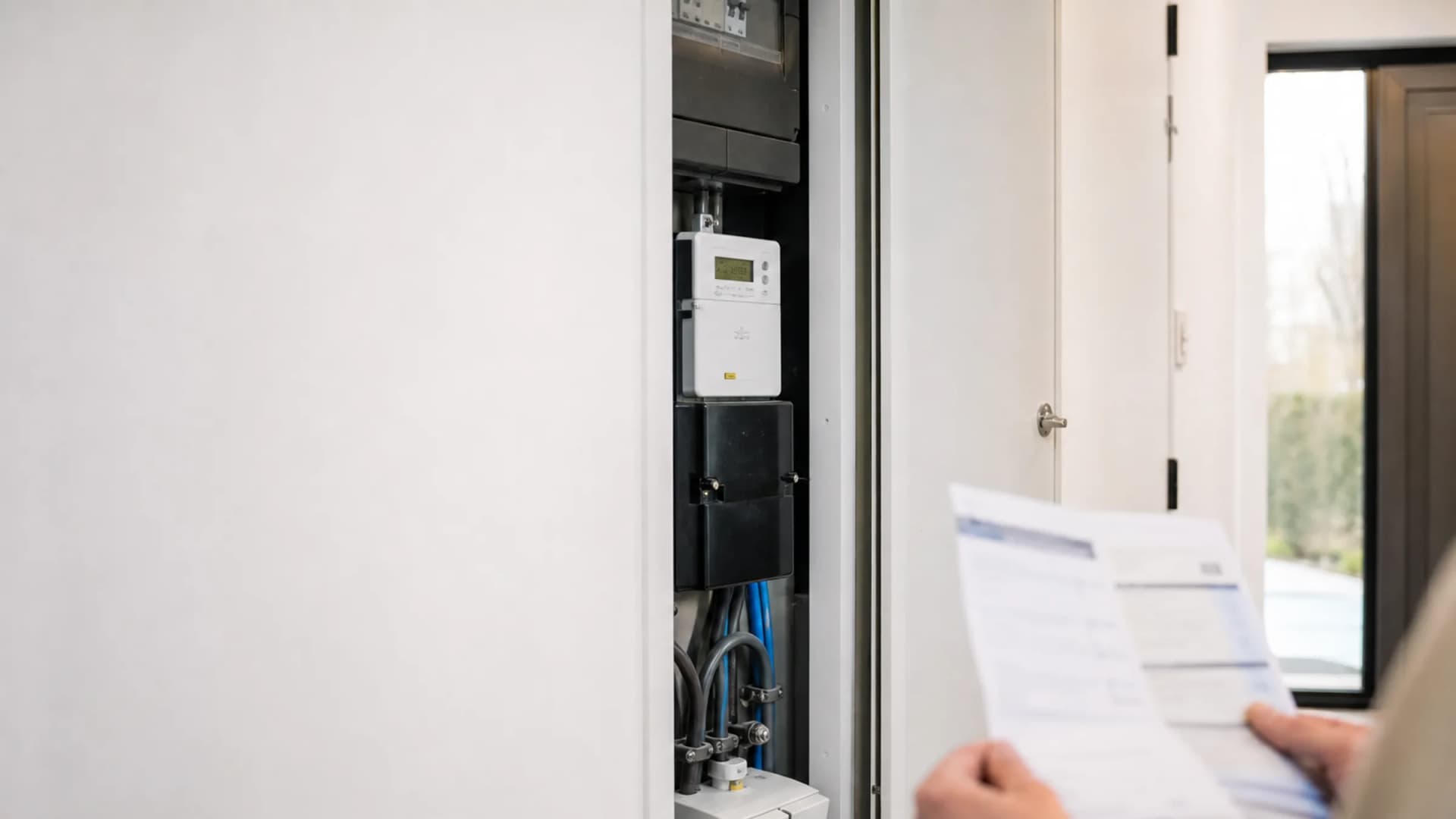
1. Shift usage to the solar hours. Running the washing machine, dishwasher and boiler during the day costs nothing and raises your self-consumption immediately. How to approach that, including automatically, is covered in smart home energy management. 2. Get a home battery calculated. A battery shifts your midday surplus to the evening and becomes structurally more valuable from 2027. The full trade-off is in our comparison with or without a home battery. No panels? Then the stop is not a reason to buy a battery; that case stays a price game. 3. Check your energy contract. What feed-in payment do you get, what feed-in charges do you pay, and does a fixed or dynamic contract suit your generation better? 4. Check your meter. A smart meter that records draw and export separately is the basis for a correct bill, and for any smart steering after that.
Conclusion
Net metering ends on 1 January 2027, in one step. Your annual bill changes from offsetting to two separate items: full payment for draw, a payment for export. Solar panels remain worthwhile, but the focus shifts to self-consumption. If you start aligning with that now, you will notice it sooner on the new bill.
Do you let out homes with solar panels? For rental homes with an energy performance fee (EPV) the end of net metering cuts deeper: the government wants to lower the EPV rates per 2027. What that means for housing associations and landlords is covered in our article on the proposed reduction of the EPV rates.
Considering a home battery with your panels, or want to know whether your system is ready for the new situation? Put your situation to us and we will calculate what changes for you.
Read more
Solar panels are still a smart investment in 2026. A few things matter if you want the most from your own power.
Your energy use
Planning to drive, cook or heat electrically? Factor that into how many panels you install now.
Spread the yield
Spread panels across roof faces so you generate through the day and use more of your own energy.
Your data
Choose a system with its own 4G connection and data storage in Europe so your information stays secure.
Boost your energy
A smart home battery stores today's power for later, so you use more of your own electricity after sunset.

We install your solar panels in a day
We can often start within three weeks. A day later your panels are on the roof and everything is connected. We leave your home clean and make sure you know exactly how it all works.
- Use more of your own power during the day
- 0% VAT makes the investment even more attractive

Discover what smart energy can do for you
In about an hour you get insight into your savings, the options for your home and when the investment pays back. Straightforward, honest advice so you know exactly where you stand.
Smart energy at home
- Upgrade your home with our smart battery
- Our solar panels deliver up to 25% more energy
- A heat pump to minimise your energy use
- Charge your electric car easily at home with an EV charger
Booking an advice call is easy
Fill in your details below. Within a day we will contact you to schedule a no-obligation advice call together.
Related articles