A size that fits
Five versions from 7.1 to 21.31 kWh. We do not default to the smallest. Size follows your use, panels and what you want the battery to do.

Leave your details for an advice call. We will look at what suits your home and needs together, with no obligation.
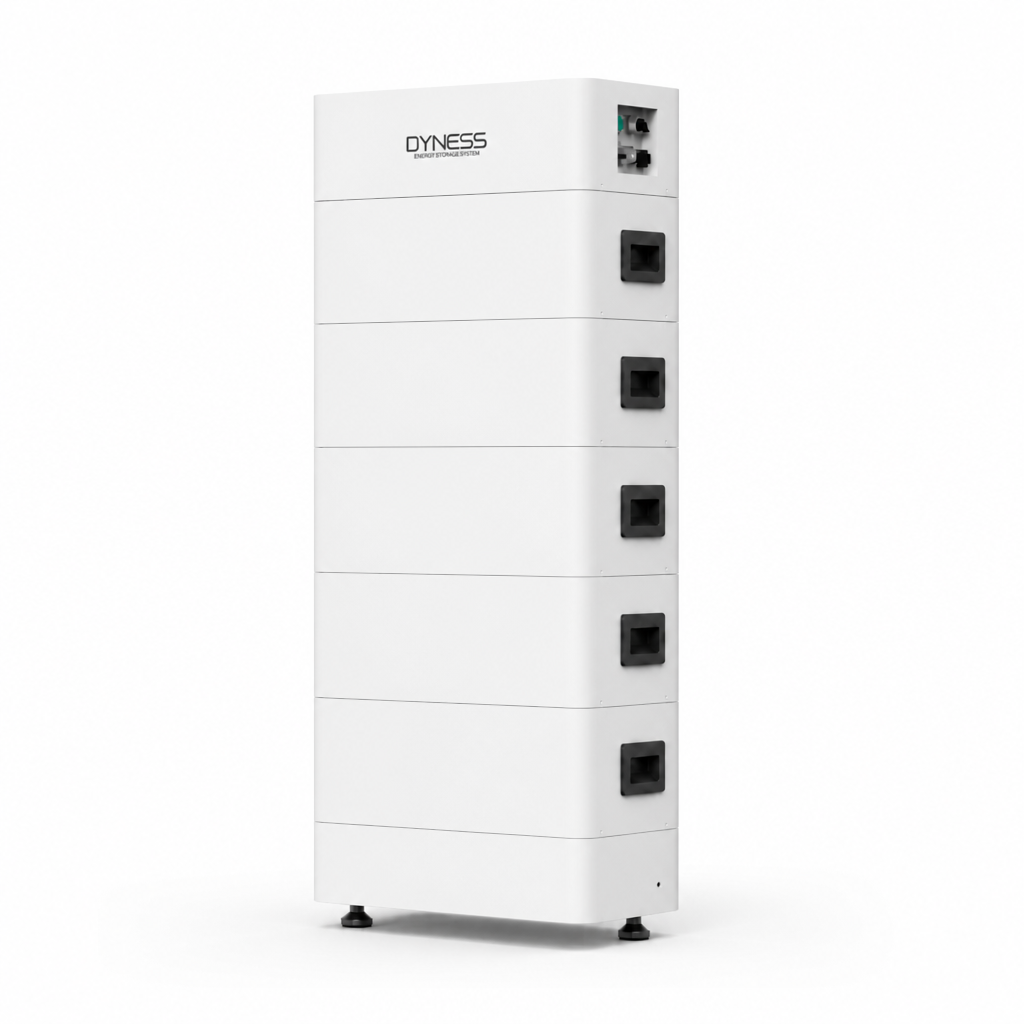
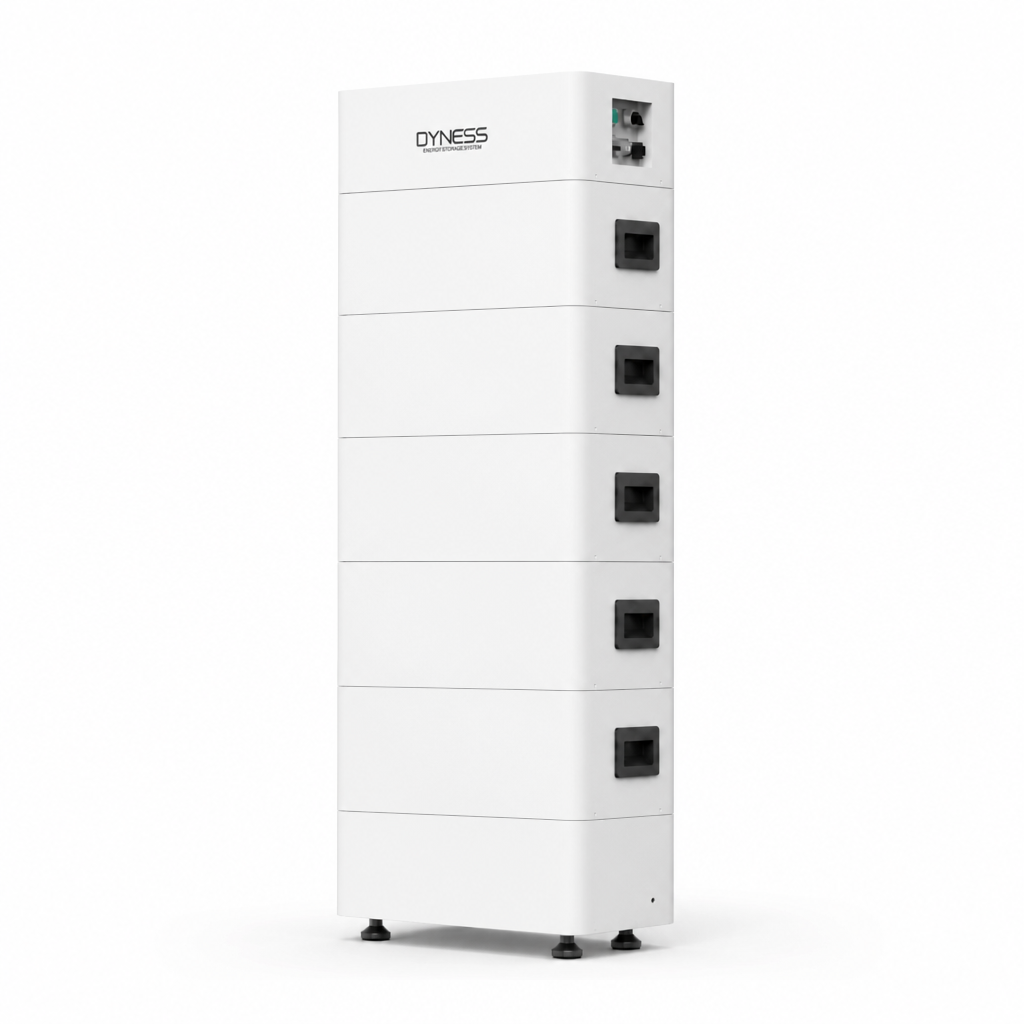
Store energy in the size that fits your home. The Dyness Tower S3 is a modular high-voltage home battery you build from separate battery modules. From 7.1 kWh to 21.31 kWh per tower, in five versions. The tower is the storage: we couple a matching hybrid inverter to it. We install it on three-phase. Steering runs through Smart Grid One, not through a direct Frank Energie app.
With Dyness you are not only buying a number of kWh. How it works follows from the battery, the hybrid inverter, the settings and how we connect it. We check whether the size matches your use and whether the inverter is officially matched to the tower. Good parts only become an energy system when they work together.
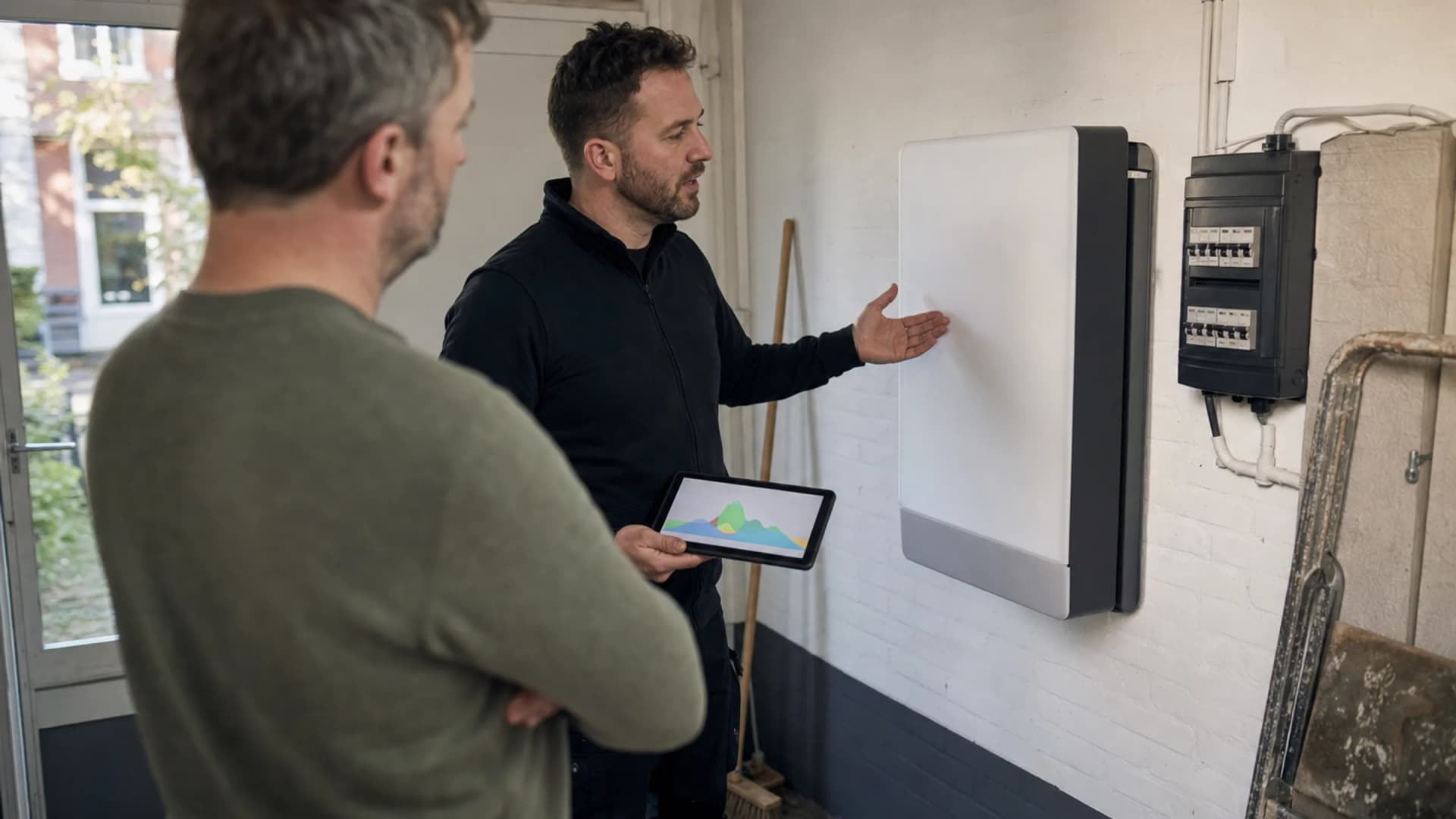
Because Tower S3 has no built-in hybrid inverter, we choose two things: tower size and inverter. First we look at your solar panels, fuse box and connection. If you already have a hybrid inverter, we check whether your exact model is on the matching list.
Five versions from 7.1 to 21.31 kWh. We do not default to the smallest. Size follows your use, panels and what you want the battery to do.
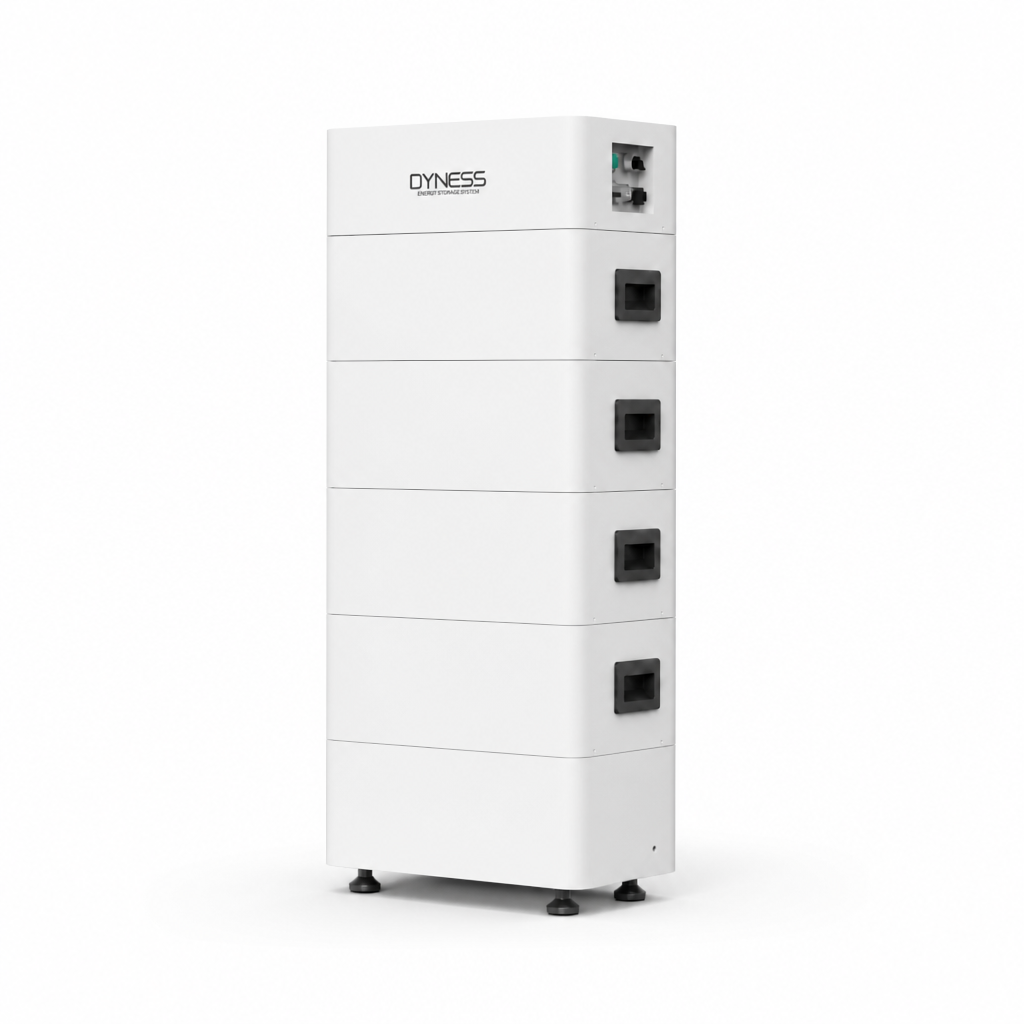
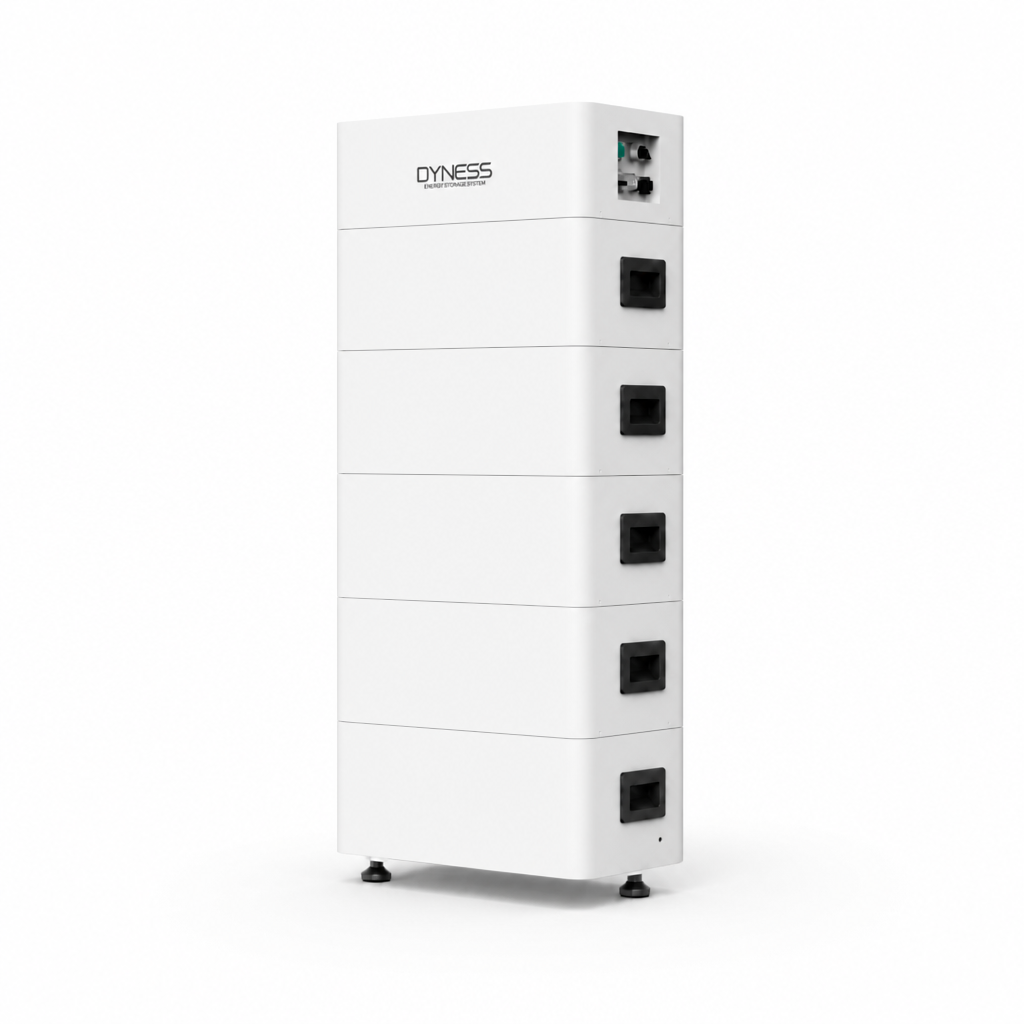
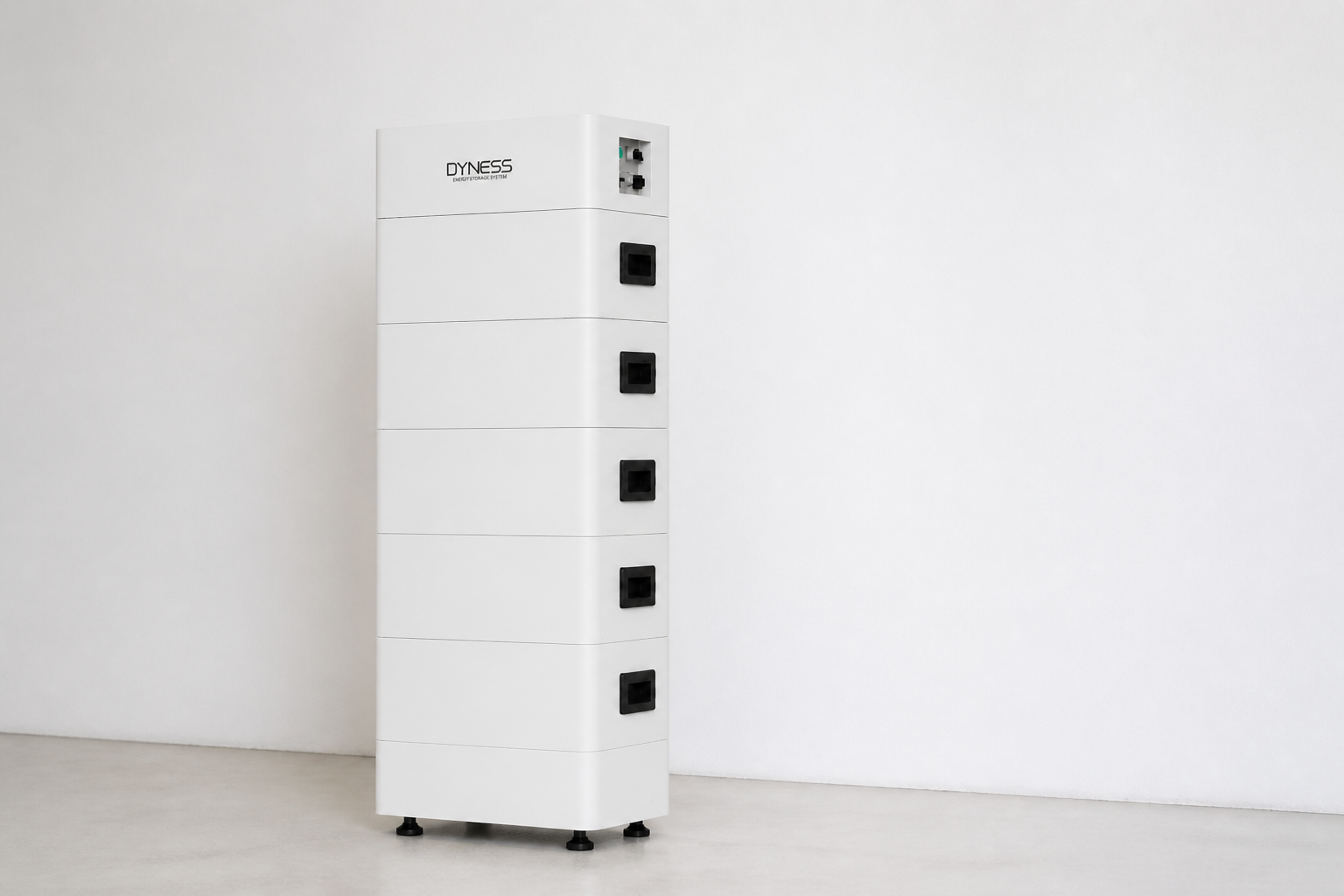
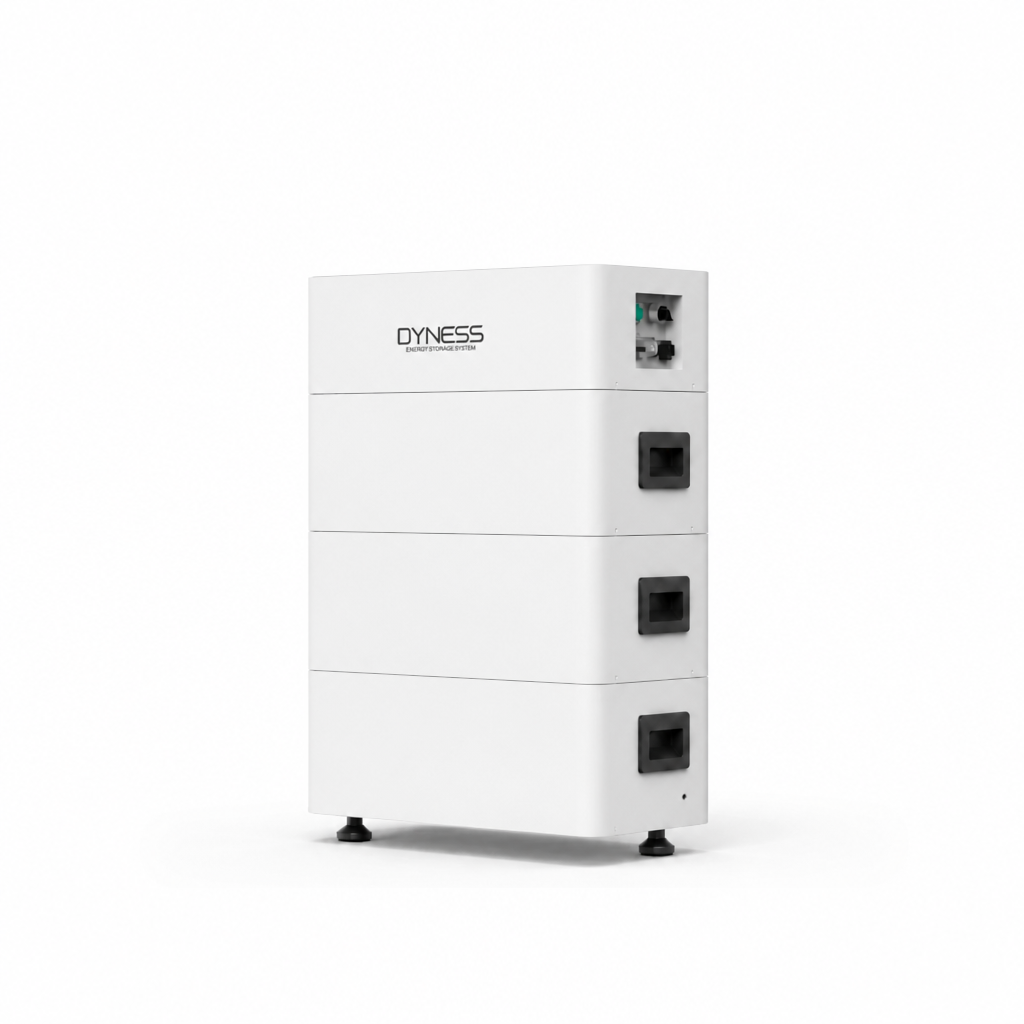
More storage means more modules in the same vertical stack. Width and depth stay 504 x 380 mm. Not a row of separate cabinets.
Battery and hybrid inverter are two parts. You are not automatically locked to a built-in inverter. Which combination fits, we check.
A well-fitted battery needs little periodic maintenance. We do not require a yearly contract because that is how it is done. A fault is service, not a maintenance visit.

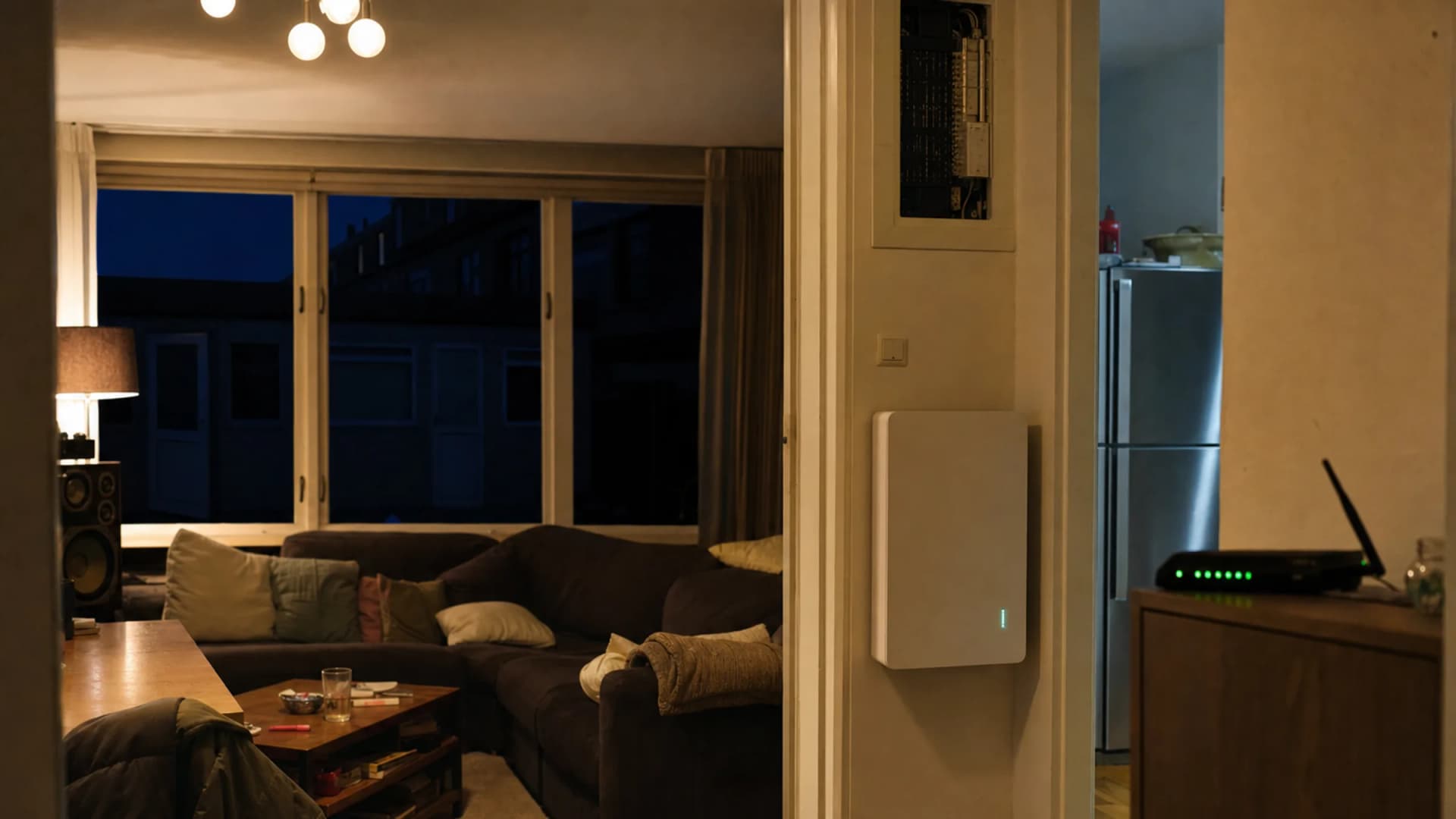
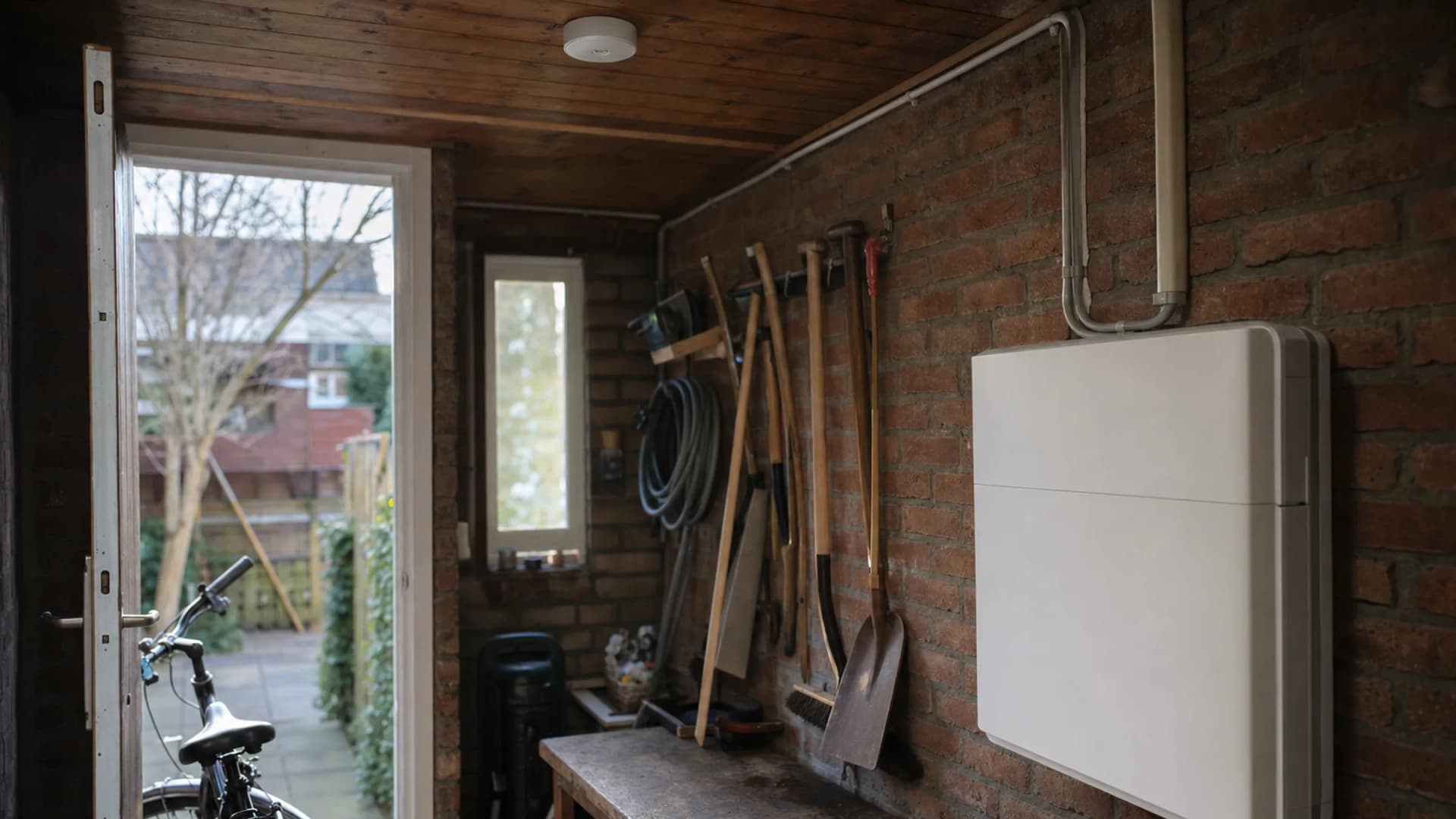
We fit the floor-standing tower, couple the hybrid inverter and set up Smart Grid One. The spot follows from temperature, clearance, cables and where the inverter sits. Outdoors is not the default, even though IP54 is on the sheet.
Five tower sizes on three-phase. 7.1 kWh is two modules, 21.31 kWh is six. Usable energy sits a little below the nominal figure, from the recommended 95% depth of discharge.
| Capacity | Line | Connection | Backup | Steering | Price incl. VAT |
|---|---|---|---|---|---|
| 7.1 kWh | Hybrid | Three-phase | No | Smart Grid One | from €6,655 |
| 10.66 kWh | Hybrid | Three-phase | No | Smart Grid One | from €7,563 |
| 14.21 kWh | Hybrid | Three-phase | No | Smart Grid One | from €8,470 |
| 17.76 kWh | Hybrid | Three-phase | No | Smart Grid One | from €9,378 |
| 21.31 kWh | Hybrid | Three-phase | No | Smart Grid One | from €10,285 |
Starting prices include standard installation and 21% VAT, price level September 2026. If your meter cupboard needs work, that is listed separately in your quote. If you trade power with your battery, you can reclaim the VAT under conditions. Whether that works for you, you can see with the VAT refund check.
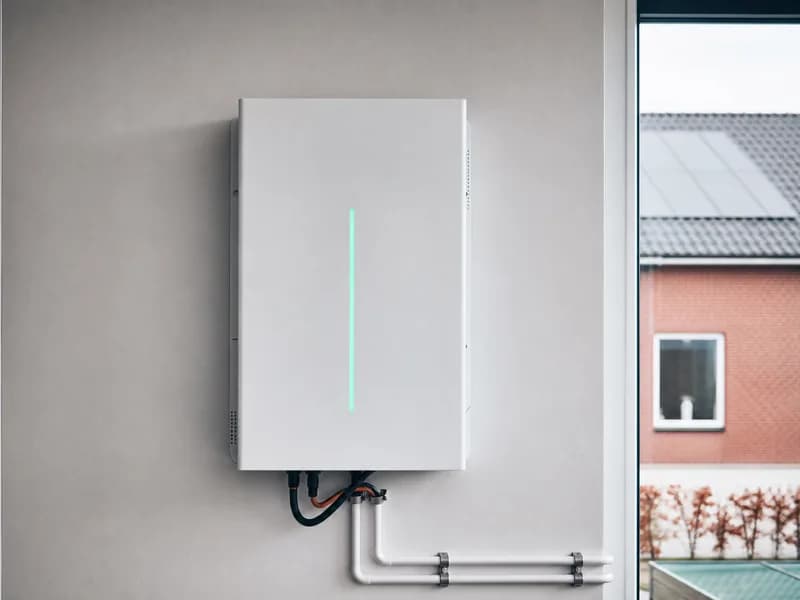
On some home batteries the pack and hybrid inverter sit in one cabinet. On the Tower S3 it is different: the tower is the storage. We couple a matching hybrid inverter to it. We fit it on three-phase, by the fuse box or in a plant room.
You are not automatically locked to a built-in inverter. Which brand and model fits your tower is not yours to work out. We check that against the matching list. Compatibility is for specific models, not every unit of that brand.
Tower plus inverter
Tower S3 is the storage
We couple a hybrid inverter to it
We check the model on the matching list
The range is TS7 to TS21: 7.10 / 10.66 / 14.21 / 17.76 / 21.31 kWh nominal. Two to six modules, the same footprint, the tower gets taller. Usable at 95% depth of discharge: 6.745 to 20.245 kWh.
The largest battery is not automatically the best. How much storage makes sense depends on your use, panels, when you use power, and whether a heat pump or EV is in the mix. Up to twelve towers in parallel, up to 255.72 kWh. That is for larger buildings, not what we put in a home.
By day you use the solar power that comes in. What is left can go into the tower. In the evening, when the panels do less, that stored energy can go back to the house. Between panels, battery, home and grid sits the hybrid inverter: that moves the energy.
Whether and when the battery charges from the grid follows from the inverter, the settings and the EMS. With us that steering runs through Smart Grid One, not a direct Frank Energie app link. HyxiPower and KStar we do link to Frank if you take their dynamic contract or already have one.
From solar now to later
By day you use the solar power that comes in
What is left can go into the tower
In the evening that energy can go back to the house
Backup is not a property of the battery alone. Whether outage cover is available, and how much power, depends on the hybrid inverter we pair and how the system is connected. Tower S3 does not have that built in as standard.
If you want circuits to stay on as a product line with outage cover in the cabinet, look at KStar ALL-IN, HyxiPower ALL-IN or Sungrow PowerHarbor. What backup power does and does not do: backup power with a home battery.
If you already have solar panels, we check which inverter is there now and whether it fits a battery. If you already have a hybrid inverter, we check your exact model on the matching list. On a new system we match battery and inverter from the start.
The matching list includes brands such as GoodWe, Solis, Deye, SAJ, Hoymiles and Solinteg. That is not a promise that every unit of those brands works. We only fit a combination that is officially matched. Monitoring runs through the energy system we install: no separate Dyness app when the inverter software is the interface.
Tower S3 is floor-standing. IP54 covers indoor and outdoor on paper. IP54 does not mean put it anywhere outside. Temperature, clearance, access, cables and inverter position all count.
Charge from 0 to 50 °C, discharge from -10 to 50 °C. We pick the spot that is technically sound, not only where it is least visible. Outdoors is not the default.
Documents
The full Tower S3 specifications and the Dyness user manual. Both documents are in English.
Five versions: TS7, TS10, TS14, TS17 and TS21. Nominal capacity runs from 7.10 to 21.31 kWh. Usable at 95% depth of discharge: from 6.745 kWh on the TS7 to 20.245 kWh on the TS21.
No. Tower S3 is the storage. We couple a matching hybrid inverter to it. All-in-one with the inverter in the same cabinet is a different line, such as Sungrow PowerHarbor or KStar ALL-IN.
The battery can be part of a backup system, but outage cover depends on the hybrid inverter and how we connect it. That is not built into the tower as standard. For circuits that must stay on, look at HyxiPower ALL-IN or KStar ALL-IN. Explainer: backup power with a home battery.
No. Steering runs through Smart Grid One. HyxiPower and KStar do have a direct Frank Energie link if you take their dynamic contract or already have one.
No. We install this line on three-phase. For single-phase look at KStar ALL-IN or HyxiPower hybrid.
Within one tower the range grows to six modules (21.31 kWh). Whether we can add a module later in your setup depends on the existing modules, the inverter and the maker's conditions. Twelve towers in parallel is the maker max, not our home range.
IP54 covers indoor and outdoor on paper. We pick a dry, reachable spot that meets the instructions. Outdoors is not the default.
A battery can often be added to existing panels. The exact solution depends on the inverter already there and the connection. We check that first.
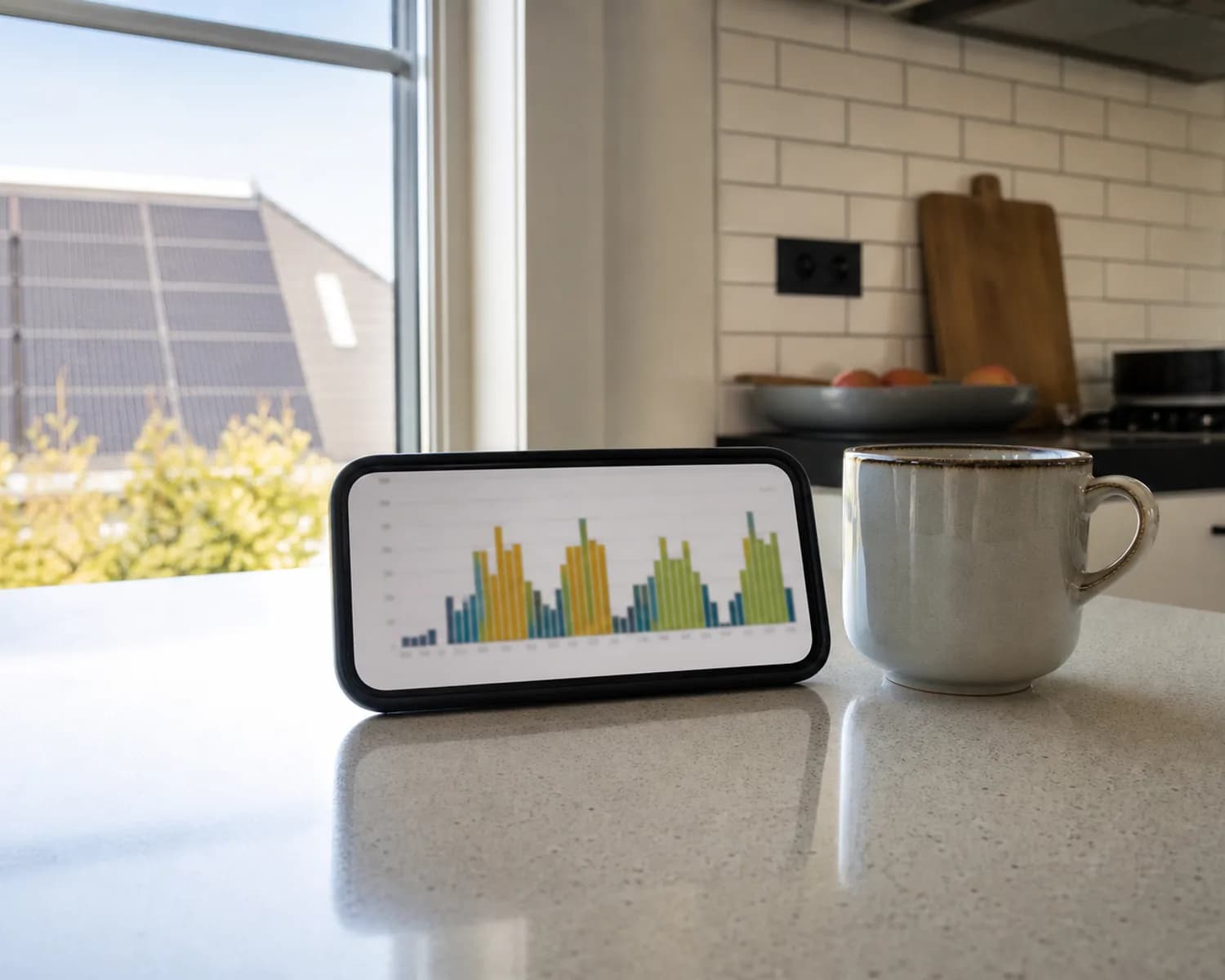
Monitoring, remote control and software updates depend on the inverter and the configuration. We do not promise a separate Dyness app when the inverter software is the environment.
No. SolarFast does not require a yearly maintenance contract for the battery. Keep the install clean and clear. If something breaks, that is service, not a maintenance visit.
The price depends on tower size, the hybrid inverter, the EMS and installation. Request a quote and we size that set for your home. Our starting prices per capacity, including VAT and standard installation, are on what a home battery costs.
Want to read more on this topic? Go deeper in our knowledge base.
Pair your battery with solar panels or a dynamic contract and you get even more from smart energy at home.
Independently certified