
How much noise does a heat pump make?
Updated on 4 min read
A heat pump outdoor unit may cause at most 40 dB at the neighbours. What that limit means, how the sound feels in practice and what placement does.
All articles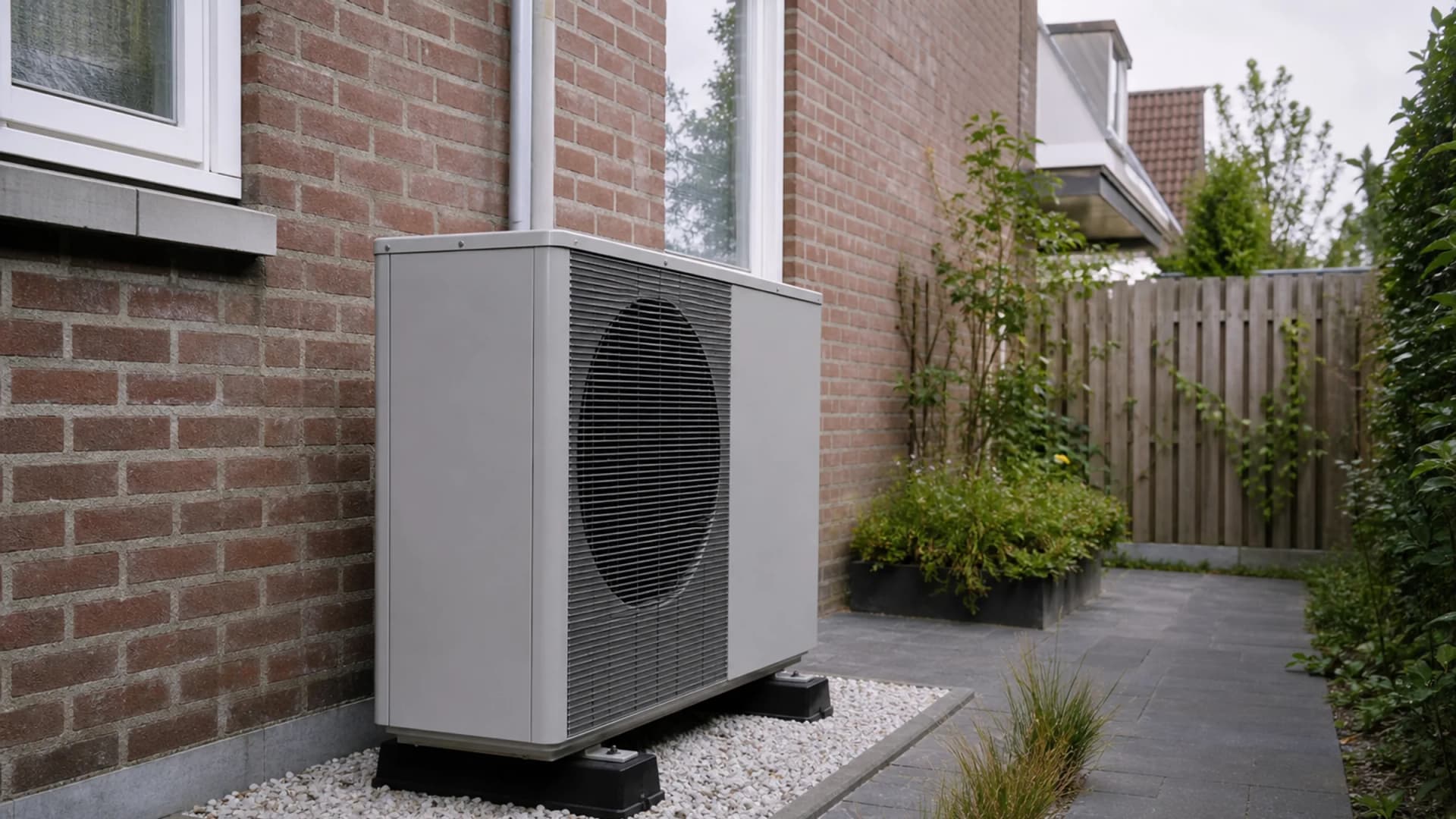
A modern outdoor unit sounds like a softly whirring fan. Dutch law sets a hard limit: at most 40 decibels at the plot boundary and at the neighbours' windows and doors. With a well-chosen spot a good installation clears that limit comfortably.
Where does the sound come from?
 Heat pump
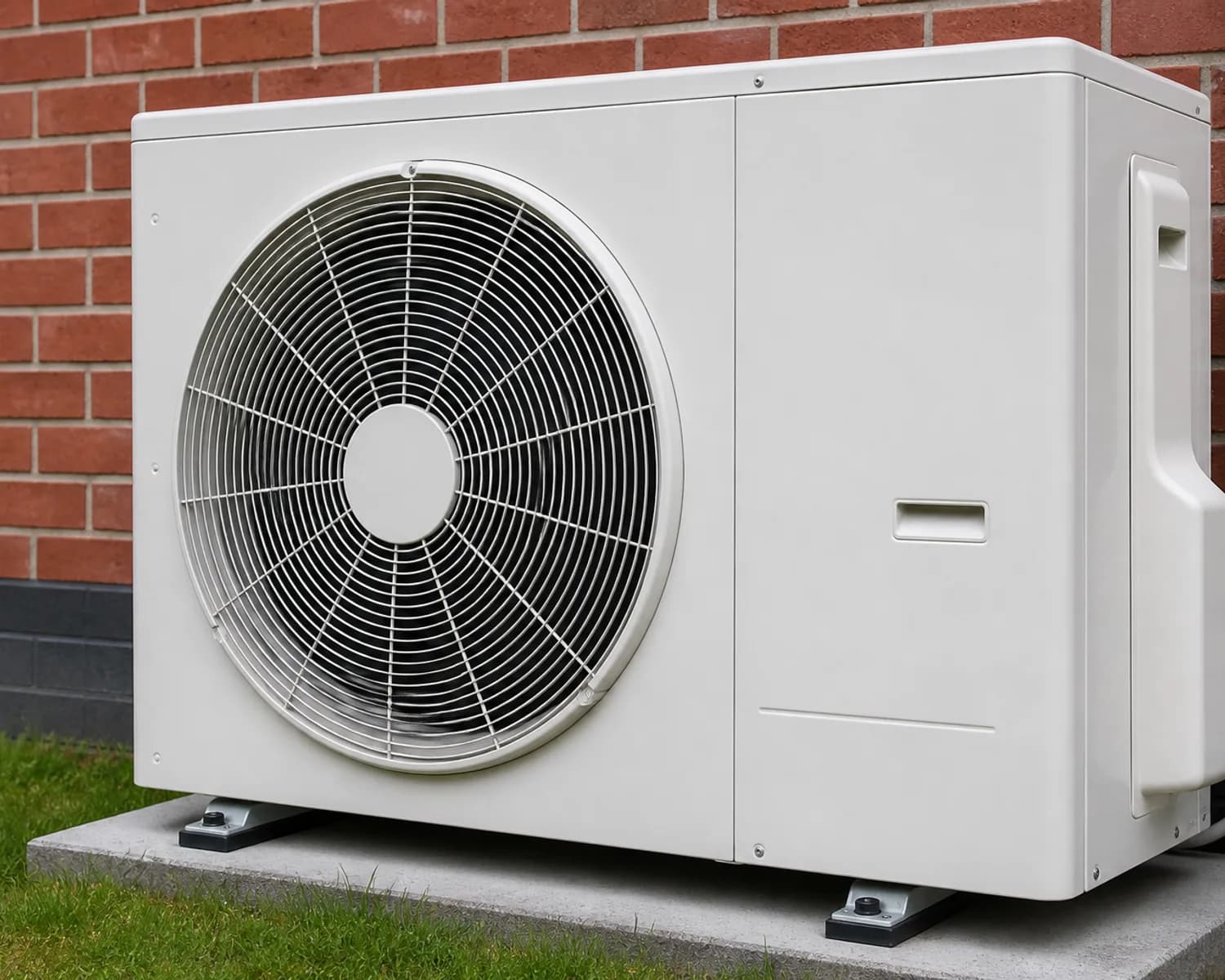
An air-to-water heat pump extracts heat from outdoor air. A fan pulls air through the outdoor unit, and inside a compressor squeezes the refrigerant. Those two parts make the sound: a soft whoosh from the fan and a low hum from the compressor. It is a constant, even sound, not a peak noise like a slamming door.
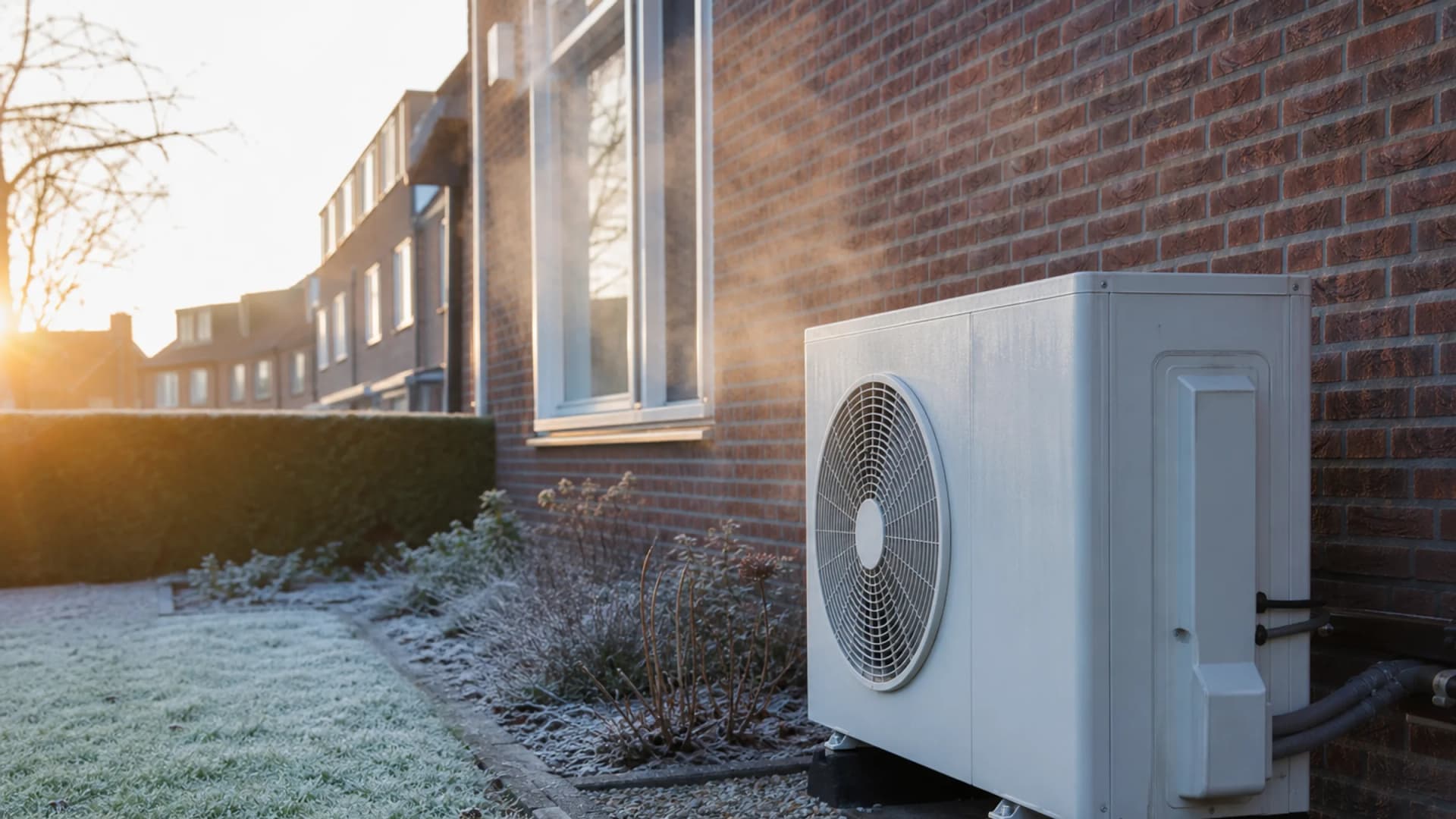
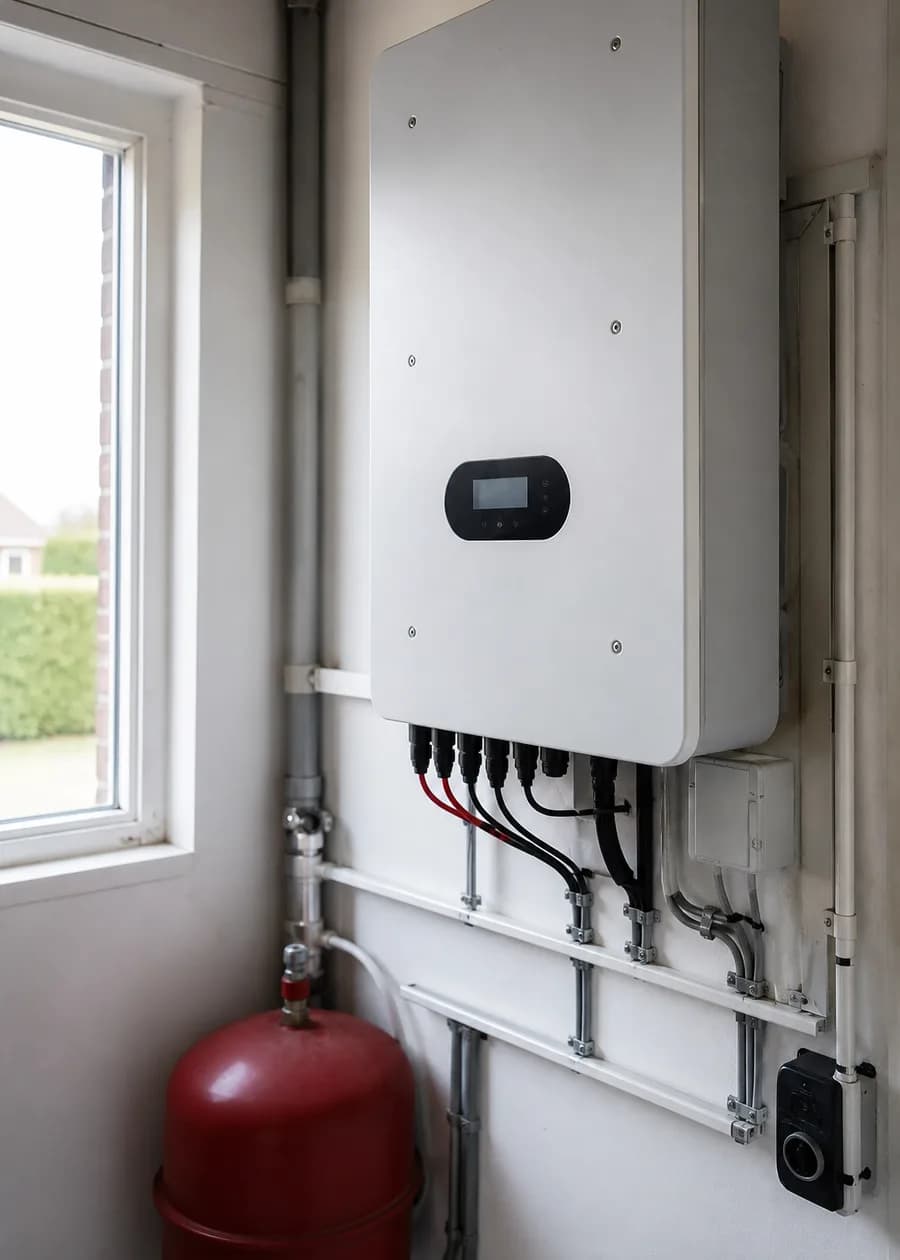
How hard the unit works determines how much you hear. On a mild day it runs gently and you hear little from a few metres away. On a cold winter day, when heat demand is high, the fan spins faster. Defrosting (the unit clearing ice off its own fins) also adds some sound temporarily. Indoors you hear next to nothing from a well-placed outdoor unit.
The legal limit: 40 dB at the neighbours
Since April 2021 the Dutch government sets a noise requirement for outdoor heat pump and air-conditioning units at homes; the rule now lives in the building decree (Besluit bouwwerken leefomgeving, Bbl). An outdoor unit may cause at most 40 decibels at the boundary with an adjacent residential plot, and at an openable window or door of a home, as explained by the government's Informatiepunt Leefomgeving. If the unit has a separate evening and night mode, a correction applies during the day (7:00 to 19:00), effectively allowing 45 decibels in daytime.
Good to know: the limit does not apply vaguely somewhere in the garden but precisely at the plot boundary and at the neighbours' windows and doors. Forty decibels is comparable to a quiet residential street at night; softer than a normal conversation. The installer must show in advance that the setup meets the requirement; an official calculation tool exists that factors in distance, screening and reflection.
What placement does
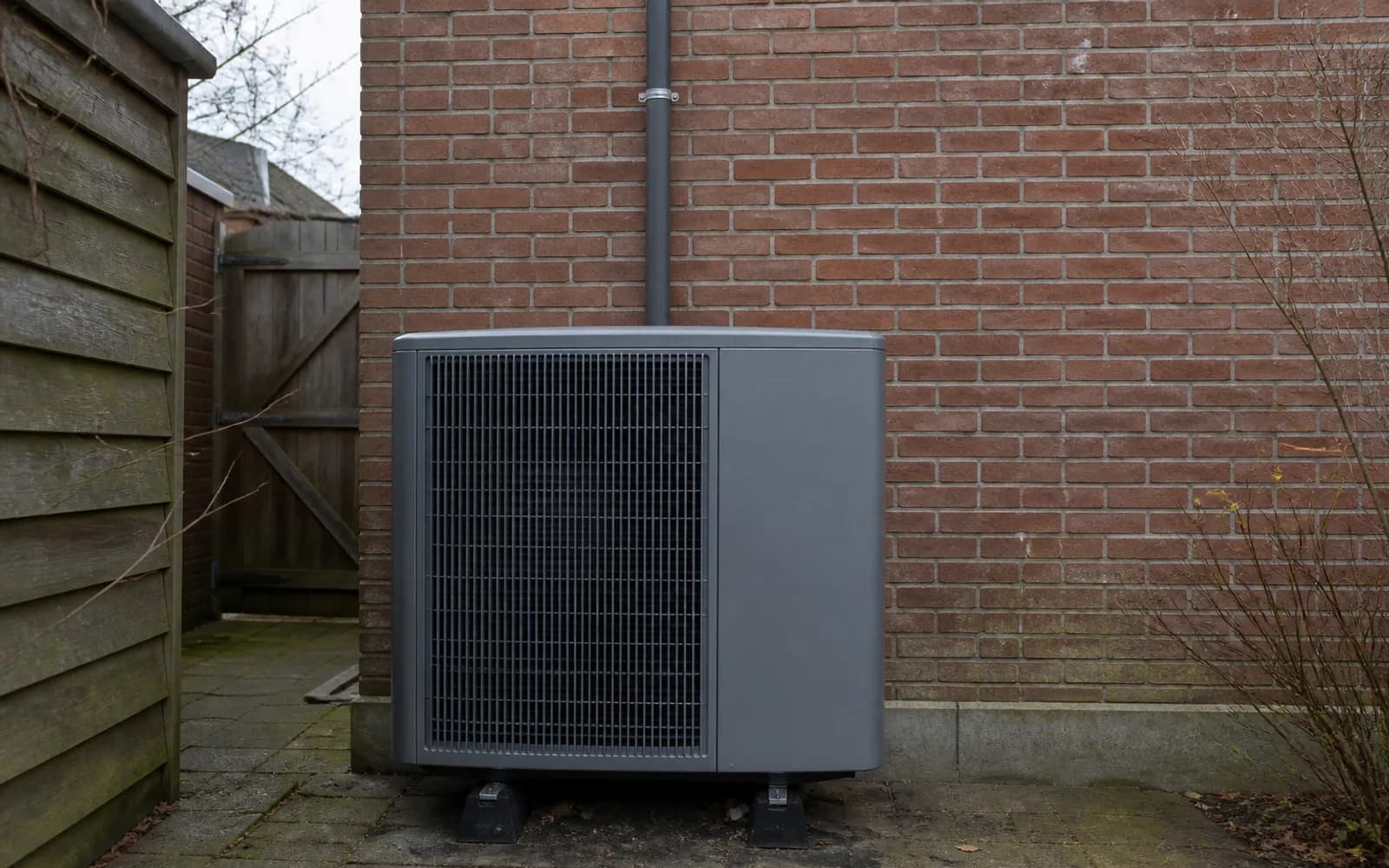
Sound drops off quickly with distance: every doubling of the distance makes a noticeable difference. The biggest gain is therefore the spot itself: not right on the plot boundary, not straight under the neighbours' bedroom window, and the fan outlet not aimed at the neighbours. A wall or fence between unit and neighbours dampens further, though a hard wall directly behind the unit can also reflect sound; a good installer weighs that in.
Vibration dampers under the unit help too (so the hum does not travel through the facade into your home or the neighbours'), and where needed a sound-dampening enclosure. Modern units also have a quiet mode for evening and night: the unit deliberately runs slower. That costs a little capacity at exactly the hours you need less heat anyway.
How SolarFast handles this
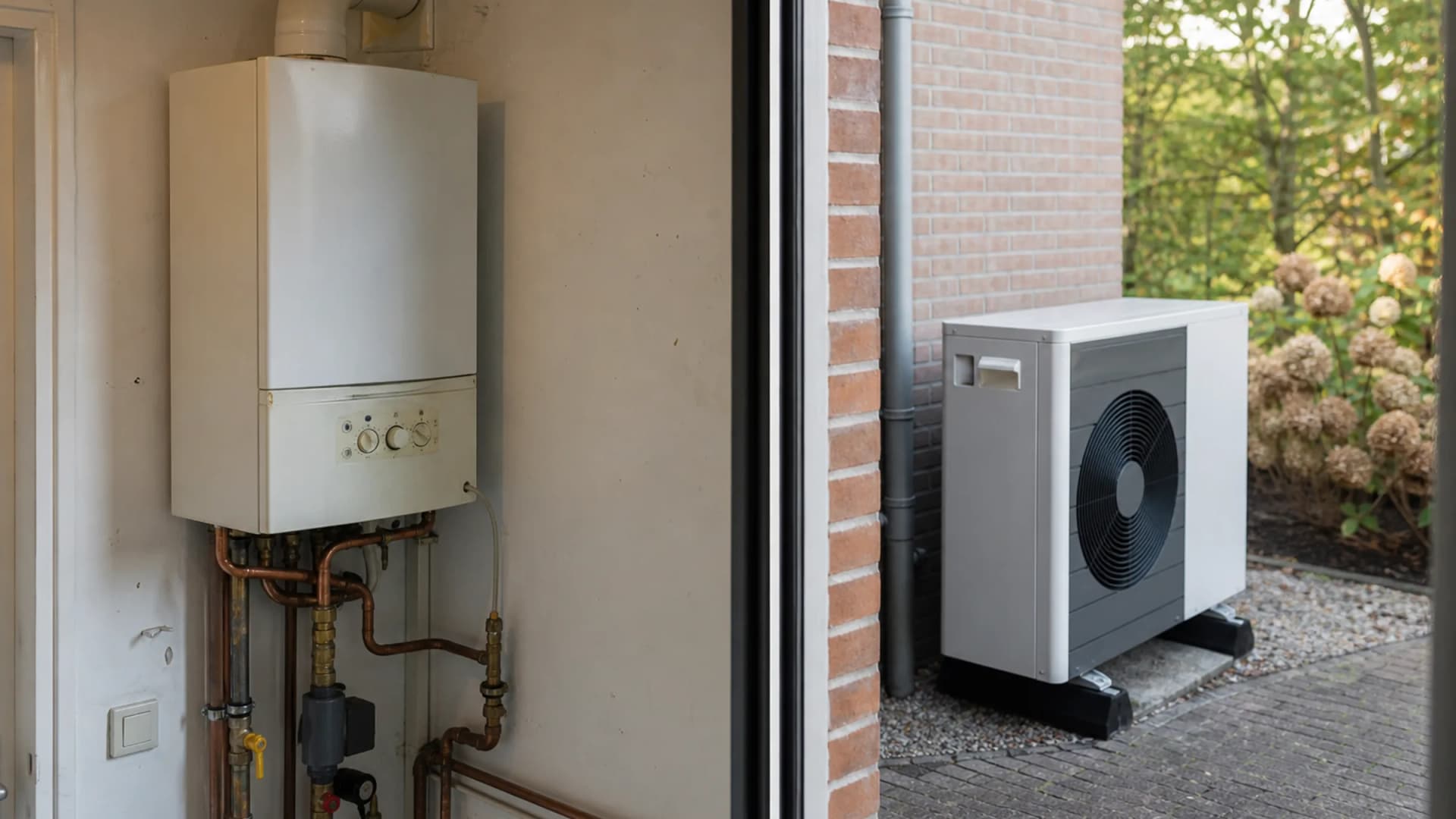
During the survey we look not only at your fuse box and heat demand but explicitly at the placement: distance to the boundary, the position of bedroom windows (yours and the neighbours') and the surface. We run the noise requirement on that, so the permit check and the neighbours hold no surprises. Unsure whether your situation fits? Put it to us or first read the heat pump page. How the heat pump compares to your current boiler is covered in heat pump vs gas boiler.
Solar panels are still a smart investment in 2026. A few things matter if you want the most from your own power.
Your energy use
Planning to drive, cook or heat electrically? Factor that into how many panels you install now.
Spread the yield
Spread panels across roof faces so you generate through the day and use more of your own energy.
Your data
Choose a system with its own 4G connection and data storage in Europe so your information stays secure.
Boost your energy
A smart home battery stores today's power for later, so you use more of your own electricity after sunset.

We install your heat pump
Usually within a few weeks. Our installers fit the heat pump and calmly explain how it works.
- Use structurally less gas
- Comfort all year round
Frequently asked questions
At most 40 decibels at the boundary with the neighbours and at their openable windows and doors. If the unit has a separate evening and night mode, 45 decibels is effectively allowed in daytime. The requirement is set in the Dutch building decree (Bbl).
With a good setup, hardly. Vibration dampers stop the hum travelling through the facade, and the indoor unit itself makes no more noise than a gas boiler.
Slightly, yes. With high heat demand the fan spins faster, and the unit occasionally defrosts its fins, which is briefly audible. The legal limit continues to apply then too.
Then it comes down to placement, screening and possibly a sound-dampening enclosure or an extra-quiet model. In most terraced homes a suitable solution can be found; we calculate it during the survey.
Yes. The unit deliberately runs at lower speed, exactly in the hours when noise is most sensitive and heat demand is usually low. Many modern units schedule this automatically.

Discover what smart energy can do for you
In about an hour you get insight into your savings, the options for your home and when the investment pays back. Straightforward, honest advice so you know exactly where you stand.
Smart energy at home
- Upgrade your home with our smart battery
- Our solar panels deliver up to 25% more energy
- A heat pump to minimise your energy use
- Charge your electric car easily at home with an EV charger
Booking an advice call is easy
Fill in your details below. Within a day we will contact you to schedule a no-obligation advice call together.
Related articles