
How many kWh does a heat pump use per year?
Updated on 9 min read
A heat pump's yearly electricity use depends on your heat demand and the SCOP, for an 8 kW unit or a hybrid too. How to run the numbers yourself in kWh.
All articles
A heat pump's yearly electricity use follows from two things: how much heat your home demands and how efficiently the unit produces it (the SCOP). Divide the heat demand by the SCOP for a first estimate in kWh. That estimate is in kWh, not kW: kW is the unit's capacity, kWh is what lands on the meter over a year. 8 kW on the rating plate is capacity too, not yearly use. Insulation, heat delivery and heating habits decide whether you end up above or below it.
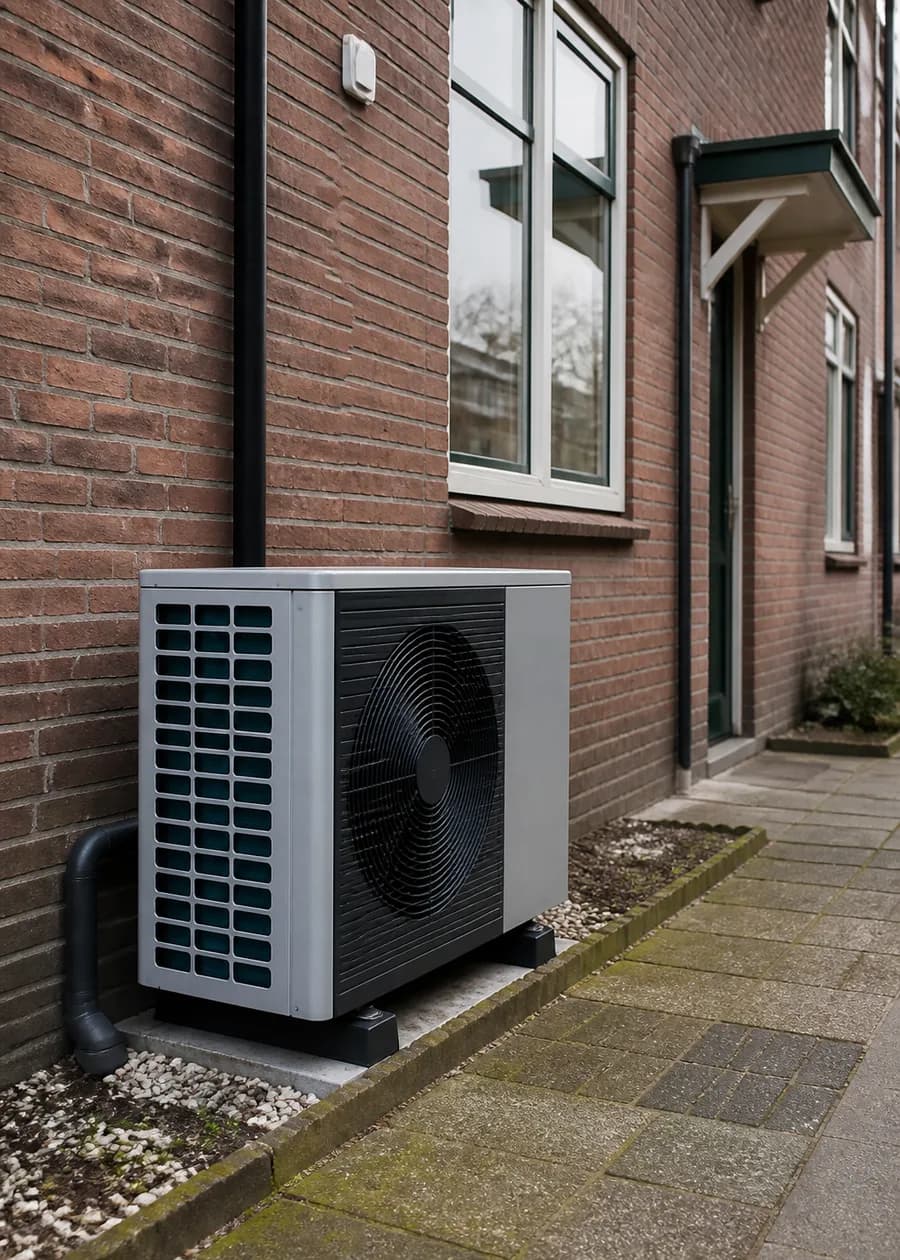
What does electricity use depend on?
 Heat pump
There is no fixed consumption per heat pump; the unit delivers what your home demands. Three factors decide the outcome. The heat demand: how much heat your house needs for heating and hot water, driven mainly by size and insulation. The efficiency: how many kilowatt-hours of heat the unit makes per kilowatt-hour of power. And your habits: turning the thermostat up a degree or showering long asks for more.
That efficiency is expressed in the SCOP. From one kilowatt-hour of power a heat pump makes three to five kilowatt-hours of heat (Dutch). That is exactly why a heat pump is so much more efficient than an electric heater, which turns one kilowatt-hour of power into exactly one kilowatt-hour of heat.
kW or kWh: what counts for consumption?
If you search how many kW a heat pump uses, you usually want the yearly figure. kW is capacity: how hard the unit can deliver at a moment. kWh is consumption: what lands on the meter over a year. Yearly electricity use is counted in kWh, not kW.
The kW on the rating plate therefore does not tell you what you pay for. That follows from your heat demand and the SCOP, in the sum below.
What does an 8 kW heat pump use?
An 8 kW heat pump does not use 8 kW per year. That 8 kW is capacity: how hard the unit can deliver heat. What you pay for is counted in kWh. An all-electric unit usually has a capacity of 6 to 12 kW; 8 kW often fits a mid-terrace, end-terrace or a small semi-detached house.
In a well-insulated end-terrace with two people, yearly use comes to around 3,400 kWh. That is an example for that housing type, not a fixed figure for every 8 kW unit. The sum below stays the same: heat demand divided by SCOP. When it runs at that 8 kW heat output with an efficiency of 4, it draws about 2 kW of power. Over a year the meter counts kWh.
Making a first estimate yourself
The calculation is simple: heat demand divided by SCOP. If your home needs 12,000 kilowatt-hours of heat per year and the unit reaches a SCOP of 4 with your heat delivery system, you arrive at about 3,000 kilowatt-hours of power. You will not know your heat demand by heart, but your gas consumption is the best pointer: nearly all the gas of an average household goes to heating and hot water.
| Heat demand per year | SCOP 3.5 | SCOP 4.5 |
|---|---|---|
| 8,000 kWh | approx. 2,300 kWh | approx. 1,800 kWh |
| 12,000 kWh | approx. 3,400 kWh | approx. 2,700 kWh |
| 16,000 kWh | approx. 4,600 kWh | approx. 3,600 kWh |
Indicative sums, rounded; the real outcome depends on insulation, heat delivery and heating habits.
Note the difference between the two columns: the same home, only a different efficiency, saves hundreds of kilowatt-hours per year. That is why the heat delivery system weighs so heavily: the lower the water temperature to your floor or radiators, the higher the SCOP. For figures per housing type and insulation level this sum is a first step; those tables assume a fixed housing type (Dutch).
Hybrid or all-electric: different consumption
A hybrid heat pump uses considerably less power than an all-electric one, because it shares the work with your gas boiler. An example from Milieu Centraal, the Dutch energy information centre, for a moderately insulated end-of-terrace house: with only a high-efficiency boiler it comes to 1,360 m³ of gas and 310 kWh of power per year. Add a 4 kW hybrid heat pump and that becomes 680 m³ of gas and 1,925 kWh of power. In that example the heat pump needs about 1,600 kWh of extra power, and gas use halves. On the gas used for heating alone you save roughly 60 to 70 percent.
You estimate it yourself with the same sum as above, but only over the share of heat the pump supplies: that share divided by the SCOP. The gas boiler covers the rest, and usually the hot water too.
An all-electric heat pump does everything on power, including your hot water. Your power consumption rises harder, but your gas use drops to zero. Which route fits which home is covered in our comparison hybrid vs all-electric.
When does a hybrid use the most?
A hybrid heat pump works in autumn, winter and spring, when your home needs heat. On mild days the pump does most of the work. If it is very cold outside or your home needs to warm up quickly, the gas boiler steps in. In summer it does not heat, and your hot water then usually comes from the boiler.
Daily consumption therefore swings a lot: a cold January day looks different from a mild October day. So look at yearly consumption in kWh rather than an average day. If you want to follow it per month, the unit's app usually shows how much power the pump uses.
What pushes consumption down (or drives it up)
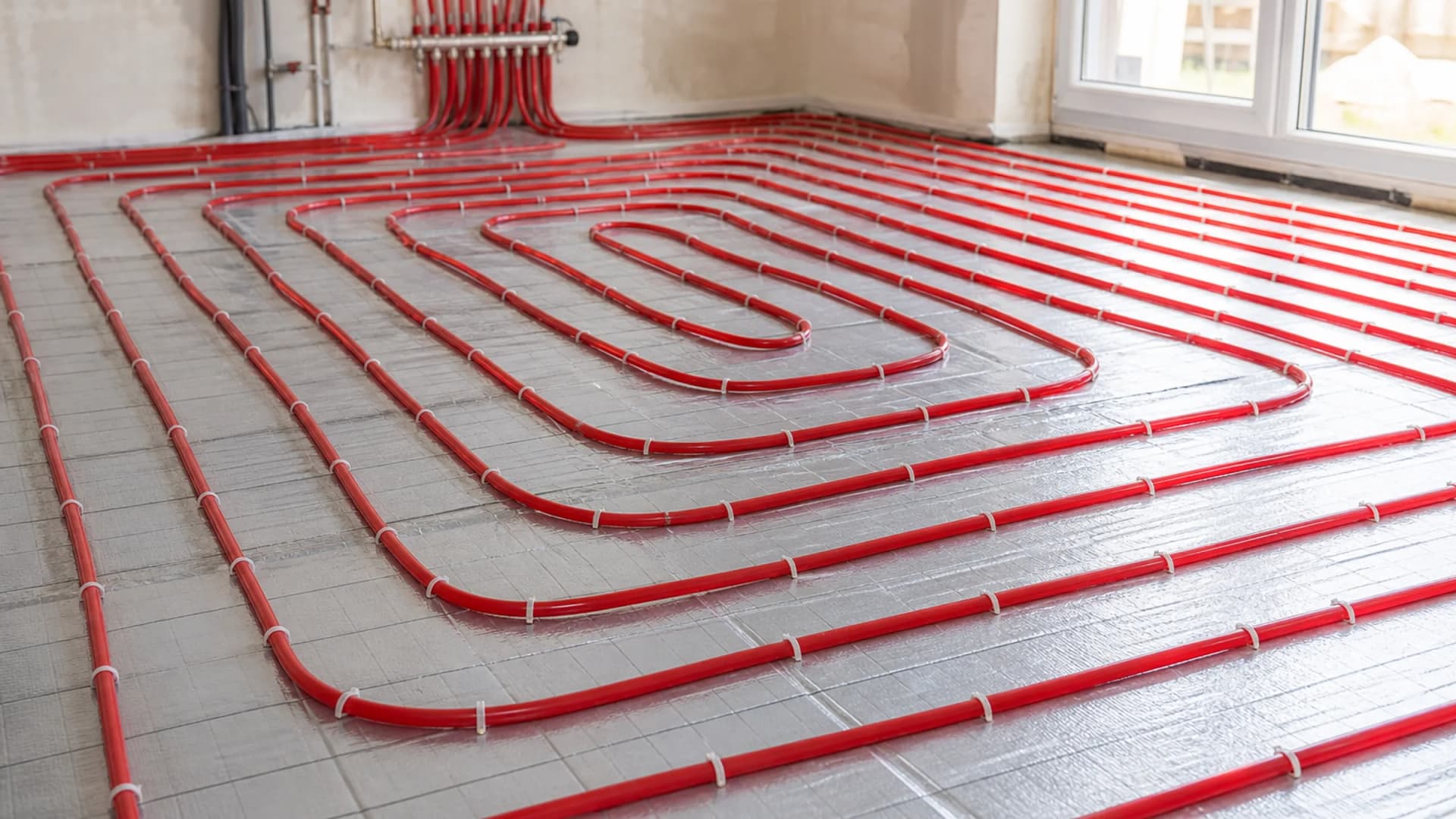
Insulation is the biggest dial: every kilowatt-hour of heat that does not leak away never has to be produced. That is why insulating comes before the heat pump, not after; which steps pay off most is covered in insulation and heat pumps. Next comes the supply temperature: underfloor heating or generously sized low-temperature radiators let the unit run at its most efficient.
What drives consumption up: high water temperatures due to undersized radiators, heavy hot water use, and a unit sized too large or too small for the home. That last one is a survey mistake you see on your bill for years, and exactly why we calculate the capacity instead of installing a standard size.
Heat pump next to solar panels: the honest story
Solar panels and a heat pump are a logical combination, with one honest caveat: the heat pump consumes most in winter, exactly when panels produce least. Over the full year your panels offset a good share of the extra power use, but in January the unit runs largely on grid power. If you are considering the combination, start with solar panels and add the heat pump on top of that calculation.
How SolarFast estimates your consumption
During the site survey we look at your gas consumption over recent years, your insulation and your heat delivery system. From that follows an expected power consumption that fits your home, with the SCOP that belongs to it instead of the prettiest brochure figure.
Want an indication for your situation up front? Send us your question or see our heat pump page.
Solar panels are still a smart investment in 2026. A few things matter if you want the most from your own power.
Your energy use
Planning to drive, cook or heat electrically? Factor that into how many panels you install now.
Spread the yield
Spread panels across roof faces so you generate through the day and use more of your own energy.
Your data
Choose a system with its own 4G connection and data storage in Europe so your information stays secure.
Boost your energy
A smart home battery stores today's power for later, so you use more of your own electricity after sunset.

We install your heat pump
Usually within a few weeks. Our installers fit the heat pump and calmly explain how it works.
- Use structurally less gas
- Comfort all year round
Frequently asked questions
It differs per home: divide the heat demand by the SCOP for a first estimate in kWh. A home with a 12,000 kWh heat demand and a SCOP of 4 comes to about 3,000 kWh of power per year. Insulation, heat delivery and heating habits determine the real outcome.
kW is the unit's capacity, not what you pay for over a year. The rating plate shows how hard it can deliver at a moment. Electricity use is counted in kWh: divide your heat demand by the SCOP.
8 kW is the unit's capacity, not what you pay for over a year. That size often fits a mid-terrace or end-terrace. In a well-insulated end-terrace with two people you come to around 3,400 kWh of power per year. Your home may land below or above that: divide your heat demand by the SCOP.
Per day is not a useful figure. The unit draws much more in winter than in summer, so January looks nothing like July. Do not divide the yearly figure by 365 for an average day. Look at kWh per year, and in the winter months at the unit's own app.
That depends on your home. In a Milieu Centraal example for a moderately insulated end-of-terrace house with a 4 kW hybrid heat pump, it comes to 1,925 kWh of power per year, against 310 kWh with only a high-efficiency boiler. Gas use drops in that example from 1,360 to 680 m³.
Yes, because the gas boiler steps in on cold days and usually provides the hot water. In return you keep part of your gas use; on the gas used for heating you save roughly 60 to 70 percent.
Your power use rises, but your gas use drops sharply or disappears entirely. Because a heat pump turns one kilowatt-hour of power into three to five kilowatt-hours of heat, total energy costs come out lower than with a gas boiler in most homes. The survey makes that concrete.
Yes, by far the most: heat demand is highest then and efficiency somewhat lower due to the cold outdoor air. Solar panels produce least in winter, so in those months the unit runs largely on grid power.
Many units show consumption in their own app. If it structurally deviates from what was calculated in the quote, have the installer take a look: the cause is often a setting or a supply temperature set too high.
Every degree lower reduces the heat demand and thus power consumption noticeably. Combined with a night setback that suits a heat pump (a modest one, since the unit prefers a constant temperature), the thermostat is the cheapest saving dial.

Discover what smart energy can do for you
In about an hour you get insight into your savings, the options for your home and when the investment pays back. Straightforward, honest advice so you know exactly where you stand.
Smart energy at home
- Upgrade your home with our smart battery
- Our solar panels deliver up to 25% more energy
- A heat pump to minimise your energy use
- Charge your electric car easily at home with an EV charger
Booking an advice call is easy
Fill in your details below. Within a day we will contact you to schedule a no-obligation advice call together.
Related articles