
Underfloor heating and heat pumps: ideal match?
Updated on 6 min read
Why underfloor heating and a heat pump work so well together, when radiators are enough and what fitting it in an existing floor involves.
All articles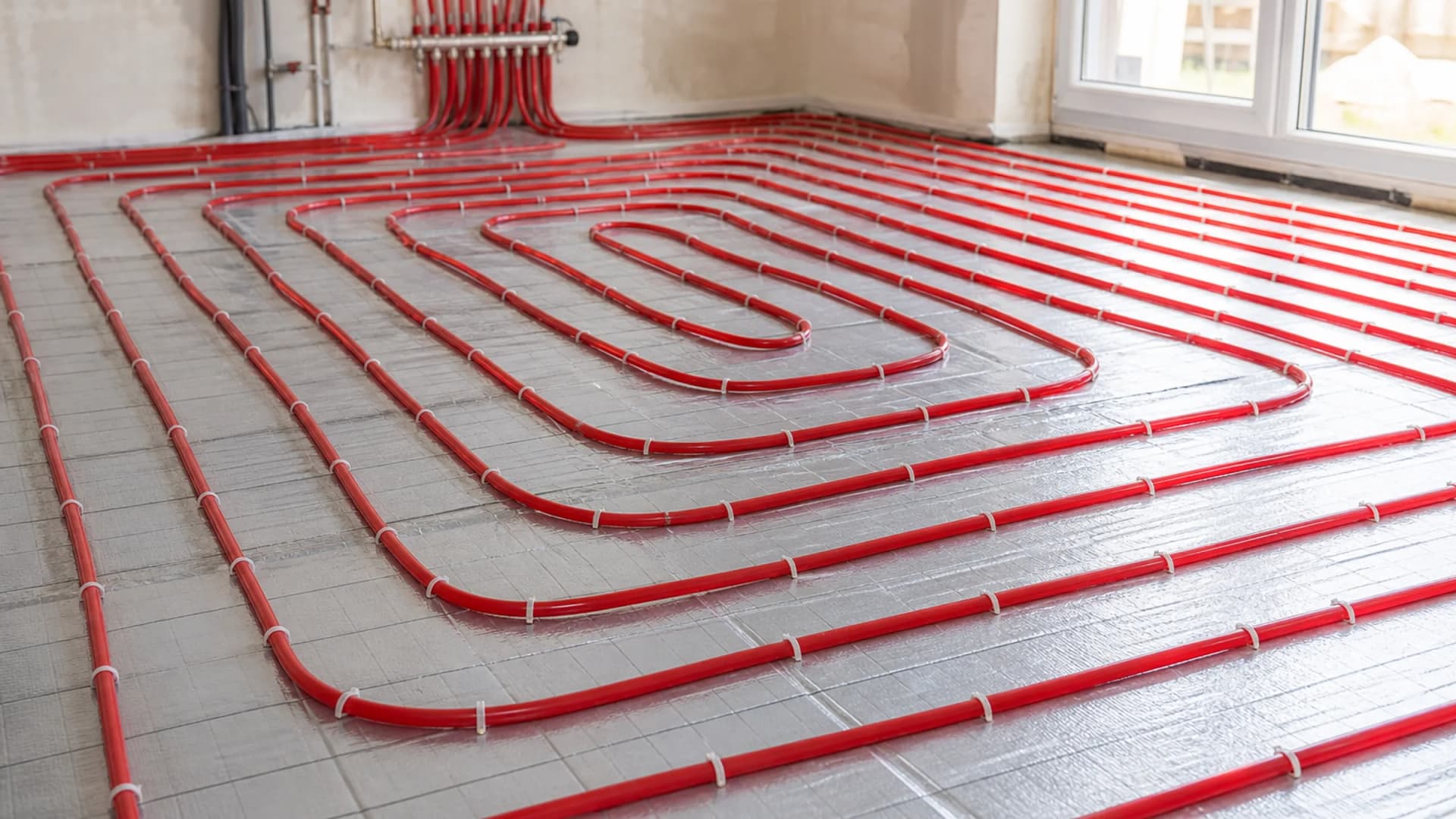
Underfloor heating is the ideal partner for a heat pump: the large emitting surface heats your home with water of around 30 to 40 degrees, exactly where the pump runs most efficiently. Mandatory it is not. Generously sized radiators or convectors with enough output work too.
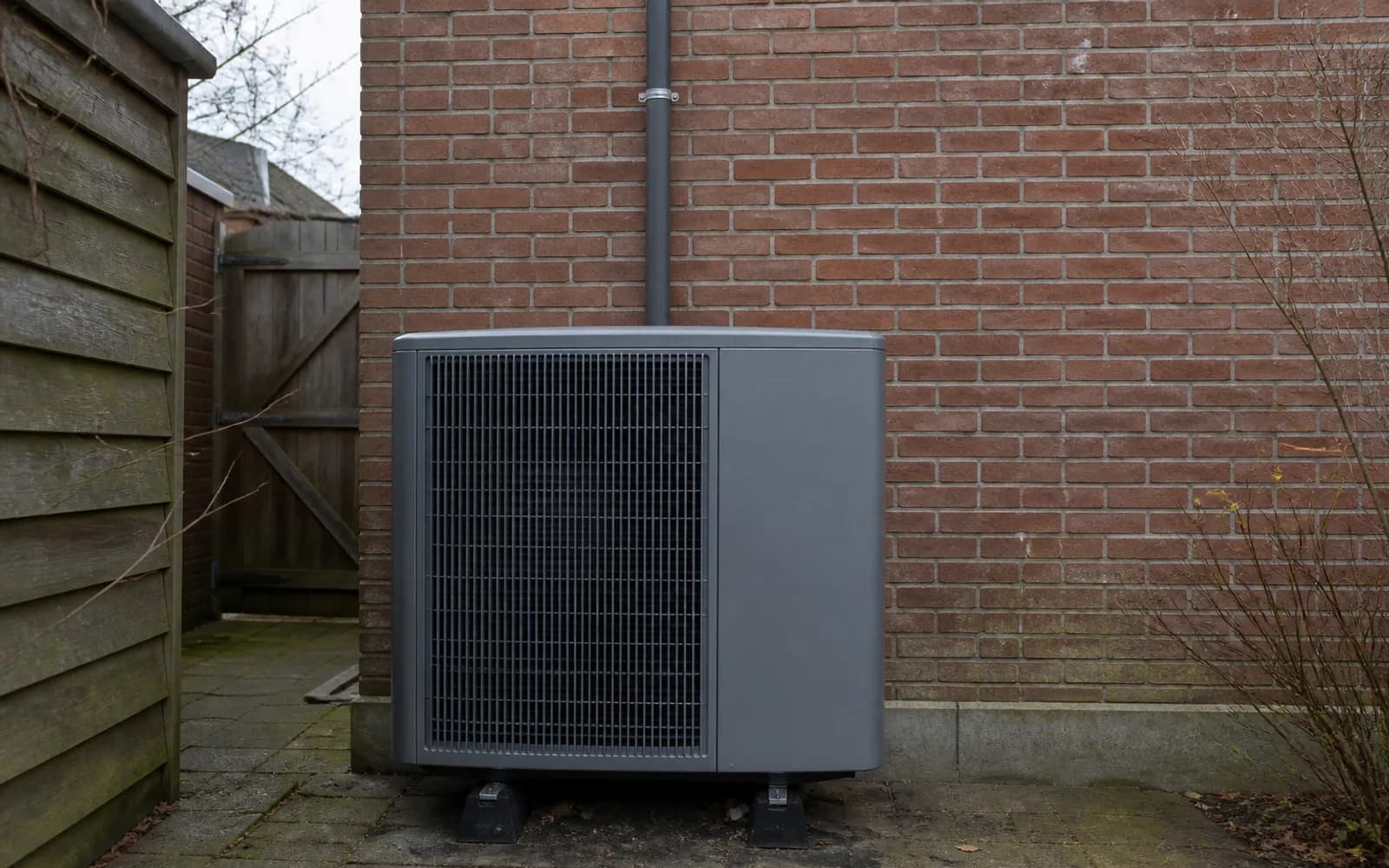
Why low water temperature decides everything
 Heat pump
A gas boiler sends water of roughly 70 to 80 degrees through your radiators. A heat pump works differently: it delivers heat most efficiently at a low water temperature, usually between 30 and 55 degrees. The smaller the temperature gap the pump has to bridge, the less electricity it uses. Every degree lower in the flow temperature shows up directly on your energy bill.
To get a comfortable home out of that lukewarm water, you need emitting surface. That is exactly what underfloor heating provides: the entire floor becomes a radiator. Underfloor heating is designed to heat with water up to about 40 degrees, as Milieu Centraal explains about low-temperature heating (Dutch). That is why a heat pump on underfloor heating almost always runs in its sweet spot.
That large surface has another upside: the heat enters the room evenly and as radiant warmth. Many people find that more comfortable than the hot air above a radiator, and less dust gets stirred up.
Is underfloor heating mandatory with a heat pump?
No. The heat pump makes just one demand of your heating: the emitter system must shed enough heat at a low water temperature. Underfloor heating is the easiest route there, but not the only one. Generous double or triple panel radiators, convectors or dedicated low-temperature radiators can achieve the same.
| Emitter system | Comfortable at | Match with heat pump |
|---|---|---|
| Underfloor heating | approx. 30-40 °C | Ideal |
| Wall heating | up to approx. 40 °C | Ideal |
| LT radiators and convectors | approx. 45-50 °C | Good |
| Generous existing panel radiators | approx. 50-55 °C | Often fine, sometimes supplemented |
| Small or old radiators | 60 °C or more | Replace or extend first |
Guide values from practice; the exact design follows from the room-by-room heat loss calculation.
Not sure whether your current radiators are enough? Set your boiler to 50 degrees for a winter and see whether the house gets comfortably warm, including after a cold night. If it does, your emitter system is probably ready for a heat pump. If not, insulation or emitters need work first; how those two interact is covered in insulation and heat pumps.
One in-between fix that is often underrated: radiator fans. Those small fans under an existing radiator boost its heat output considerably, precisely at low water temperatures. That can push a borderline case over the line without any demolition.
Fitting underfloor heating in an existing floor
In new builds underfloor heating comes as standard, but in an existing home it is almost always possible too. The most common retrofit method is milling: cutting grooves into the existing screed, laying the pipes in and finishing the grooves. It is quick and barely raises the floor build-up. With a timber floor, or when a new screed is planned anyway, systems with castellated panels or dry-construction boards are the alternative.
Do account for the inertia: a floor with pipes in it warms up slowly and cools down slowly. That actually suits a heat pump, which prefers to run calmly and steadily. Big night setbacks on the thermostat backfire with this combination; a flat schedule is more efficient and more comfortable.
One warning: do not pick electric underfloor heating as your main heating. It heats with an electric wire instead of warm water, sits outside the heat pump's water circuit and uses far more electricity for the same warmth.
Underfloor heating downstairs, radiators upstairs: fine
It does not have to be all or nothing. Many homes have underfloor heating on the ground floor and radiators upstairs. That combination works well with a heat pump, as long as the upstairs radiators can also cope with a lower water temperature. Bedrooms are usually kept cooler anyway, which relaxes the requirements there.
A manifold with the right controls makes sure floor and radiators each get the water they need. These choices tie into the type of system: an air-to-water heat pump feeds the whole water circuit, while an air-to-air system uses no water at all. That difference is explained in air-to-air vs air-to-water.
A bonus of underfloor heating on an air-to-water system: in summer the heat pump can chill the water slightly and take a few degrees off via the floor. It is no air conditioner, but on hot days you notice the difference.
How we run the numbers
During a heat pump survey we look at heat loss, the existing emitter system and the insulation, room by room. From that follows whether your current radiators suffice, where a radiator needs replacing or where underfloor heating is the logical step. Sometimes the conclusion is: insulate first, or start with a hybrid setup. That trade-off is covered in hybrid vs all-electric.
Want to know what your home needs before the heat pump goes in? Put your situation to us and we will look at the floor, radiators and insulation with you.
Solar panels are still a smart investment in 2026. A few things matter if you want the most from your own power.
Your energy use
Planning to drive, cook or heat electrically? Factor that into how many panels you install now.
Spread the yield
Spread panels across roof faces so you generate through the day and use more of your own energy.
Your data
Choose a system with its own 4G connection and data storage in Europe so your information stays secure.
Boost your energy
A smart home battery stores today's power for later, so you use more of your own electricity after sunset.

We install your heat pump
Usually within a few weeks. Our installers fit the heat pump and calmly explain how it works.
- Use structurally less gas
- Comfort all year round
Frequently asked questions
No. The requirement is an emitter system that sheds enough heat at a low water temperature. Underfloor heating is ideal for that, but generous radiators, convectors or low-temperature radiators work too. Radiator fans can give existing radiators a serious boost.
Underfloor heating is designed to heat with water up to about 40 degrees; in practice it often runs around 30 to 35 degrees. That is exactly the range where a heat pump is at its most efficient.
Usually yes. What matters is whether it was designed as main heating, with pipes spaced closely enough, or as supplementary heating next to radiators. During the survey we assess the manifold and pipe spacing, and whether adjustments are needed.
Almost always. In renovations the pipes are usually milled into the existing screed, which is quick and barely raises the floor. Alternatives are castellated panel or dry-construction systems when a new floor build-up is planned.
With an air-to-water heat pump the floor can cool mildly in summer: the system then circulates cooler water through the pipes. Expect a few degrees of difference, not an air-conditioning effect. Full room-by-room cooling calls for an air-to-air system.
Not as main heating. Electric underfloor heating converts electricity straight into heat and therefore uses several times what a heat pump needs for the same warmth. For a small bathroom as supplementary heating it can work, for the whole house it does not.
Yes, flatter. A floor warms and cools slowly, and a heat pump runs most efficiently when it can work calmly and steadily. Big night setbacks cost energy with this combination; a small difference of one or two degrees at most works better.

Discover what smart energy can do for you
In about an hour you get insight into your savings, the options for your home and when the investment pays back. Straightforward, honest advice so you know exactly where you stand.
Smart energy at home
- Upgrade your home with our smart battery
- Our solar panels deliver up to 25% more energy
- A heat pump to minimise your energy use
- Charge your electric car easily at home with an EV charger
Booking an advice call is easy
Fill in your details below. Within a day we will contact you to schedule a no-obligation advice call together.
Related articles