
Cable for a home charger: which one do you need?
Posted on 10 min read
Supply cable, earth leakage protection and charging cable for a home charger explained: what sets the thickness and what your installer needs to know.
All articles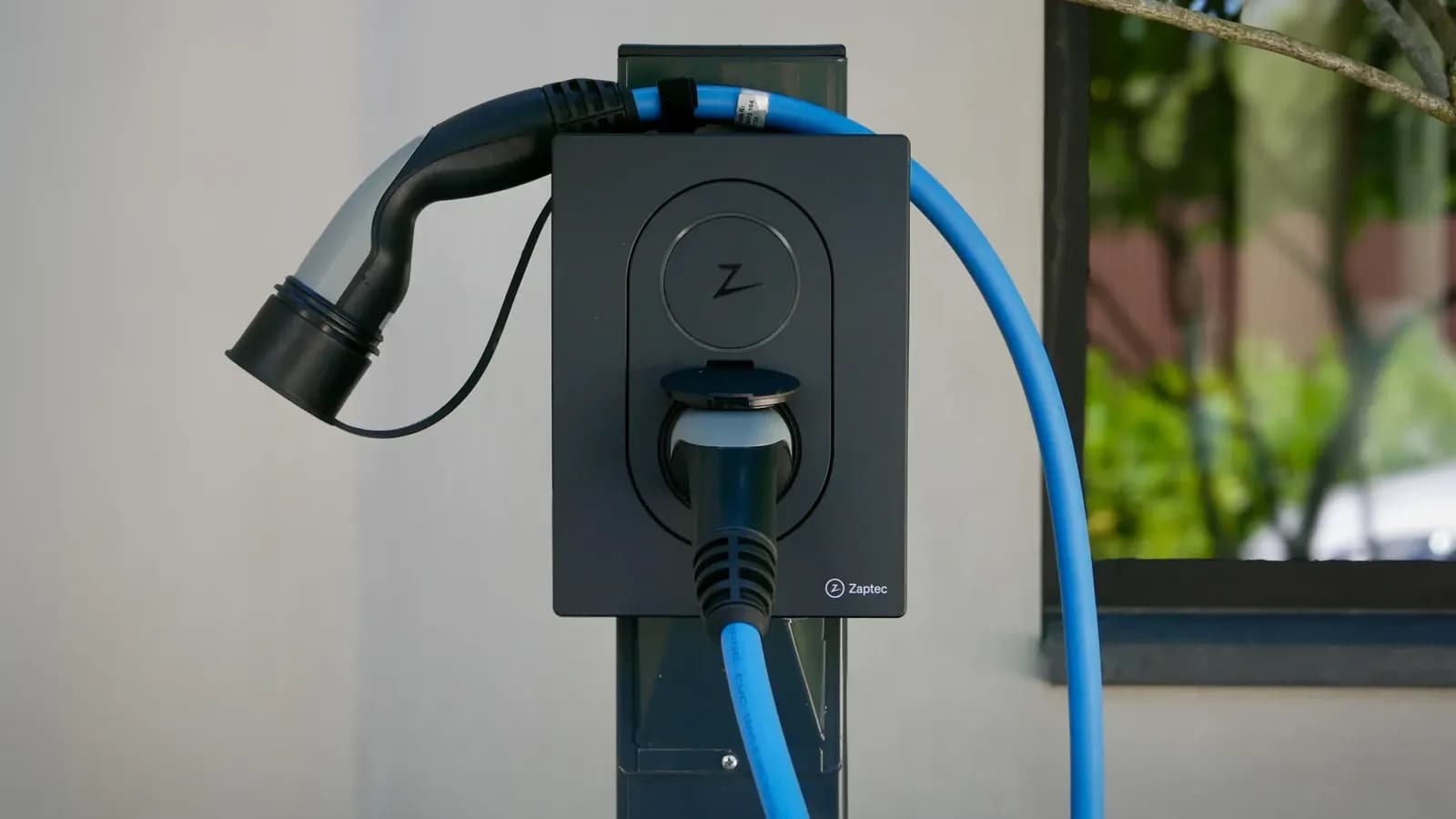
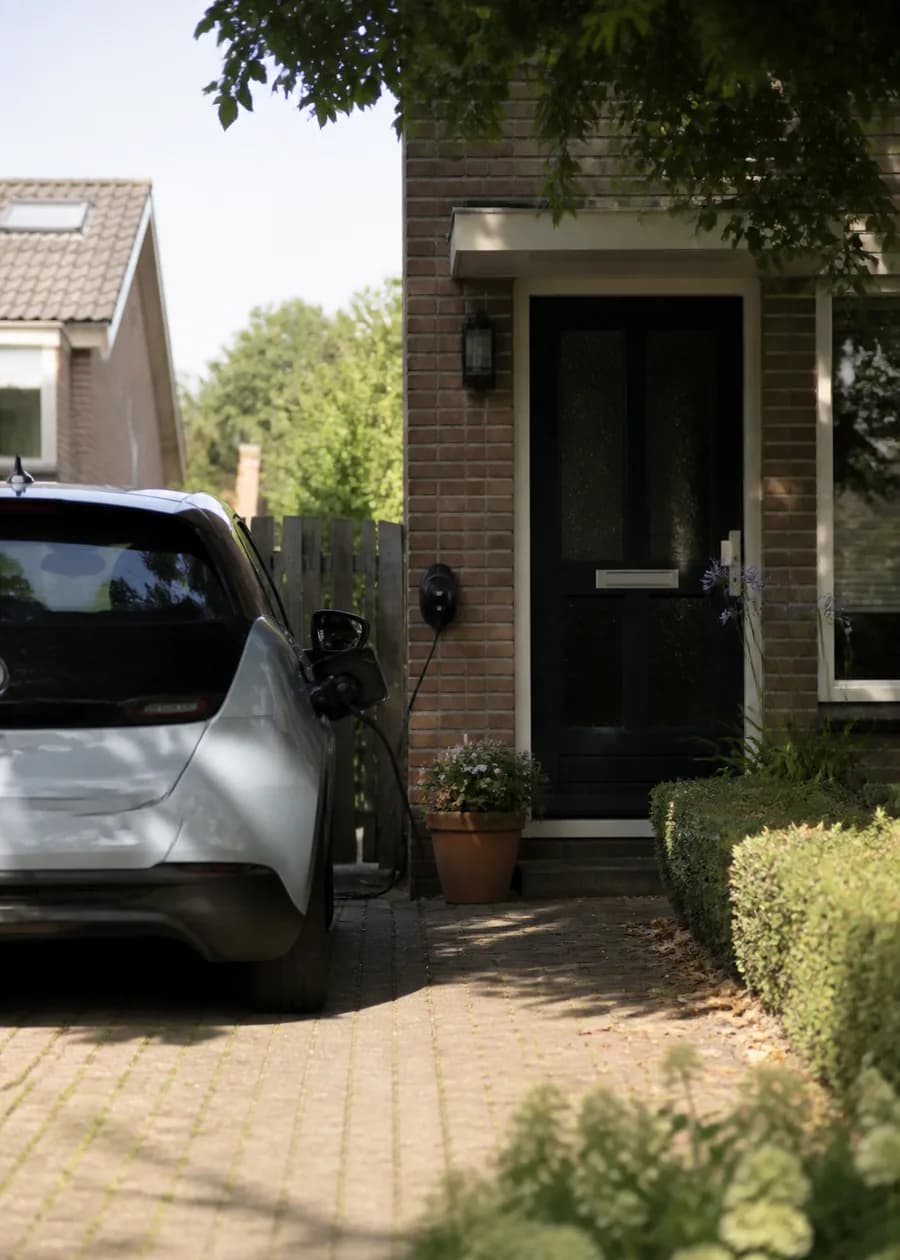
A home charger needs two cables. The supply cable runs fixed from your fuse box to the charge point, on a circuit of its own with earth leakage protection. The charging cable runs from the charge point to your car and in the Netherlands has a Type 2 plug. How thick the supply cable has to be depends on the power, the length and the route. That is a calculation under the Dutch installation standard NEN 1010, not a rule of thumb. You park on the driveway in the evening, pick up the charging cable and click it in. What you do not see is the cable that is already waiting behind it, from the fuse box. Below you read what each cable does, what decides the choice and which protection belongs in the fuse box. At the end there is a checklist for your installer.

Two cables, two questions
 EV charger
People who search for a cable for a home charger usually mean one of two cables. One is fixed in your home, the other you take along to the car.
| In short | Supply cable | Charging cable |
|---|---|---|
| Where does it run? | From the fuse box to the charge point on the wall or a post | From the charge point to your car's charging port |
| Who chooses it? | The installer, based on a calculation | You, to suit your car and charge point |
| What does it depend on? | Power and phases, length of the route, how the cable runs | Plug type (Type 2), power of car and charge point, the length you want |
| Fixed or loose? | Always fixed | Fixed to the charge point, or loose if the charge point has a socket |
The supply cable: what decides the thickness?
A charge point draws a lot of current for hours. The cable has to handle that without overheating, and not too much voltage may be lost along the way. For the thickness of the conductors, the number of loaded conductors and the way the cable runs count. An installer therefore looks at four things.
- Power and number of phases. A three-phase charge point needs a cable with more conductors than a single-phase one. How much current flows per phase also helps decide how thick those conductors are.
- The length of the route. The further your parking spot is from the fuse box, the more voltage is lost along the way. On a longer route a thicker cable may be needed.
- How and where the cable runs. In a conduit, along the wall or in the ground: each way of laying gives off heat differently. A cable that runs in the ground outdoors needs extra mechanical protection, for example a conduit or an armoured cable.
- What you want later. A second charge point, a heat pump or a home battery? Say so beforehand, so the cable choice can take it into account.
Why is there no table with millimetres? Because the right cross-section is a calculation under the installation standard NEN 1010, not a rule of thumb. The same charger may need a different cable on a short route in the garage than on a long route through the garden. A table without your situation would point you the wrong way.
Not sure about the route from your fuse box to your parking spot? Ask your question and we will think along with you.
Which protection belongs in the fuse box?
For electric-car charge points the installation standard NEN 1010 has a section of its own: section 722. Among other things it requires:
- A circuit of its own. The charge point is fed by its own circuit with its own overcurrent protection. It does not share that circuit with other appliances. The standard allows exceptions.
- Earth leakage protection of 30 mA is mandatory for the charge point.
- Protection against DC leakage current. A charge point can leak direct current in a fault, and the installation has to protect against that too. The standard therefore asks for a type B residual current device, or a type A or F together with a device that trips at more than 6 mA DC (an RDC-DD under IEC 62955).
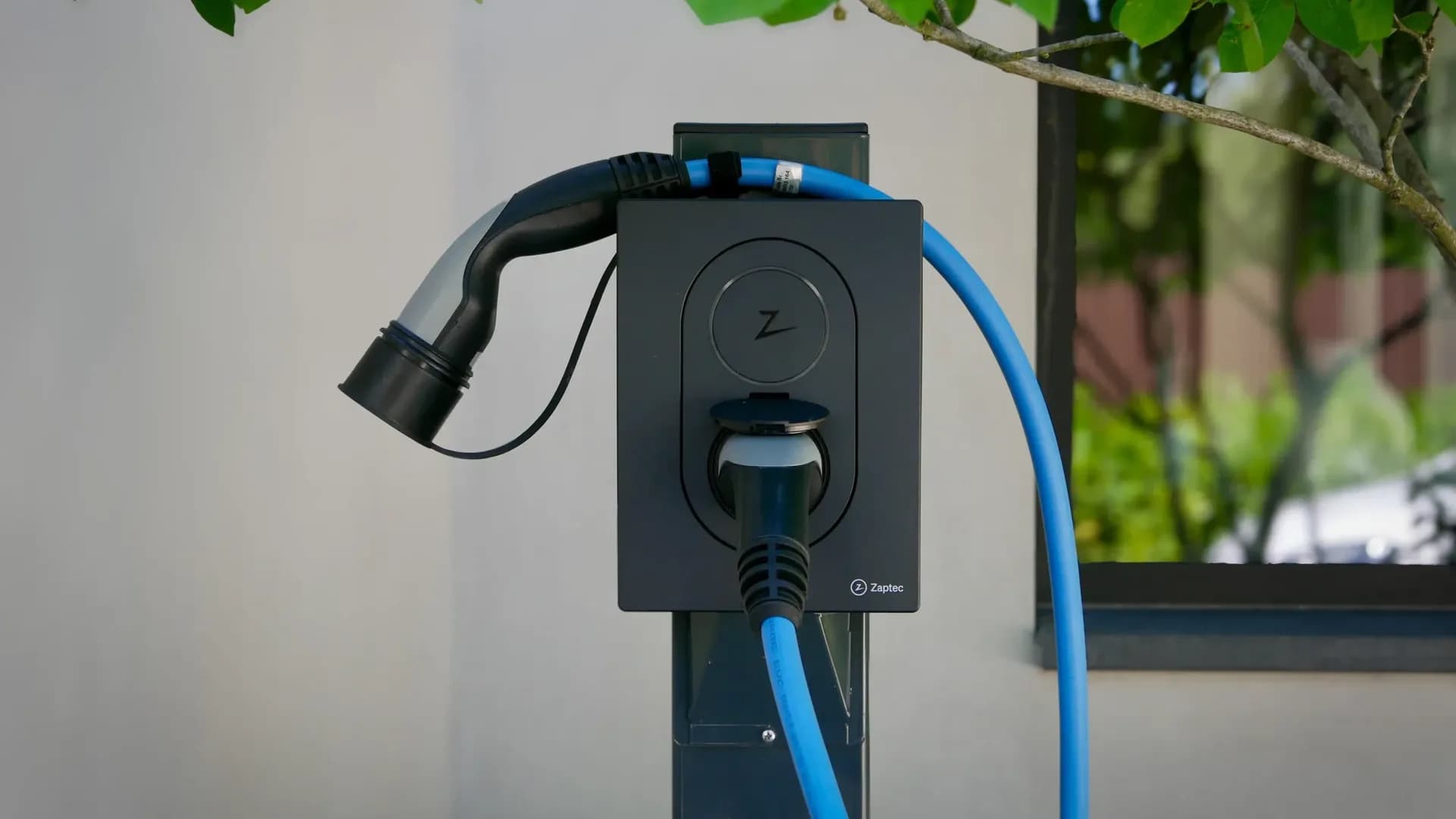
Some charge points already have that 6 mA detection built in. According to Zaptec's product sheet, the Zaptec Go and the Zaptec Go 2 have an integrated RDC-DD (6 mA DC) under IEC 62955. That does not replace the protection in the fuse box. The installer decides on and checks which residual current device and fuse go with your charge point.
From fuse box to driveway: the cable route
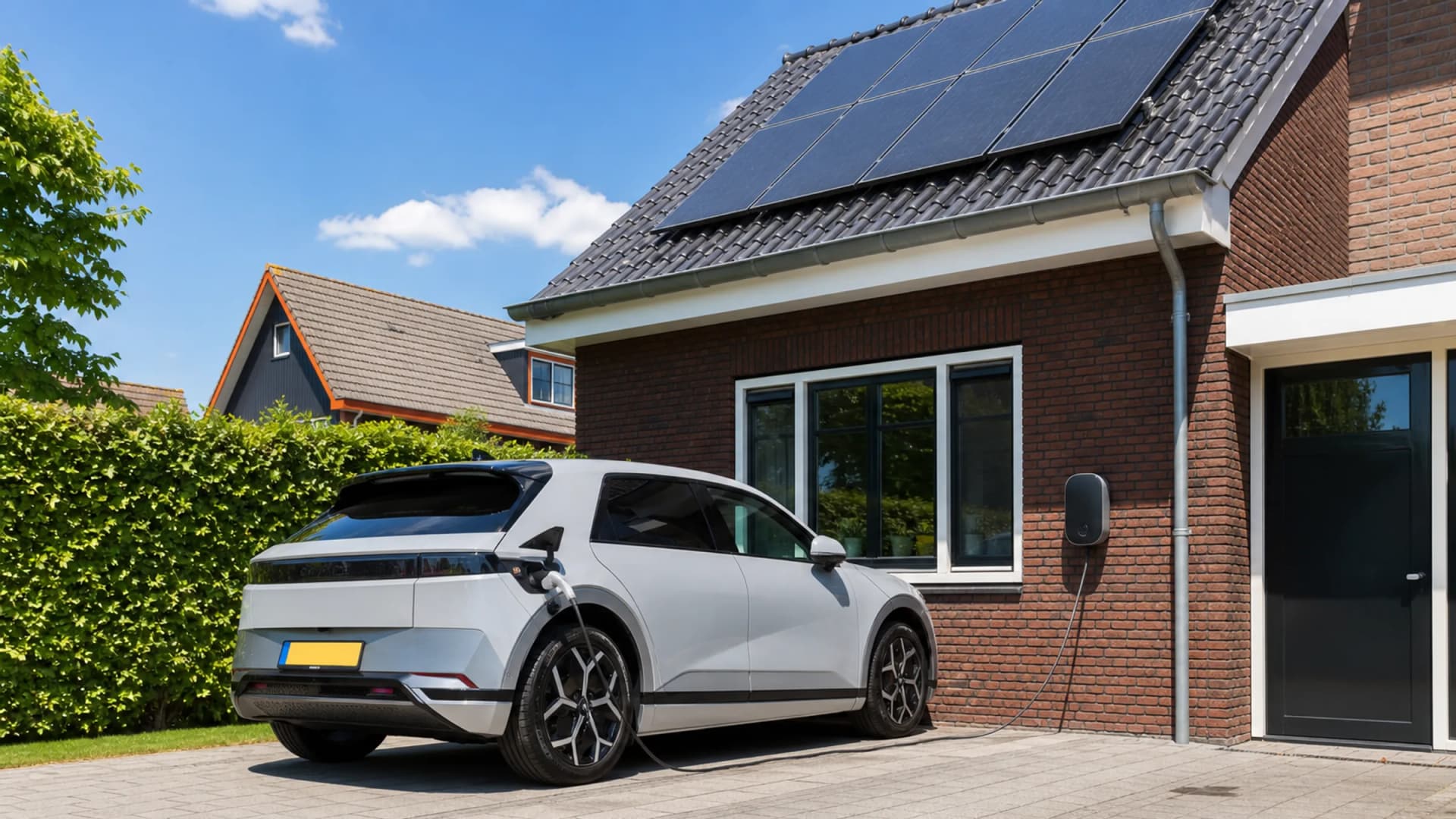
Besides the charger itself, the route of the cable counts in the work and in the price. From fuse box to car, the power passes four links.
From fuse box to car
Fuse box with its own circuit
Supply cable, permanently installed
Charge point on the wall or on a post
Charging cable with Type 2 plug to your car
Discuss beforehand:
- where the cable leaves the fuse box and which walls or floors it passes through;
- whether it runs along the wall or underground, and whether paving has to be opened;
- where the charge point goes: on the wall, or on a separate post at the parking spot.
A home charger or wall box costs a one-off €1,300 to €2,200 or so, including installation and changes to the fuse box. The cost is often lower when the charger is close to the fuse box. That is a national indication. Your situation may differ.
One phase or three phases?
The cable follows your connection. On a single-phase connection, usually 1x25A, you can install a charger of 3.7 kW at most. With a three-phase connection of 3x25A, a charger of 7.4 or 11 kW is possible. If you do not have three phases, you can ask the grid operator to upgrade your connection. What that involves is in which connection you have and when to upgrade.
A faster charge point does not make your car faster: your car's onboard charger sets the maximum. What suits your car is in 11 or 22 kW: what suits your car?.
Load balancing makes the charge point charge more slowly when more power is drawn elsewhere in the home. It is not mandatory, but advisable. How it works out on a three-phase connection is in a three-phase charger and load balancing. In ElaadNL's Nationaal Laadonderzoek 2026, a survey of EV drivers in July and August 2026, 64 percent of home chargers have a charge point with smart charging functions such as local load balancing.
The charging cable to your car
- Plug. Electric cars in the Netherlands charge with a Type 2 plug, also called a Mennekes plug.
- Fixed or loose. Some charge points have a fixed cable, others a socket for a loose cable. The Zaptec Go and the Zaptec Go 2 have a Type 2 socket, so there you use a loose cable. It can be locked electronically.
- Power. Your car, the charging cable, the charge point and your connection together limit how fast you charge. Choose a cable that suits what your car and charge point can handle. The cable's maximum power is in its specifications.
- Length. Choose the length based on where your car's charging port is and how you park. A cable that is too long gets in the way, one that is too short forces you to park differently.
Charging from a socket or an extension lead?
Charging from an ordinary socket is possible, but only under conditions. The socket has an earth contact and wiring that is suitable for long charging, sits on a separate, properly fused circuit in the fuse box under NEN 1010, and you use a charging cable with a protection unit. Never use an extension lead. Without those conditions, charging from a socket is a (fire) hazard. Expect well over ten hours of charging time.
In the Nationaal Laadonderzoek 2026, 11 percent of home chargers charge from a socket. Of those socket chargers, 49 percent had the socket checked by a certified installer. Unsure about your socket? Have it checked.
What if your car is not parked on your own property?
Not everyone has a driveway. Of the EV drivers who cannot park on their own property, 36 percent still charge from their own power connection. Of the drivers who charge that way, 26 percent let the cable run over the pavement without a cover. Others use a cable mat (29 percent), a cable duct (13 percent) or a cable bridge (7 percent).
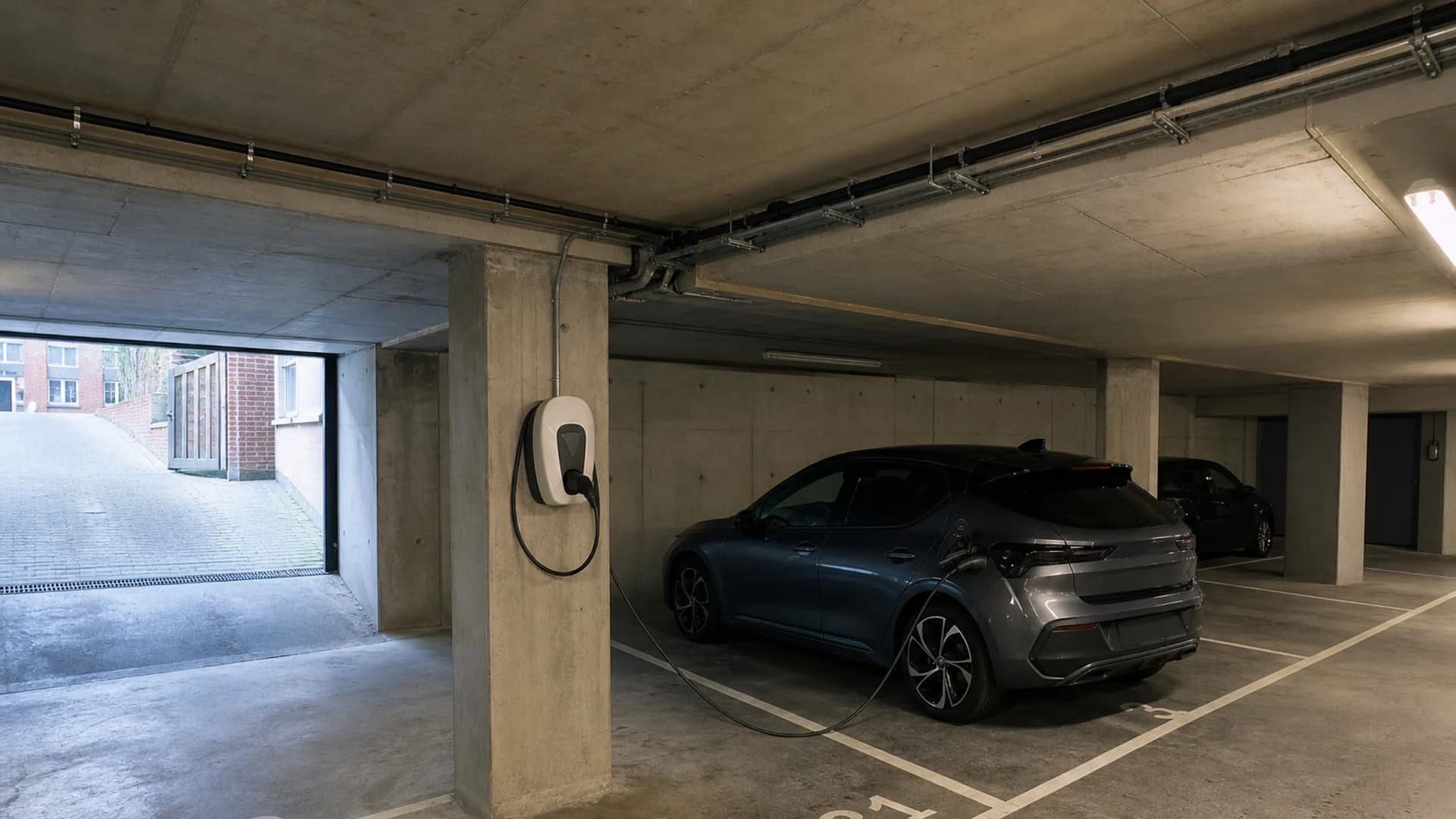
Want to run a cable across the pavement? Ask your municipality first what is possible. Live in an apartment complex? Then read a charger in an owners' association.
Checklist: what your installer needs to know
With this information an installer can decide on the cable and the protection:
- the make and model of your car and its maximum AC charging power;
- your connection: one or three phases and how many amps;
- where the car is parked and how far that is from the fuse box;
- whether the cable has to run indoors, along the wall or through the ground;
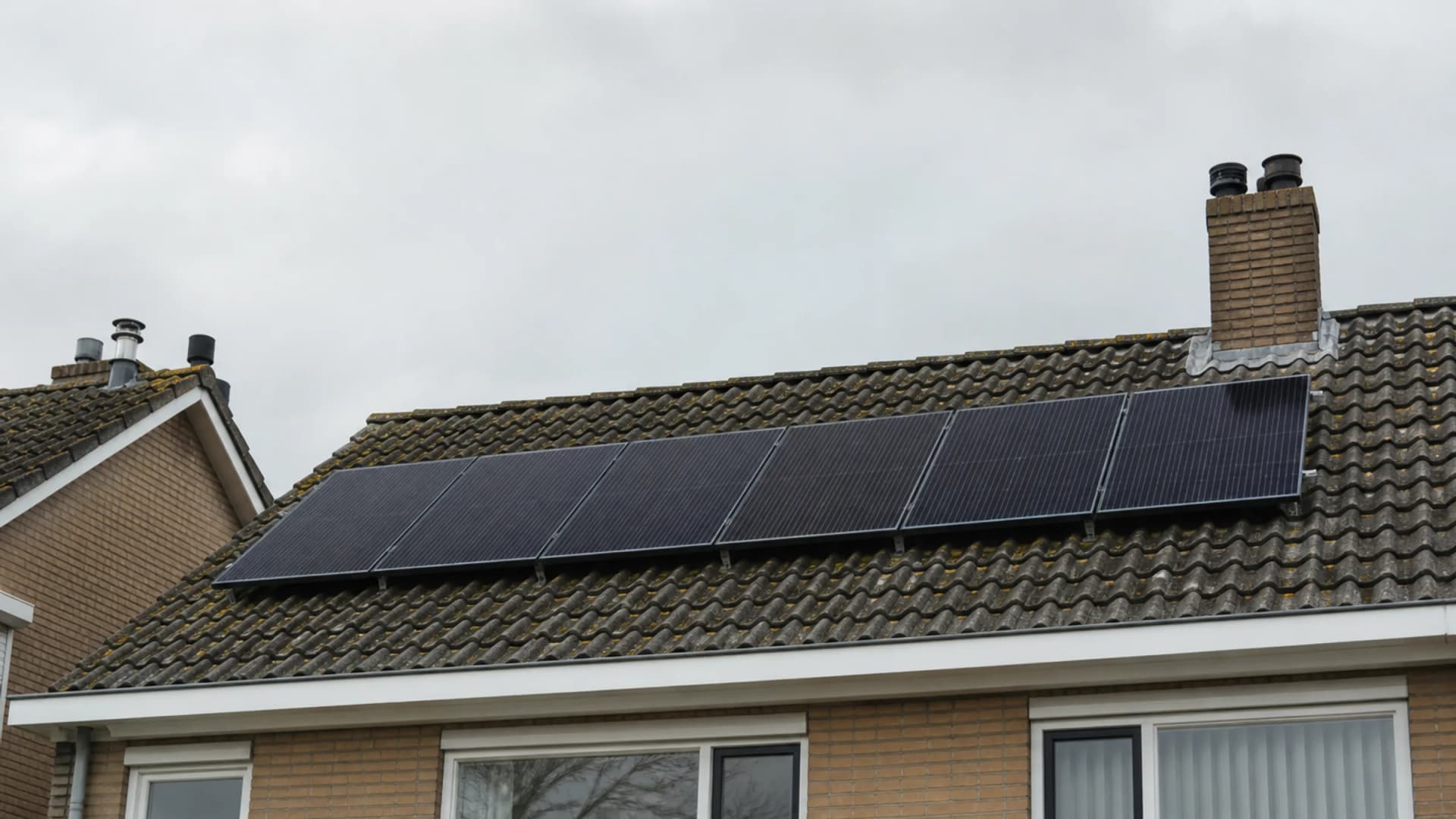
- whether you have or want solar panels, and whether you want to charge on solar power (see charging on solar power);
- whether you plan a second car, a heat pump or a home battery.
Conclusion
A charging spot that suits your home starts with your car, your connection and the route of the cable. Where needed, a site survey at your home follows. Request a no-obligation quote or take a look at the Zaptec Go and the Zaptec Go 2 first.
Read more
Get more out of your own power. Four things to watch for, even as net metering ends
Your energy use
Planning to drive, cook or heat electrically? Factor that into how many panels you install now.
Spread the yield
Spread panels across roof faces so you generate through the day and use more of your own energy.
Your data
Ask your installer where your system's data is stored and which parties have remote access.
Boost your energy
A smart home battery stores today's power for later, so you use more of your own electricity after sunset.

We install your EV charger
We install your charger professionally and explain the costs upfront. We look at your car, fuse box and where the charger will sit. After installation we remain available for questions.
- Leave every morning with a full battery
- Faster charging than a wall socket
Frequently asked questions
That depends on the power, the number of phases, the length of the route and how the cable runs. The cross-section follows from a calculation under NEN 1010 and differs for every situation. There is no single size for everyone.
NEN 1010 asks for earth leakage protection of 30 mA and protection against DC leakage current: a type B residual current device, or type A or F together with a device that trips at more than 6 mA DC (RDC-DD). Some charge points, such as the Zaptec Go, already have that 6 mA detection built in. The installer decides what goes with your charge point.
As a rule, yes. NEN 1010 feeds a charge point from its own circuit with its own overcurrent protection, although exceptions are possible. That way the charge point does not share its circuit with other appliances.
A cable with a Type 2 plug that suits the charging power of your car and your charge point. If your charge point has a socket, like the Zaptec Go, you need a loose cable. If it has a fixed cable, you do not.
No, never use an extension lead. Charge from a charge point, or from a suitable socket on a separate, properly fused circuit with a charging cable that has a protection unit.
That depends on the distance to the fuse box, the way the cable is laid and whether digging is needed. For a home charger Milieu Centraal names a one-off €1,300 to €2,200 or so, including installation and changes to the fuse box. With a SolarFast quote, the total depends on the charge point, the cable length, the mounting, any digging and changes to the fuse box. Your proposal describes the chosen set-up.

Discover what smart energy can do for you
In about an hour you get insight into your savings, the options for your home and when the investment pays back. Straightforward, honest advice so you know exactly where you stand.
Smart energy at home
- Upgrade your home with our smart battery
- Solar panels matched to your roof and usage
- A heat pump to minimise your energy use
- Charge your electric car easily at home with an EV charger
Booking an advice call is easy
Fill in your details below. Within a day we will contact you to schedule a no-obligation advice call together.
Related articles