
A charger in your owners' association: how to get it done
Updated on 4 min read
A charger at your parking spot in a Dutch VvE often needs approval today. How to approach it, what the 2017 model rules allow and which law is coming.
All articles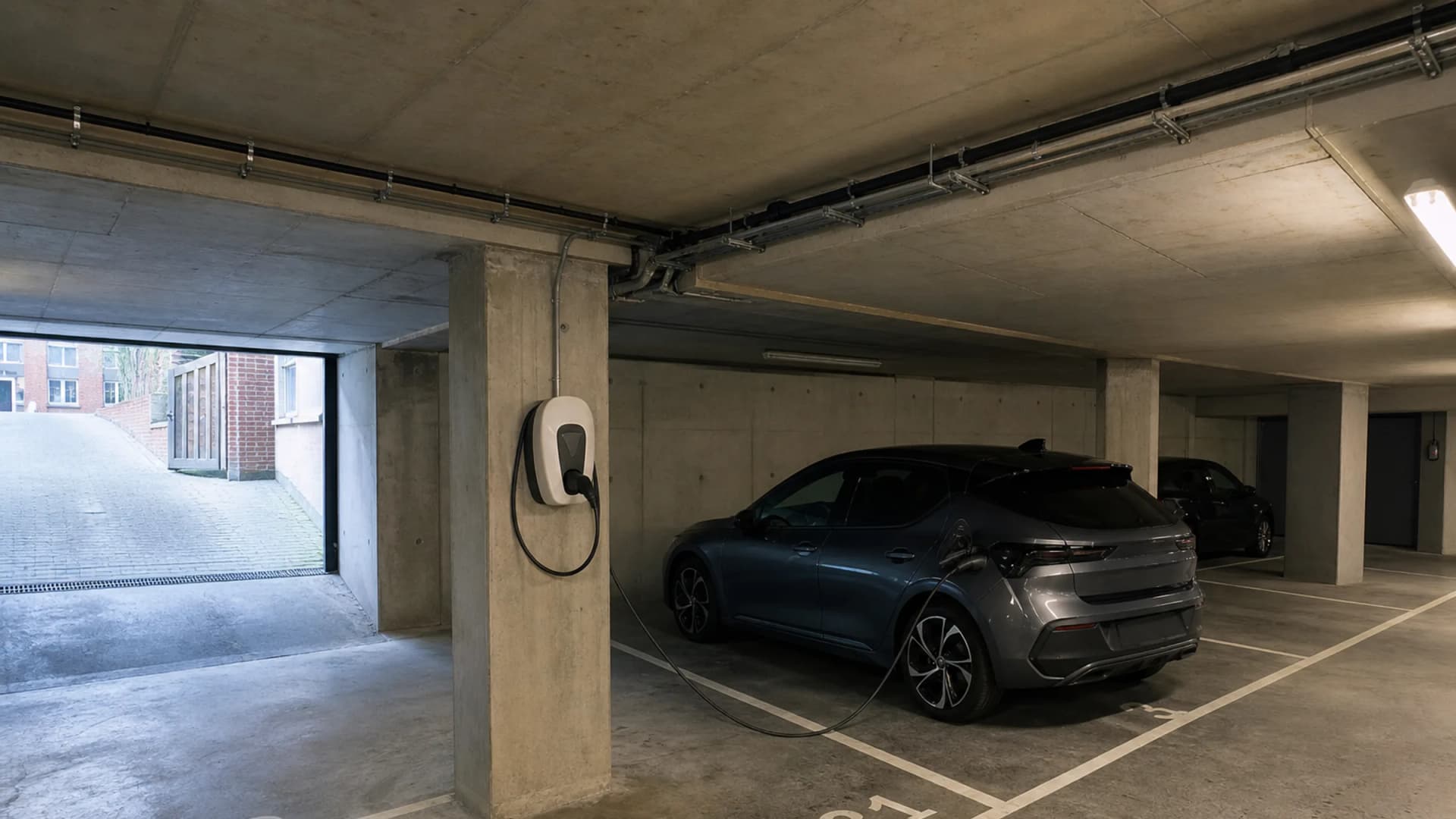
Want a charger at your parking spot in a Dutch apartment building? In most cases you currently need approval from the owners' association (VvE) meeting. If your VvE uses the 2017 model regulations, a notification with a work plan often suffices. A national notification scheme covering all VvE's is in the making.
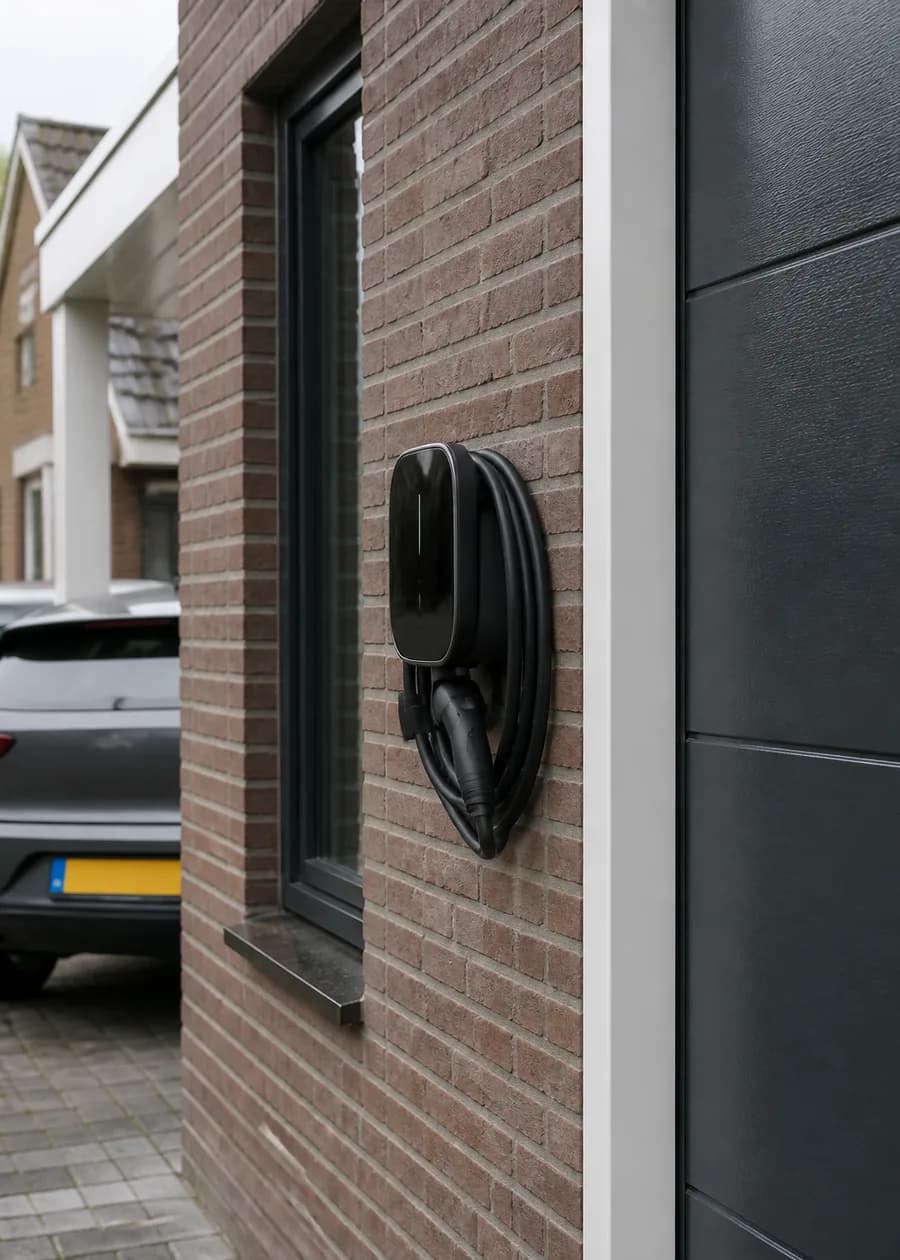
Why the VvE has a say
 EV charger
In an apartment building your parking spot is rarely an island. The cable runs through communal spaces, the power often comes from the building's central connection and the wall carrying the charger is usually communal property. That is why the owners' association formally has a say: what happens to communal parts is decided by the meeting.
Which route you must follow exactly is set out in the deed of division and your VvE's regulations. Roughly there are two flavours: VvE's under the 2017 model regulations and VvE's with older regulations.
2017 model regulations: notify instead of ask
If your VvE falls under the 2017 model regulations, there is good news: those regulations already contain a notification arrangement for charging points on a private parking spot. You do not need to ask the meeting for approval; you notify the board in advance with a work plan. Conditions apply: installation by a certified installer, at your own cost and risk, with separate metering, and without leaving other residents short of power.
Many owners (and boards) do not know this route exists. So first check which regulations your deed of division refers to before starting a long meeting process.
Older regulations: through the meeting
Under older regulations, approval by the general meeting is the standard route. That does not have to take years if you prepare well. What works in practice: come to the meeting with a complete proposal instead of an open question. That means a quote from a certified installer, a drawing of the cable route, separate metering so you only pay your own consumption, and agreements on maintenance, insurance and removal when you leave.
Also think one step beyond your own spot. For the VvE a collective plan is often more attractive: lay the infrastructure properly once (with load balancing on the central connection) so others can join later, instead of ten separate wall openings and cables. A proposal that includes that perspective wins a majority more easily.
What is coming: the notification scheme
The Dutch government is working on a law that levels this for all VvE's: the notification scheme for charging points at VvE's. The core: a notification to the board with a work plan replaces the meeting's approval, provided the charging point meets the legal conditions. At the time of writing this is still a bill; the intended start sits around the turn of 2026 into 2027 and the exact conditions will follow in an implementing decree.
Until then your own VvE's regulations simply apply. Waiting for the law is rarely necessary: with a good proposal or the notification route of the 2017 model regulations you can get there today.
How SolarFast helps here
We supply the documents a VvE board asks for: a quote with the cable route, a safe connection with separate metering and load balancing so the central connection is never overloaded. In Amsterdam and the surrounding area this is daily work: a large share of charger requests there runs through a VvE. Do you live in an apartment with your own parking spot? Put your situation to us or first see the charger page. If the building has solar panels, charging on solar power is interesting for a VvE too.
Solar panels are still a smart investment in 2026. A few things matter if you want the most from your own power.
Your energy use
Planning to drive, cook or heat electrically? Factor that into how many panels you install now.
Spread the yield
Spread panels across roof faces so you generate through the day and use more of your own energy.
Your data
Choose a system with its own 4G connection and data storage in Europe so your information stays secure.
Boost your energy
A smart home battery stores today's power for later, so you use more of your own electricity after sunset.

We install your EV charger
We install your charger professionally and explain the costs upfront. We look at your car, fuse box and where the charger will sit. After installation we remain available for questions.
- Leave every morning with a full battery
- Faster charging than a wall socket
Frequently asked questions
Under older regulations the meeting decides, but a refusal must be reasonable. Under the 2017 model regulations a notification with a work plan suffices on a private parking spot and no approval is needed. The upcoming notification scheme will level this for all VvE's.
You, as the owner having it installed: installation, maintenance and insurance are at your own expense. With separate metering or a charging point that records consumption, you settle the power on your own usage instead of through the service charges.
A quote from a certified installer, the cable route, how consumption is metered, how the central connection is protected (load balancing) and agreements on maintenance, liability and removal. The more complete the proposal, the smoother the decision.
Usually not. The scheme is still a bill and the conditions are not yet fixed. With the notification route of the 2017 model regulations or a well-prepared meeting proposal you can proceed today.
Often, yes. One properly installed base infrastructure with load balancing is cheaper and safer than repeated separate installs, and the VvE keeps control. An individual request is a good moment to start that conversation.

Discover what smart energy can do for you
In about an hour you get insight into your savings, the options for your home and when the investment pays back. Straightforward, honest advice so you know exactly where you stand.
Smart energy at home
- Upgrade your home with our smart battery
- Our solar panels deliver up to 25% more energy
- A heat pump to minimise your energy use
- Charge your electric car easily at home with an EV charger
Booking an advice call is easy
Fill in your details below. Within a day we will contact you to schedule a no-obligation advice call together.
Related articles