
11 kW vs 22 kW charger: what do you really gain?
6 min read
A 22 kW charger sounds twice as fast as 11 kW, but your car and connection decide what you actually charge. The honest trade-off for home.
All comparisons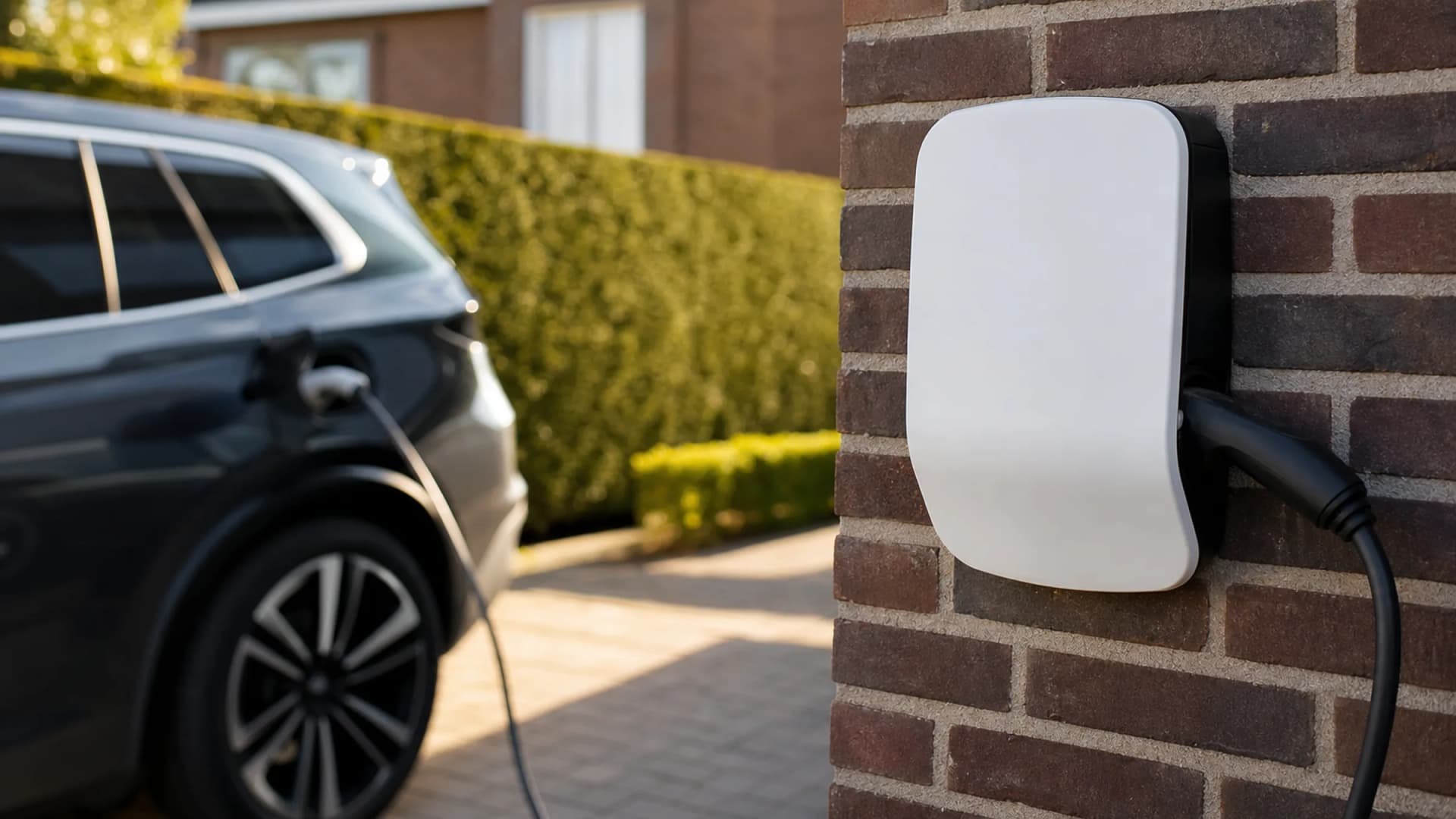
On paper 22 kW charges twice as fast as 11 kW. In practice most cars do not charge faster than 11 kW at home, because the onboard charger in the car sets the limit. And 22 kW requires a heavy 3x32A connection most homes do not have. For almost everyone, 11 kW is the sensible maximum at home.
Introduction
 EV charger
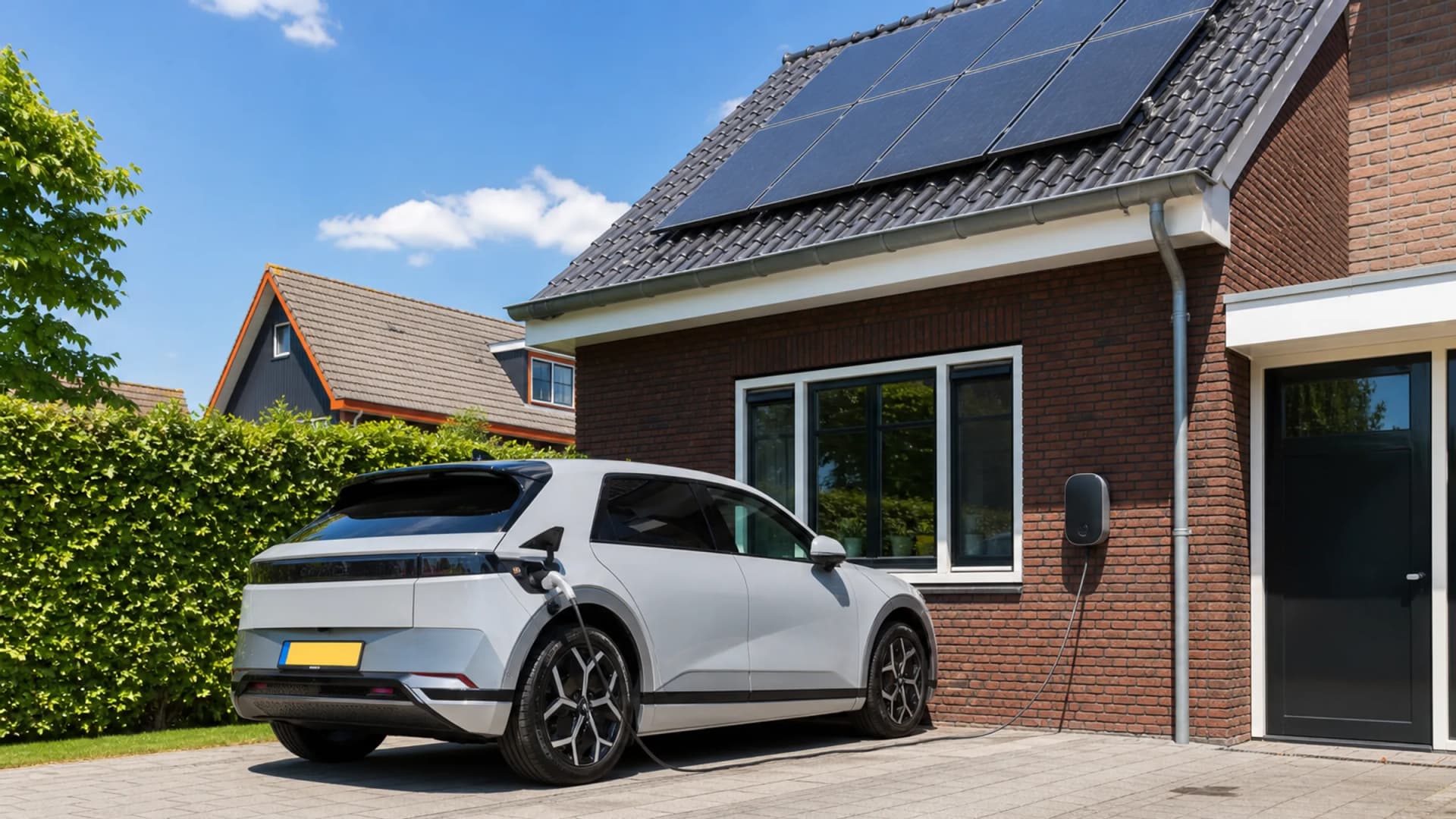
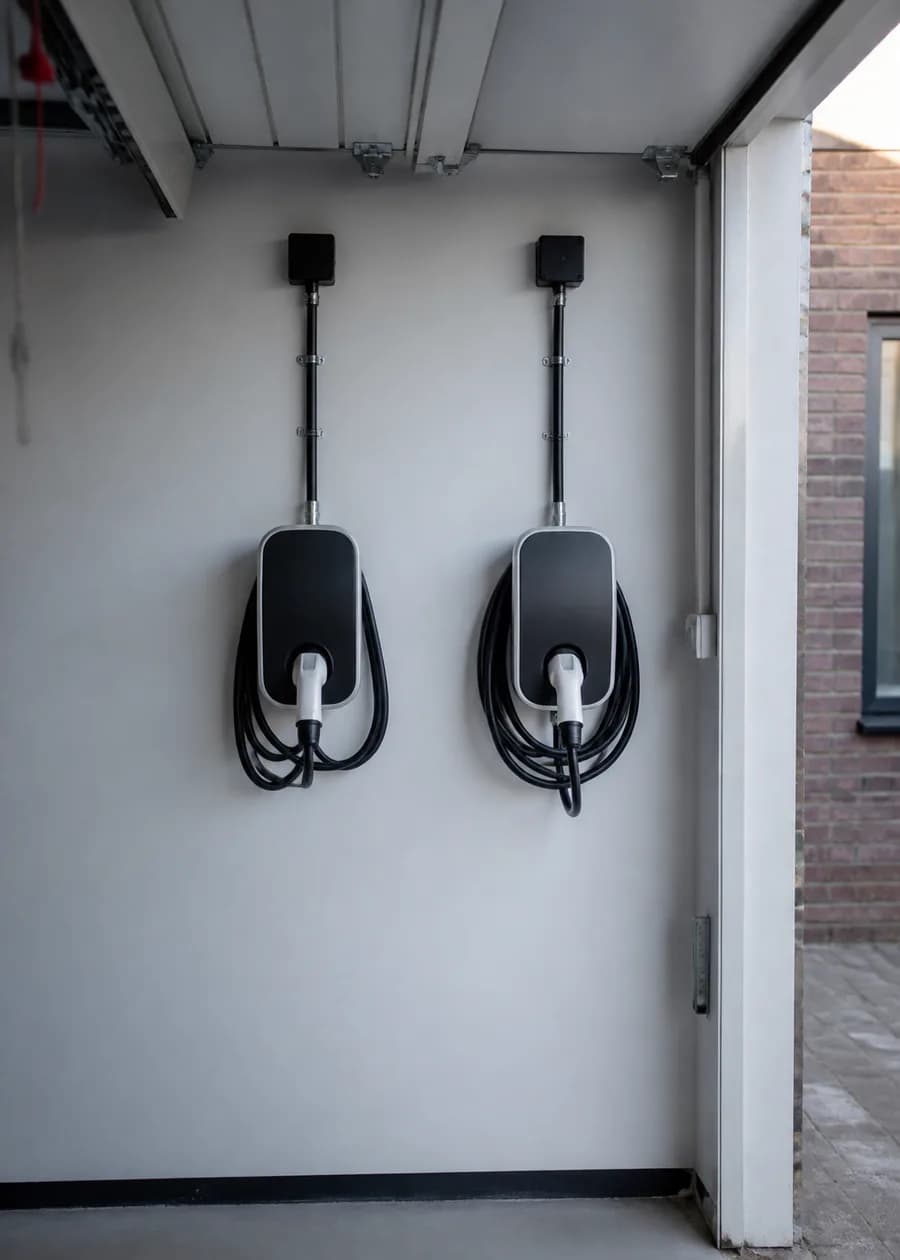
With chargers, more power seems automatically better. But home charging is an interplay of three links: the charger, the onboard charger in the car and your grid connection. The weakest link sets the pace. Below we compare 11 and 22 kW honestly, including the question that comes first: what can your fuse box handle? If you mainly want to charge on your own sun, also read charging on your own solar power.
The options side by side
11 kW charger (3x16A)
Pros
- Fits most three-phase home connections
- Nearly every car uses the full power
- Full battery overnight, with time to spare
- No connection upgrade needed
Cons
- Not achievable on a single-phase connection (then about 7.4 kW max)
- Slower than 22 kW on paper
22 kW charger (3x32A)
Pros
- Fastest AC charging possible at home
- Future-proof if cars ever charge faster on AC
- Useful for intensive use with several cars
Cons
- Requires a heavy 3x32A connection most homes lack
- Most cars charge no faster on it than 11 kW
- Upgrading costs money once and raises your fixed grid fees
The car's onboard charger sets the limit
The least-known fact in this comparison: with home (AC) charging, the car's onboard charger decides the speed, not the wallbox. Many electric cars have an 11 kW onboard charger; quite a few models sit at 7.4 kW. Cars that can take 22 kW at home are the exception.
Mount a 22 kW unit on the wall for a car with an 11 kW onboard charger and it simply charges at 11 kW. The extra power stands idle. So first check the specifications of your (next) car for what the onboard charger handles; that single figure decides this whole comparison.
How many amps is 11 kW (and 22 kW)?
11 kW is about 16 amps per phase. 22 kW comes out at about 32 A per phase. That is three-phase charging, with 230 volts on each phase.
The installer therefore puts an 11 kW unit on a 3x16A circuit and 22 kW on 3x32A. On single-phase, 32 A is about 7.4 kW, and that is the ceiling there. That circuit is not the same as your house connection: most three-phase fuse boxes can spare 16 A per phase, 32 A per phase almost never without an upgrade.
What your connection can handle
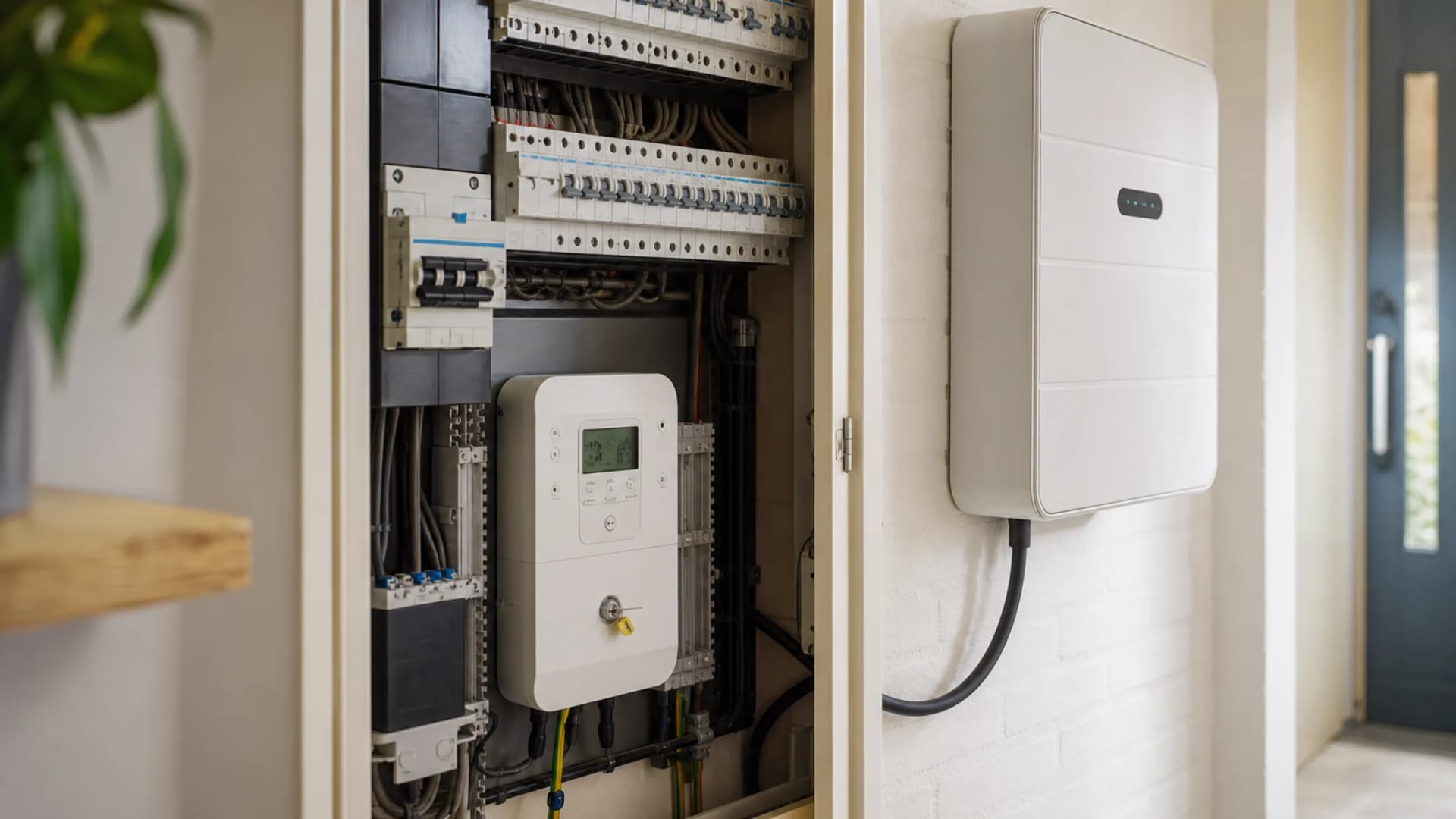
The second link is the fuse box. For 11 kW the installer fits a three-phase 3x16A circuit; that fits most three-phase homes without upgrading the house connection. For 22 kW you need a 3x32A circuit, and that almost always means a heavier house connection. Upgrading is possible, but costs a one-off connection fee plus a structurally higher fixed tariff at the grid operator. Those fixed costs keep running, every year, even if you never charge at 22 kW.
| 11 kW | 22 kW | |
|---|---|---|
| Circuit in the fuse box | Three-phase, 3x16A | Three-phase, 3x32A |
| Current per phase | about 16 A | about 32 A |
| Car's onboard charger uses it | Nearly every model | Only a few models |
| 60 kWh battery from empty to full | About 5.5 hours | About 3 hours (if the car can take it) |
| Upgrade needed | Usually not | Almost always, with lasting higher grid fees |
| Charging on solar surplus | Combines fine | Combines fine |
Charging times are indicative and assume full power; the car's onboard charger may cap the pace.
On a single-phase connection the choice is different anyway: about 7.4 kW is the maximum there. That too is plenty for most drivers, certainly with a whole night available.
How fast does home charging really need to be?
Do the maths. An average driver comes home with a battery far from empty and has the whole night. At 11 kW a large 60 kilowatt-hour battery goes from empty to full in about five and a half hours; a normal day's driving is topped up in an hour or two. The moments where 22 kW makes a difference at home are rare.
If you want to cut charging costs, smart charging beats faster charging: letting the car charge on your solar surplus or during the cheap hours of a dynamic energy contract. For that, gentle charging is actually favourable; speed is no advantage there.
When does 22 kW make sense?
There are cases where it is defensible: a household with two electric cars driving many kilometres daily, a car whose onboard charger genuinely takes 22 kW, or a business at home with changing cars on the driveway. If a 3x32A connection is already in place for such reasons, the extra cost of the unit itself is limited.
For the average home charger the reverse holds: the extra cost of upgrading and the higher fixed grid tariff is never earned back with charging speed your car does not use.
How SolarFast advises on this
During the survey we look at your connection, your car (and your next car) and your driving pattern. That almost always results in an 11 kW recommendation, with load balancing so the unit works neatly with the rest of the house, and surplus charging if you have panels. Put your situation to us or see the charger page.
Verdict
For nearly every home charger 11 kW is the sensible maximum: more than enough every night, no upgrade needed and nearly every car uses it fully. Only choose 22 kW if your car demonstrably takes it and your connection already allows it, or if several cars charge many kilometres daily. Faster on paper is not faster on your driveway.
Solar panels are still a smart investment in 2026. A few things matter if you want the most from your own power.
Your energy use
Planning to drive, cook or heat electrically? Factor that into how many panels you install now.
Spread the yield
Spread panels across roof faces so you generate through the day and use more of your own energy.
Your data
Choose a system with its own 4G connection and data storage in Europe so your information stays secure.
Boost your energy
A smart home battery stores today's power for later, so you use more of your own electricity after sunset.

We install your EV charger
We install your charger professionally and explain the costs upfront. We look at your car, fuse box and where the charger will sit. After installation we remain available for questions.
- Leave every morning with a full battery
- Faster charging than a wall socket
Frequently asked questions
Usually not. The car's onboard charger sets the pace for home charging, and on most models it sits at 11 kW or lower. A 22 kW unit simply charges such a car at 11 kW.
About 16 amps per phase on three-phase. That is why it sits on a 3x16A circuit. 22 kW is about 32 A per phase, so a 3x32A circuit.
A three-phase 3x16A circuit. That fits most three-phase homes without upgrading the house connection. 22 kW needs a 3x32A circuit, and that almost always means a heavier connection.
You pay the grid operator a one-off connection fee and then a structurally higher fixed tariff for the heavier connection. Current amounts are published by your grid operator; we include them in the advice.
For most drivers, yes: with a whole night available, a normal day's driving is easily topped up. Only with long daily distances or several cars does three-phase charging become interesting.
Yes, especially so. With surplus charging the unit adjusts its power to your solar surplus, which is almost always below 11 kW. More power adds nothing there.
That is rarely rational: you pay now for an upgrade and lasting higher grid fees for speed your car does not use. An 11 kW unit with load balancing is the future-proof choice for almost everyone.

Discover what smart energy can do for you
In about an hour you get insight into your savings, the options for your home and when the investment pays back. Straightforward, honest advice so you know exactly where you stand.
Smart energy at home
- Upgrade your home with our smart battery
- Our solar panels deliver up to 25% more energy
- A heat pump to minimise your energy use
- Charge your electric car easily at home with an EV charger
Booking an advice call is easy
Fill in your details below. Within a day we will contact you to schedule a no-obligation advice call together.
Related articles