Grid congestion: what still fits your home
Updated on 8 min read
What grid congestion means, what you notice at home, and how to check what still fits your connection. Soft postcode check plus the capacity map.
All articles
First the calm bit: your lights stay on, and for most homes a heat pump, EV charger or battery still fits the current connection. Media often overstates grid congestion. In plain terms it is local pressure on the grid: in some places and moments transport demand exceeds what cables can safely carry. Use our grid check or the postcode check below for a soft region indication, or open the capacity map for the official status.
This is a soft region indication from your postcode (no street-level guarantee). The national capacity map is a snapshot and mainly an indication for heavier connections. For households the first step is often: see what fits your current connection.
What is grid congestion?
 Home battery
Grid congestion is a traffic jam on the power grid: at certain moments households and businesses want to draw or feed back more power than the cables and stations can handle. The grid is not broken, it is full. Grid operators speak of congestion as soon as the demand for transport exceeds the capacity that is safely available.
Congestion is tied to time and place. One street has solar panels on every roof and three cars charging, while the street behind it carries hardly any load. Netbeheer Nederland explains how local that difference can be. There is no such thing as a nationally 'full' grid: it pinches per area, and within an area per moment.
There are also two sides to it. Demand congestion: too much draw at the same time, mainly in the evening. Feed-in congestion: too much export at the same time, mainly on sunny afternoons when every panel in the neighbourhood is delivering.
Why does it pinch in some places?
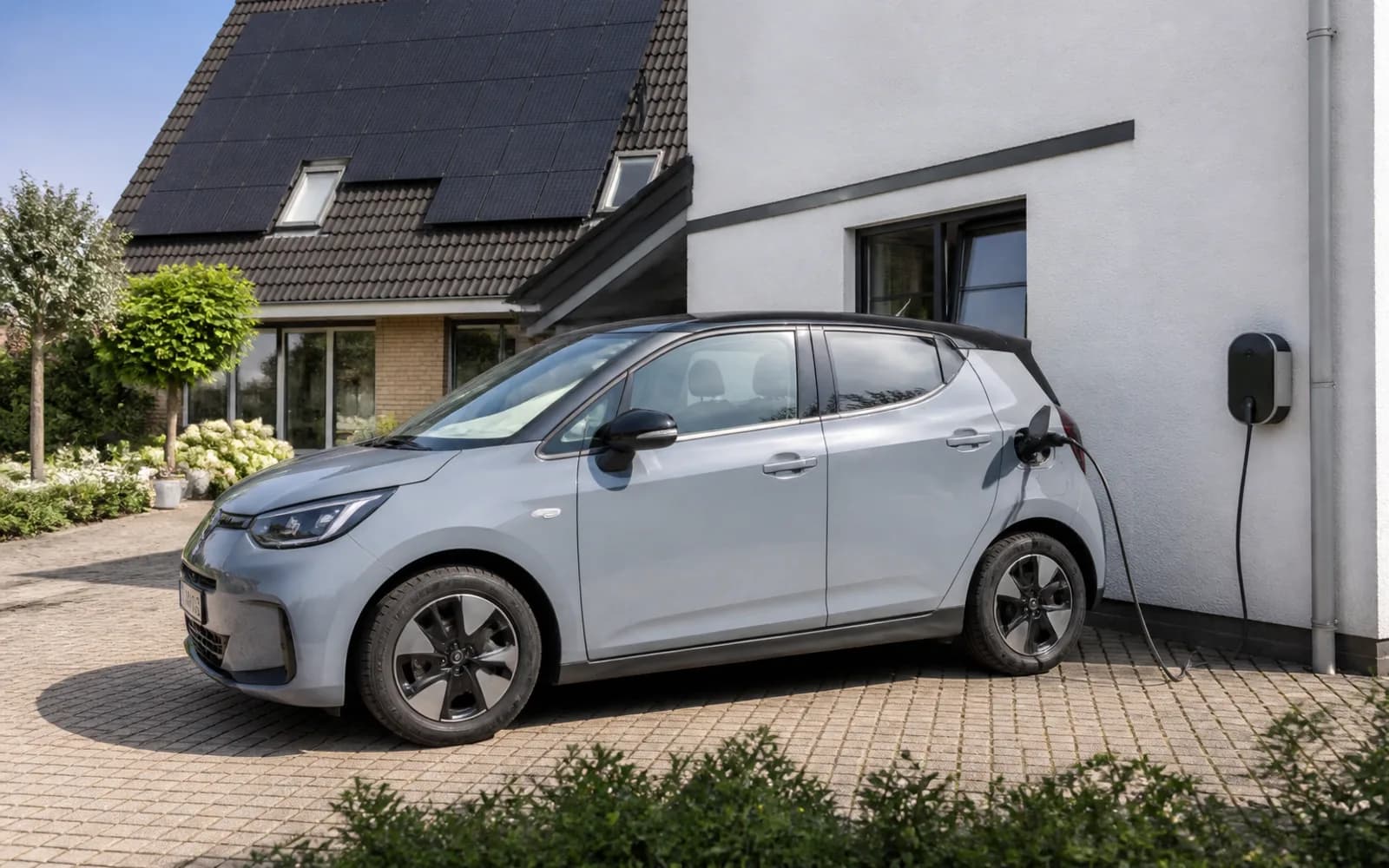
The Netherlands is electrifying faster than the grid can grow. Heat pumps replace gas boilers, cars charge at home and more and more roofs carry panels that feed back at the same moments. Every switch is a win for the climate, but it all adds up on the same cables in the ground.
Expansion is in full swing, it just takes long. A new high-voltage station or a heavier neighbourhood cable takes years of permits, space and skilled people. Meanwhile demand keeps growing, and grid congestion arises in that gap.
When and where does it pinch?
The toughest moment is the evening peak, roughly between 4 pm and 9 pm: people come home, cook electrically, the heat pump runs and the car goes on the charger. In winter that peak is highest. On the generation side you see the mirror image on sunny afternoons, when panels across the neighbourhood feed back at once.
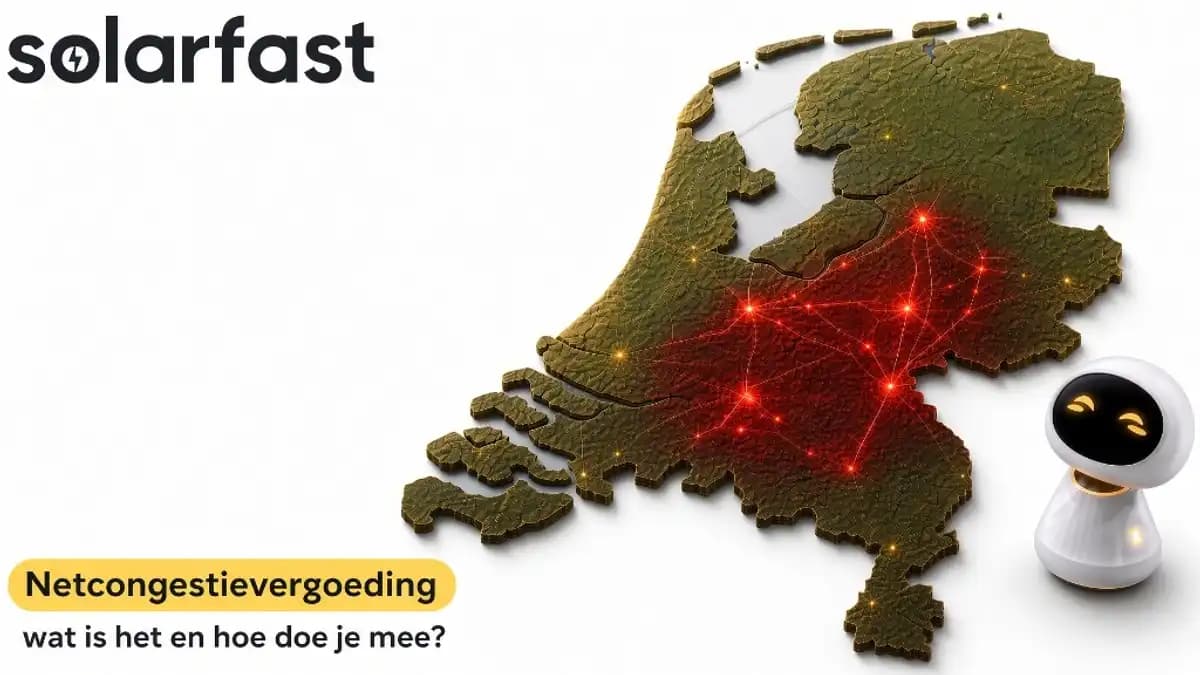
Where it pinches differs per region and even per neighbourhood. The capacity map by Netbeheer Nederland shows per area whether there is room for demand and feed-in, or whether a queue applies. The grid operators maintain that map themselves; it is the place to check your own region.
What do you notice at home?
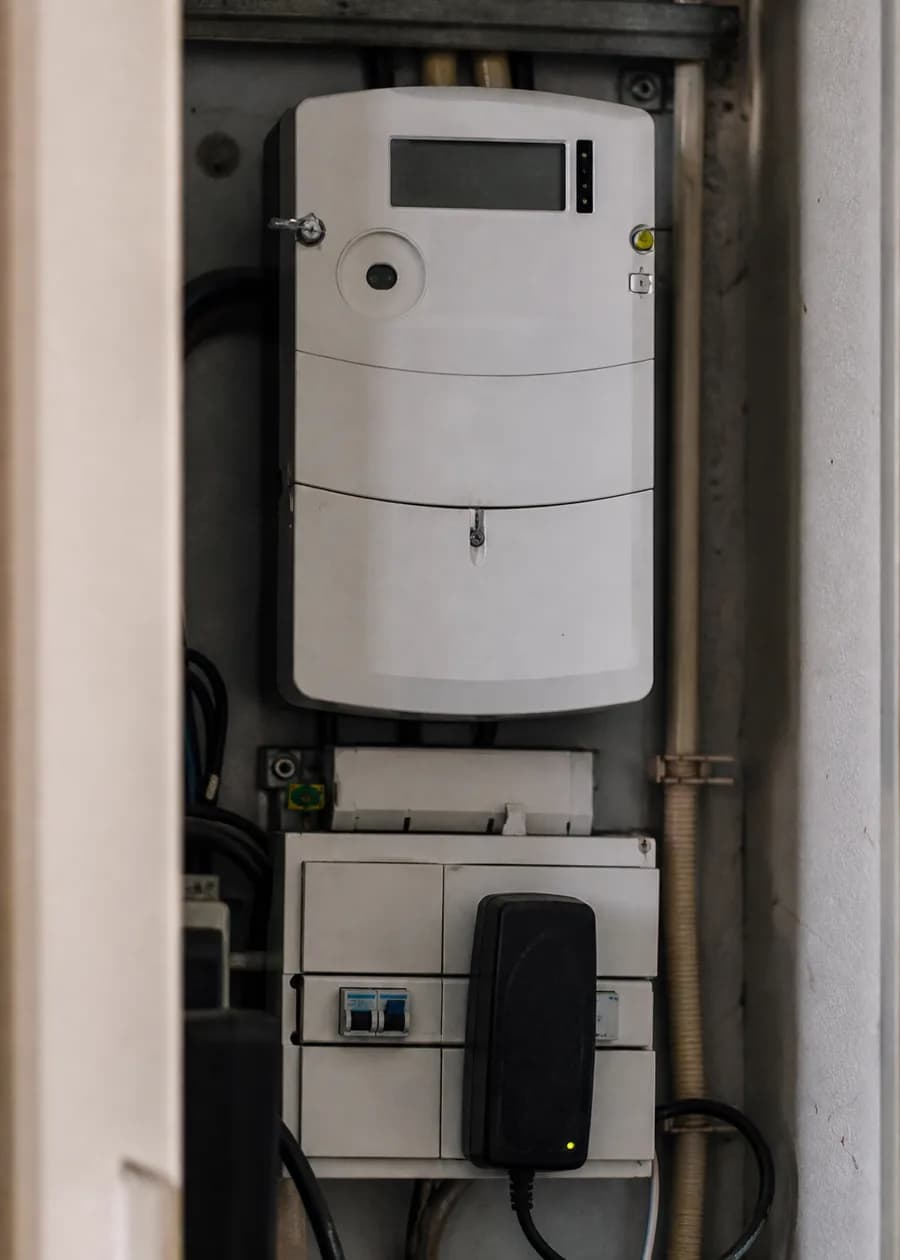
For your day-to-day power use, usually nothing: your existing connection keeps working. Grid congestion becomes visible in three other situations, which are often mixed up.
| Situation | What happens | What you notice |
|---|---|---|
| Waiting list or connection pause | New or heavier connections wait until there is room on the grid | Your application is registered and handled once capacity frees up; your current connection keeps working |
| Peak congestion | The grid runs against its limit during peak hours, mainly between 4 pm and 9 pm | Usually nothing; grid operators deploy flexibility and ask households to shift use |
| Power cut | Supply fails due to a defect or acute overload | No power until the fault is fixed; outages usually have a different cause than congestion |
If you apply for a new or heavier connection in a full area, it can end up on a waiting list. Grid operators distribute capacity that frees up according to the prioritisation framework of regulator ACM. Worth knowing: a heat pump or EV charger often fits within your existing connection, so far from every upgrade requires a heavier one.
Grid congestion and solar panels
Panels keep earning their keep, also in a full area. The power you use directly yourself never touches the grid; no congestion stands in the way there. The pinch point is what you feed back.
On sunny afternoons the grid voltage in the neighbourhood can rise so high that your inverter temporarily throttles back, exactly as it should. How that works is explained under inverter. The more of your own generation you use yourself, the less you notice of all this and the lower your feed-in charges.
What helps against grid congestion?
The structural fix is building more: thicker cables, new stations. Grid operators are working hard on that, but it takes years. Until then the gains come from using what is already there more cleverly, and households play a bigger role in that than you might think.
Shift use to quiet hours: the dishwasher after 9 pm, the car charging overnight. How to do that conveniently and automatically is covered under smart home energy management.
A home battery absorbs your midday surplus and delivers that power to your home in the evening, exactly away from the peak. A smart EV charger spreads charging across the night. And if you want your energy supplier to handle that steering for the grid, that is called grid control.
The grid congestion payment
In areas where the grid is tightest, grid operators buy flexibility from households. That runs through energy suppliers: they steer your home battery, charger or heat pump during peaks and pay you a grid congestion payment for it. Taking part is voluntary and the steering happens automatically in the background.
There is no fixed national rate: how much you receive and how it is paid out differs per supplier and contract. The areas where such an offer applies change too. Which regions take part right now and what the scheme involves there, we track in our blog post on the grid congestion payment.
Taking part through Frank Energie
SolarFast partners with Frank Energie, our official partner for dynamic contracts and smart steering. Frank steers customers' home batteries, chargers and heat pumps and takes part in the grid operators' congestion programmes. On Frank Energie's grid congestion page you can check with your postcode whether your address lies in a designated congestion area.
You are not locked in: you remain free to switch energy suppliers, and the devices we install also work without Frank. Whether the grid congestion payment stacks on top of what smart steering already saves on your own bill depends on your contract and region; it is not a fixed extra.
Grid congestion and your SolarFast system
We pick inverters, batteries and charger brands that can be steered remotely. HyxiPower and KStar we link to Frank Energie if you take their dynamic contract or already have one; Dyness through Smart Grid One. That way your system can take part in steering and payment schemes, now or later, without replacing anything.
Part of our service area, including Utrecht, De Ronde Venen and Almere, lies in regions where the grid is tight. During the survey we therefore check your fuse box, your connection and what needs to be steerable as standard. Put your situation to us and we will think along about a setup that spares the grid and is ready for a payment scheme.
Solar panels are still a smart investment in 2026. A few things matter if you want the most from your own power.
Your energy use
Planning to drive, cook or heat electrically? Factor that into how many panels you install now.
Spread the yield
Spread panels across roof faces so you generate through the day and use more of your own energy.
Your data
Choose a system with its own 4G connection and data storage in Europe so your information stays secure.
Boost your energy
A smart home battery stores today's power for later, so you use more of your own electricity after sunset.

We install your home battery
Usually within three weeks. Our installers fit the battery neatly and safely by your fuse box. We leave your home clean and make sure you know exactly how it all works.
- Charge smart when power is cheap
- Keep power until you need it
Frequently asked questions
Literally: a traffic jam on the electricity grid. The demand for transporting power is greater than the grid can safely handle in certain places at certain times. It says nothing about a defect: the grid is full, not broken.
A temporary halt on new or heavier connections in an area where the grid is full. Applications then go on a waiting list until capacity frees up. Where this currently applies and what you get in return is covered in our blog post on the grid congestion payment.
On the capacity map by Netbeheer Nederland. It shows per area whether there is room for demand and feed-in, or whether a queue applies. The map concerns applications for transport capacity; your existing connection keeps working. For a soft region indication you can also use our grid check.
The chance of that is small. Grid operators intervene in other ways first and, in an emergency, disconnect large non-critical consumers first, such as offices or swimming pools. A regular power cut usually has a different cause, such as a cable failure.
Often yes. A charger or heat pump frequently fits within your existing connection, in which case no new application with the grid operator is needed. Only a new or heavier connection can end up on a waiting list. We check this for you during the survey.
Yes, provided it is steered smartly. The battery absorbs your solar surplus at midday and delivers that power to your home during the evening peak. That way you load the grid less at both peak moments.
Grid congestion is the problem: a full grid. Grid control is one of the solutions: your energy supplier steers your charger, home battery or heat pump during peaks, with your consent and usually for a payment.
In designated congestion areas, yes: grid operators there pay a grid congestion payment through your energy supplier for devices that take part. The amount differs per supplier and contract; there is no fixed national rate.

Discover what smart energy can do for you
In about an hour you get insight into your savings, the options for your home and when the investment pays back. Straightforward, honest advice so you know exactly where you stand.
Smart energy at home
- Upgrade your home with our smart battery
- Our solar panels deliver up to 25% more energy
- A heat pump to minimise your energy use
- Charge your electric car easily at home with an EV charger
Booking an advice call is easy
Fill in your details below. Within a day we will contact you to schedule a no-obligation advice call together.
Related articles