
A home battery without solar panels: does it pay?
Updated on 7 min read
A home battery without solar panels charges at cheap hours and discharges at expensive ones. When that pays, what you need and when waiting is smarter.
All articles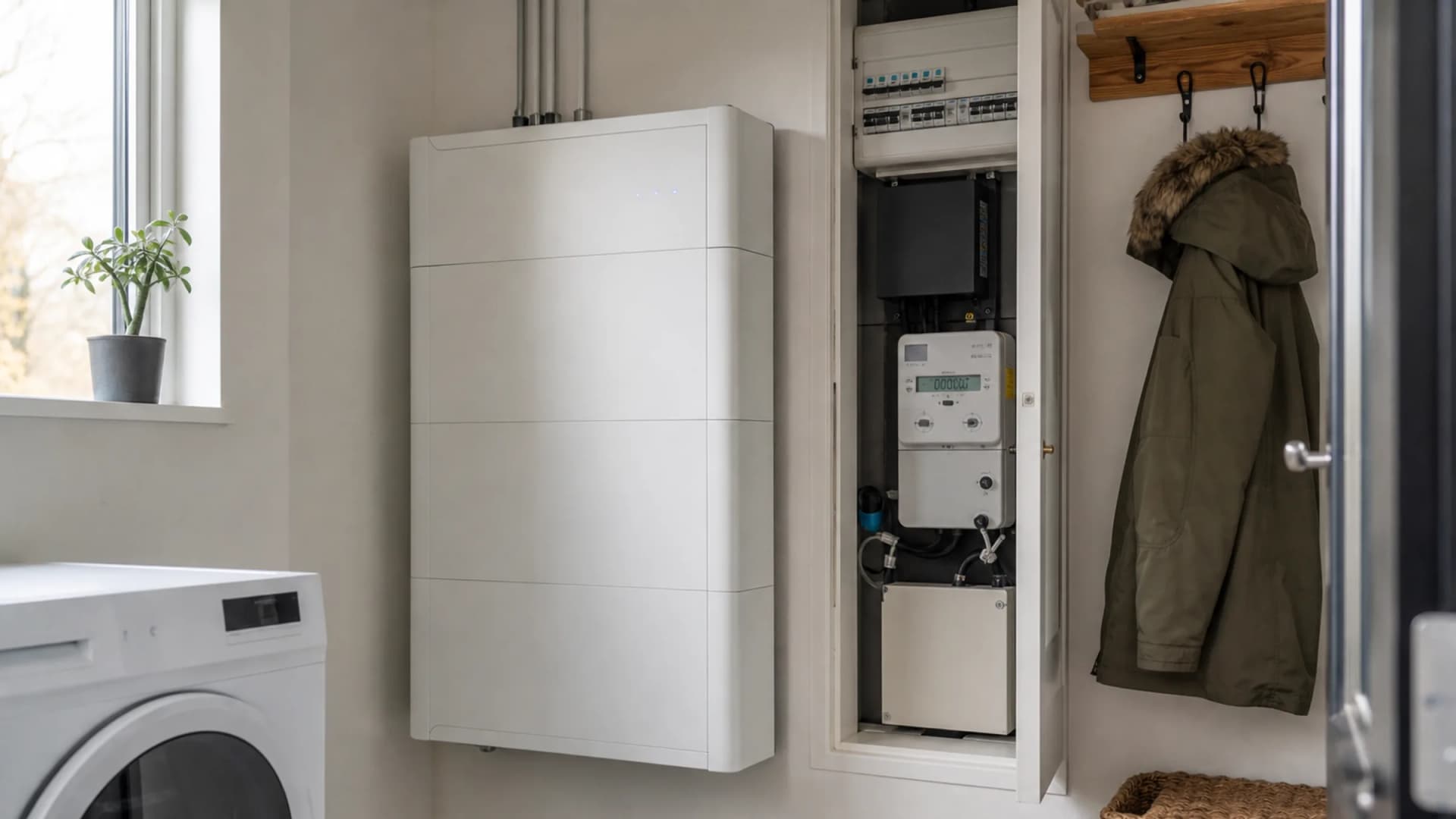
Yes, a home battery also works without solar panels: it charges during the cheap hours of a dynamic contract and feeds that power back when the price peaks. Whether it pays financially depends on the daily price spreads and your own consumption. The return is usually lower than with panels, so run the numbers honestly first.
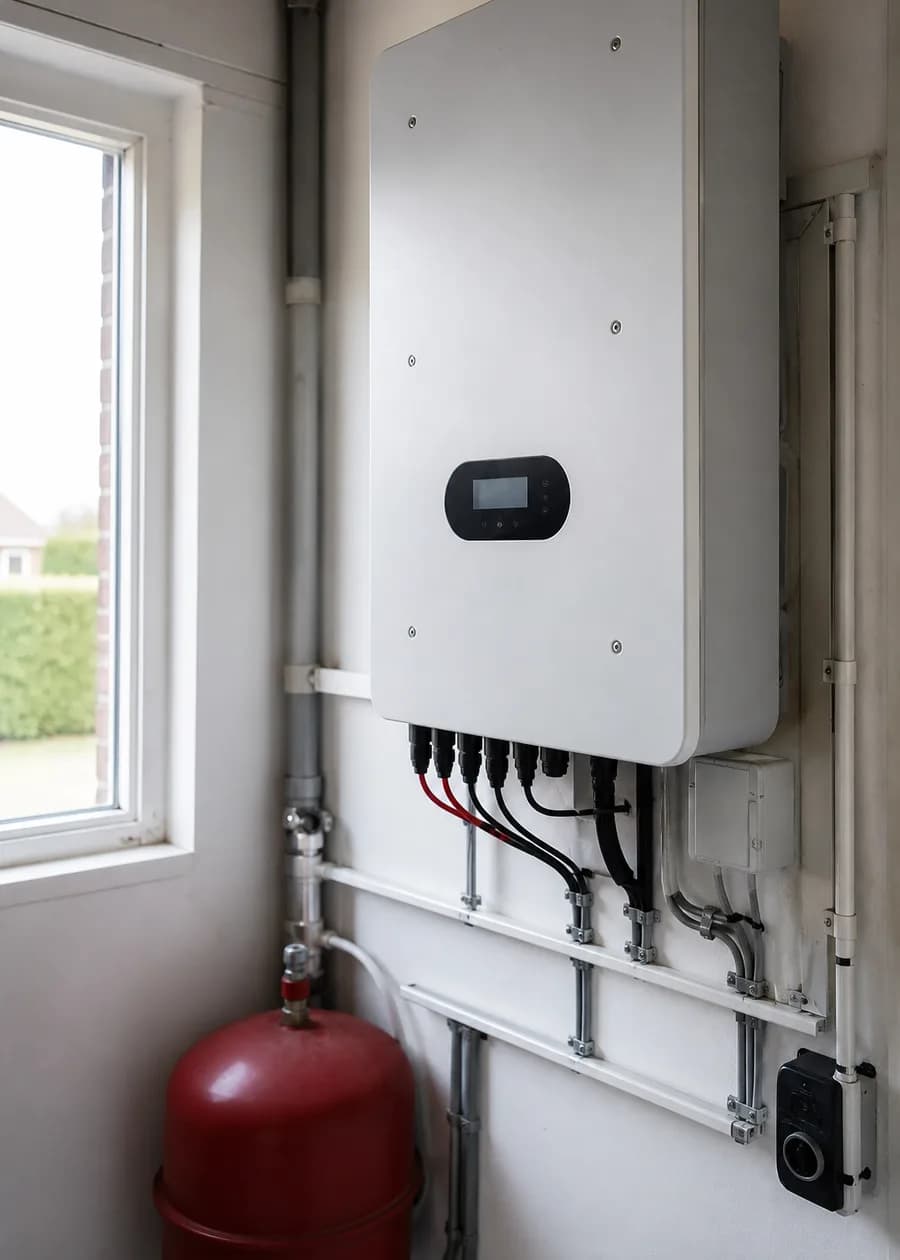
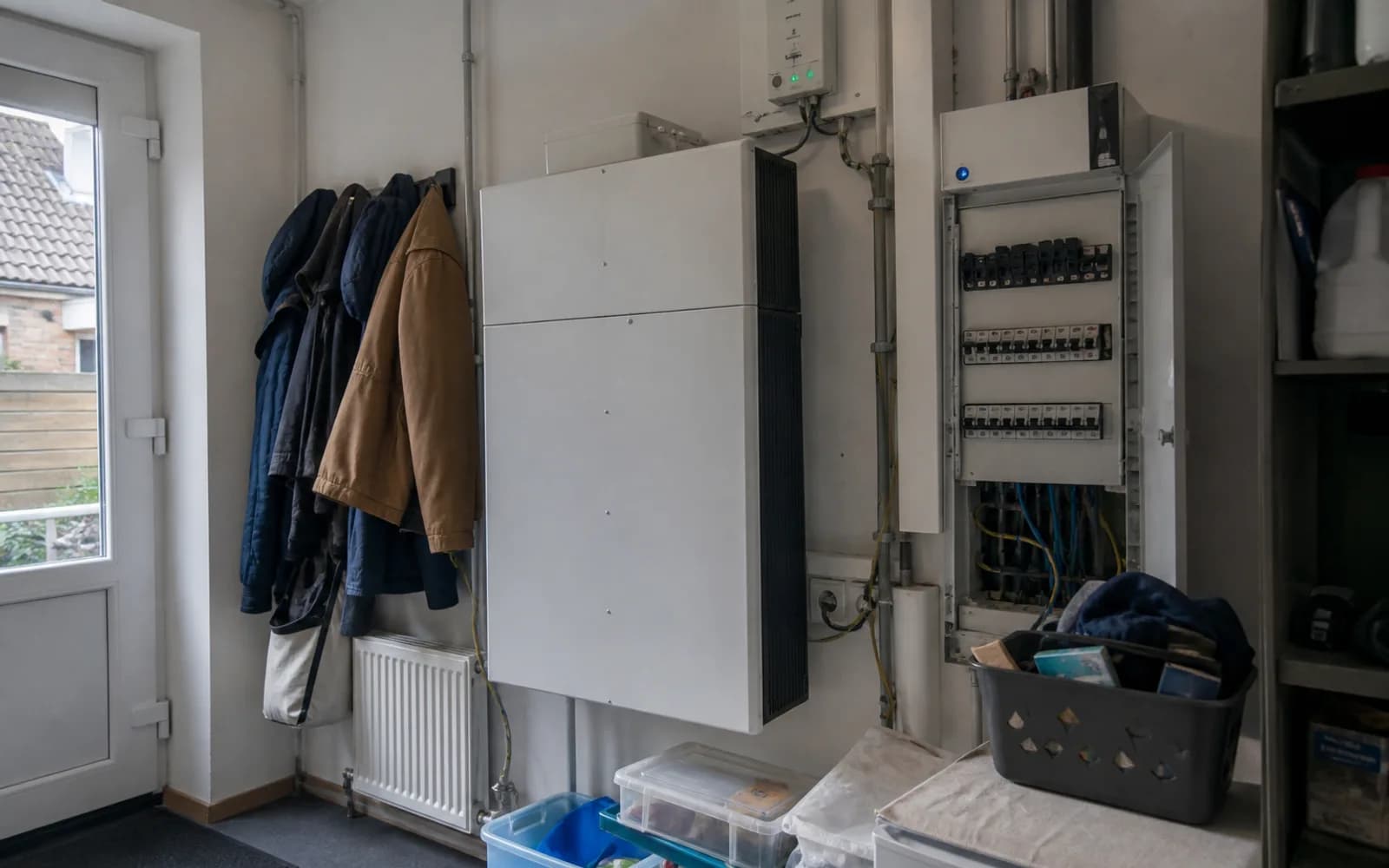
How does a home battery work without panels?
 Home battery
Without solar panels there is no own generation to store. The battery then draws its power from the grid, at moments when it is cheap. That only makes sense with a dynamic energy contract, where the price differs per hour: at night and on sunny afternoons power is often cheap, during the evening peak expensive.
The battery charges automatically during the cheapest hours and uses that power during the expensive hours for your own consumption, or feeds it back to the grid. That gap between purchase price and moment of use is the entire business case. There is a loss in it too: part of the power is lost during charging and discharging, so the price difference must be large enough to cover that.
What do you need for it?
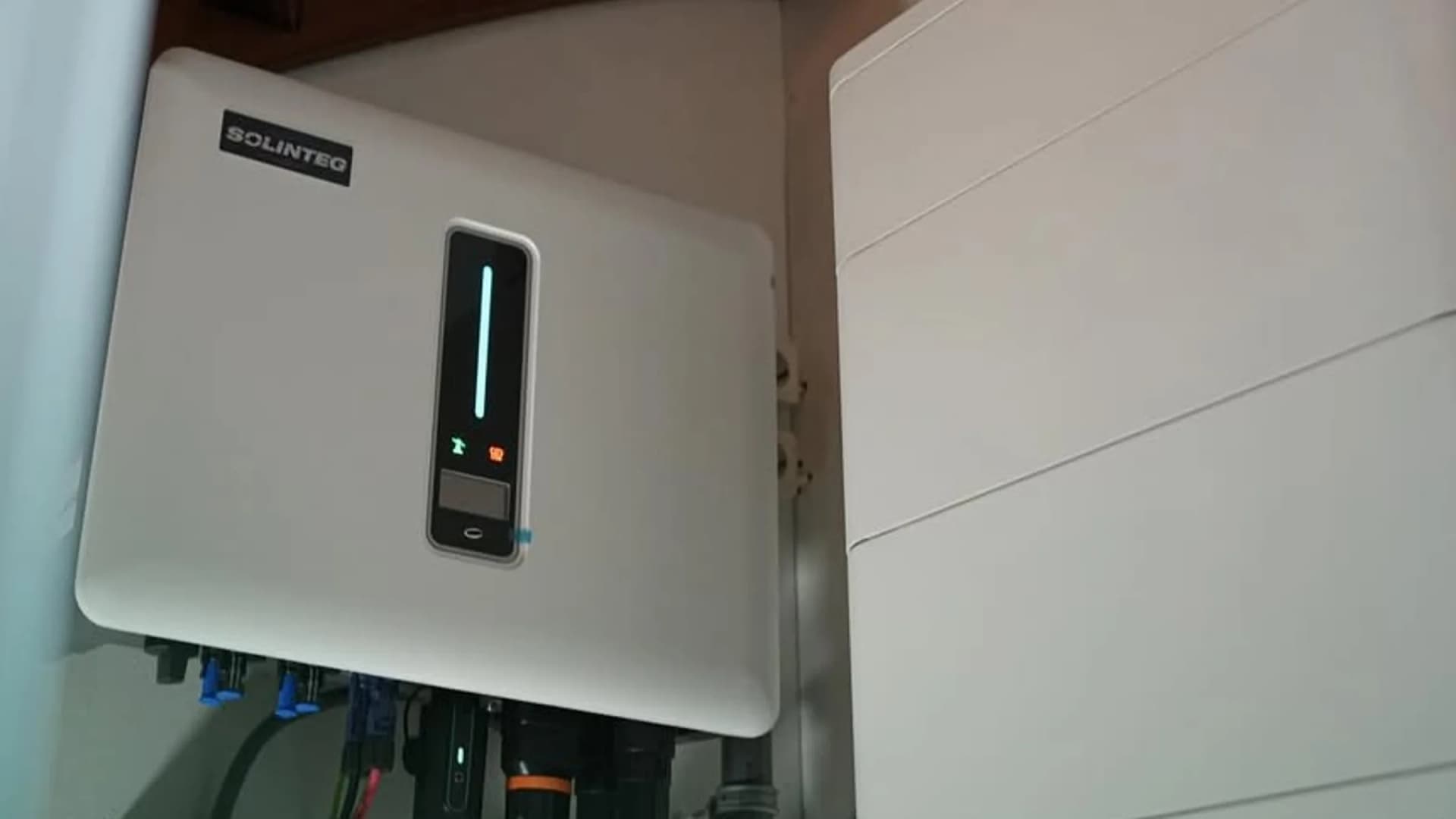
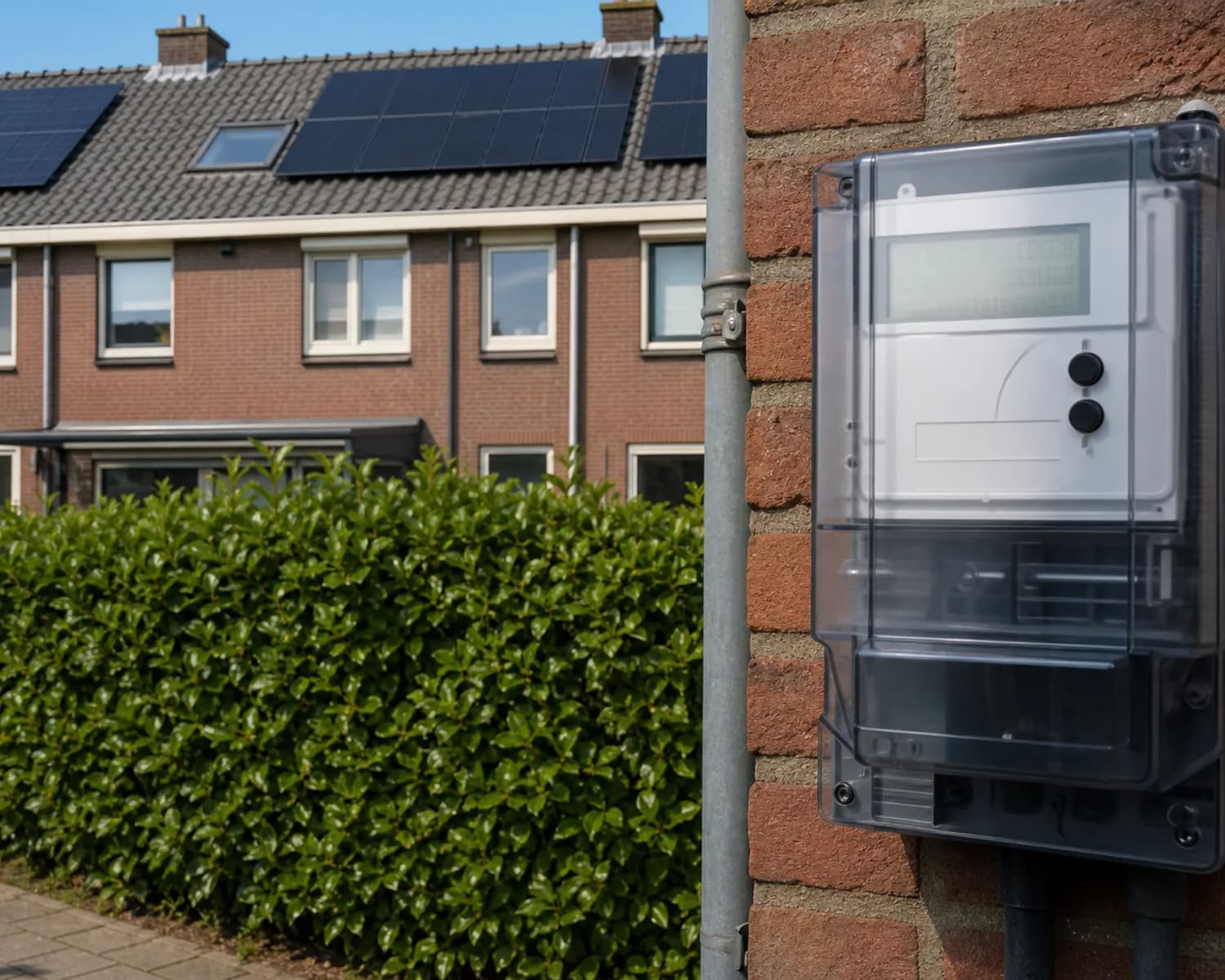
Three things. A dynamic energy contract, because with a fixed rate there is nothing to shift: every kilowatt-hour costs the same, whenever you charge. A smart meter, so consumption and feed-in are registered per hour. And a battery with an inverter that can be steered automatically on the hourly prices; switching manually is not workable.
To get more out of the battery, it can also trade automatically on the imbalance market, where prices move per quarter-hour. That requires a provider that supports it; the HyxiPower systems we install can do this through the link with Frank Energie, if you take a dynamic contract with Frank Energie or already have one.
Steering should not just fill the battery on the cheapest hour and stop there. If your charger or heat pump also draws at that moment, the connection may not cope. That is why we cap the power and keep room for what the house will actually need.
Backup power is a separate goal. A battery that charges on price does not automatically keep your fridge on during an outage. If you want that, the backup has to be in the design. How that works is on home batteries and backup power.
When does it pay, and when not?
Without panels the case is narrower than with panels. With own generation the battery does two jobs: hold your solar power and charge on price. Without panels only the price game remains. That can work, but it hinges on a few conditions.
| Works in your favour | Works against you |
|---|---|
| Dynamic contract with large daily price spreads | Fixed energy contract (nothing to shift) |
| High own consumption during expensive evening hours | Low consumption: little to shift |
| Taking part in imbalance trading via your provider | Day-ahead arbitrage only, without an extra layer |
| Space and connection already suitable | Fuse box needs upgrading first |
The deciding factor is the calculation with your own consumption profile, not an average.
What the battery itself costs and how to estimate a realistic payback period is covered in what a home battery costs. During the site survey we calculate with your actual consumption and the contract you have or plan to take; if the sums do not add up, we simply say so.
Net metering does not come into this. Without panels you have no own generation to offset. Your battery stays a price game: charge cheap, use when it is dear. What the end of net metering does and does not change if you have no panels is in our article on that misconception.
Panels first, then a battery?
For most homes with a suitable roof that is the logical order. Solar panels usually pay for themselves faster, and a battery becomes more valuable once there is own generation to hold on to. If you have neither yet, start with solar panels and include the battery as a second step.
There are exceptions. No suitable roof, a rented home where panels are not allowed, or an apartment building where the roof is already full: then the battery-without-panels route is the only one. And whoever mainly wants to trade on price differences does not strictly need the panels. This page is written for those situations.
VAT and schemes
Even without solar panels, the VAT on a home battery can be reclaimed in certain cases: the core of that route is that you trade in power, not that you generate it yourself. The conditions are precise and worth sorting out in advance; the full explanation is in VAT refund on a home battery.
A fixed home battery must be registered separately via energieleveren.nl, the same portal as for solar panels. Grid operators use those details to see what can land on the local grid.
How SolarFast handles this
With a request without panels we first look at your consumption profile and your contract, because the sums stand or fall with those. Then we advise a capacity that matches what you can genuinely shift; a bigger battery than your consumption justifies only stretches the payback period. Which size fits which household is covered in which home battery suits you.
Not sure whether it pays for you? Put your situation to us and we will run the numbers honestly. Or start on our home battery page.
This page is about a home battery without panels, not a wallbox for your car. Want to charge your car at home, even if you also have a battery? Start on the EV charger page.
Solar panels are still a smart investment in 2026. A few things matter if you want the most from your own power.
Your energy use
Planning to drive, cook or heat electrically? Factor that into how many panels you install now.
Spread the yield
Spread panels across roof faces so you generate through the day and use more of your own energy.
Your data
Choose a system with its own 4G connection and data storage in Europe so your information stays secure.
Boost your energy
A smart home battery stores today's power for later, so you use more of your own electricity after sunset.

We install your home battery
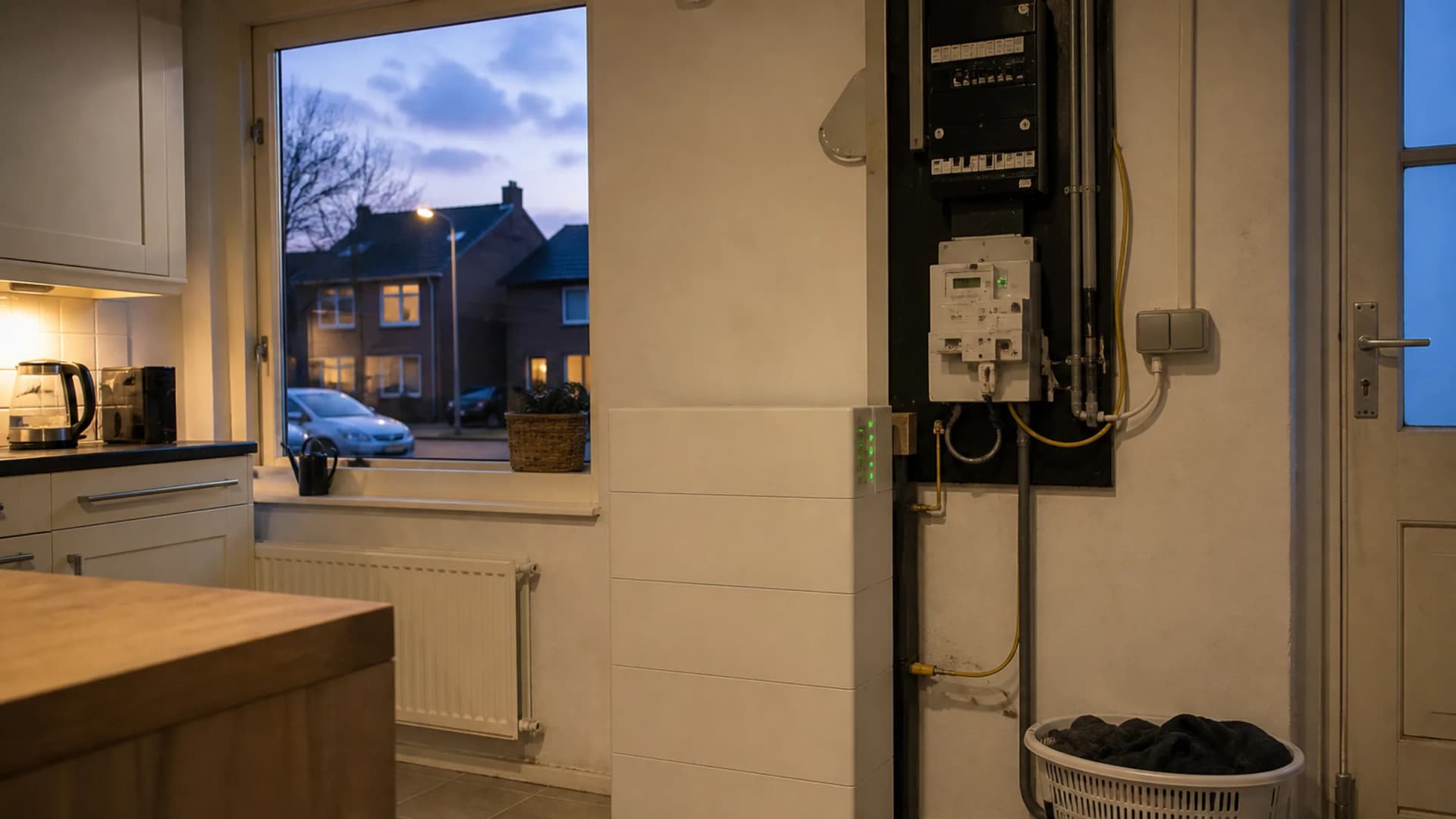
Usually within three weeks. Our installers fit the battery neatly and safely by your fuse box. We leave your home clean and make sure you know exactly how it all works.
- Charge smart when power is cheap
- Keep power until you need it
Frequently asked questions
Yes. The battery then charges from the grid during cheap hours and uses or sells that power at expensive moments. You do need a dynamic energy contract, a smart meter and an automatically steered battery.
No, not without panels. On a fixed rate every kilowatt-hour costs the same, so there is no price difference to exploit. Without own generation there is nothing for the battery to earn.
That depends on the daily price spreads, your own consumption during expensive hours and whether the battery also trades on the imbalance market. A fixed amount cannot be guaranteed; the calculation with your own consumption profile decides.
Not if it charges at surplus and discharges in the peak. If many batteries all fill on the same cheap hour, the peak just moves. That is why we cap the power and look at your connection.
Not by itself. Price steering and backup are two different designs. If you want circuits to stay on during an outage, say so on the quote. The explanation is on the page about home batteries and backup power.
Yes. A battery on a hybrid inverter can have panels added later; we include that in the advice during the survey, so your system is prepared for it.
In certain cases yes, because the route revolves around trading in power, not own generation. The conditions are precise; read our explanation of the VAT refund on a home battery before you sign.
Yes. A fixed battery is registered separately via energieleveren.nl, the same portal as for solar panels. We include that in the handover.

Discover what smart energy can do for you
In about an hour you get insight into your savings, the options for your home and when the investment pays back. Straightforward, honest advice so you know exactly where you stand.
Smart energy at home
- Upgrade your home with our smart battery
- Our solar panels deliver up to 25% more energy
- A heat pump to minimise your energy use
- Charge your electric car easily at home with an EV charger
Booking an advice call is easy
Fill in your details below. Within a day we will contact you to schedule a no-obligation advice call together.
Related articles