
Diversity factor: will it all fit on your connection?
Updated on 5 min read
The diversity factor explained: why not everything runs at full power at once, why chargers and heat pumps count differently, and how to check your connection.
All articlesThe diversity factor shows what share of all connected appliances actually draws power at the same time. Not everything in a home runs at full power at once, so an installer does not have to add up every rating. With an EV charger and a heat pump, which draw a lot of power for long stretches, you cannot count on that.
What is the diversity factor?
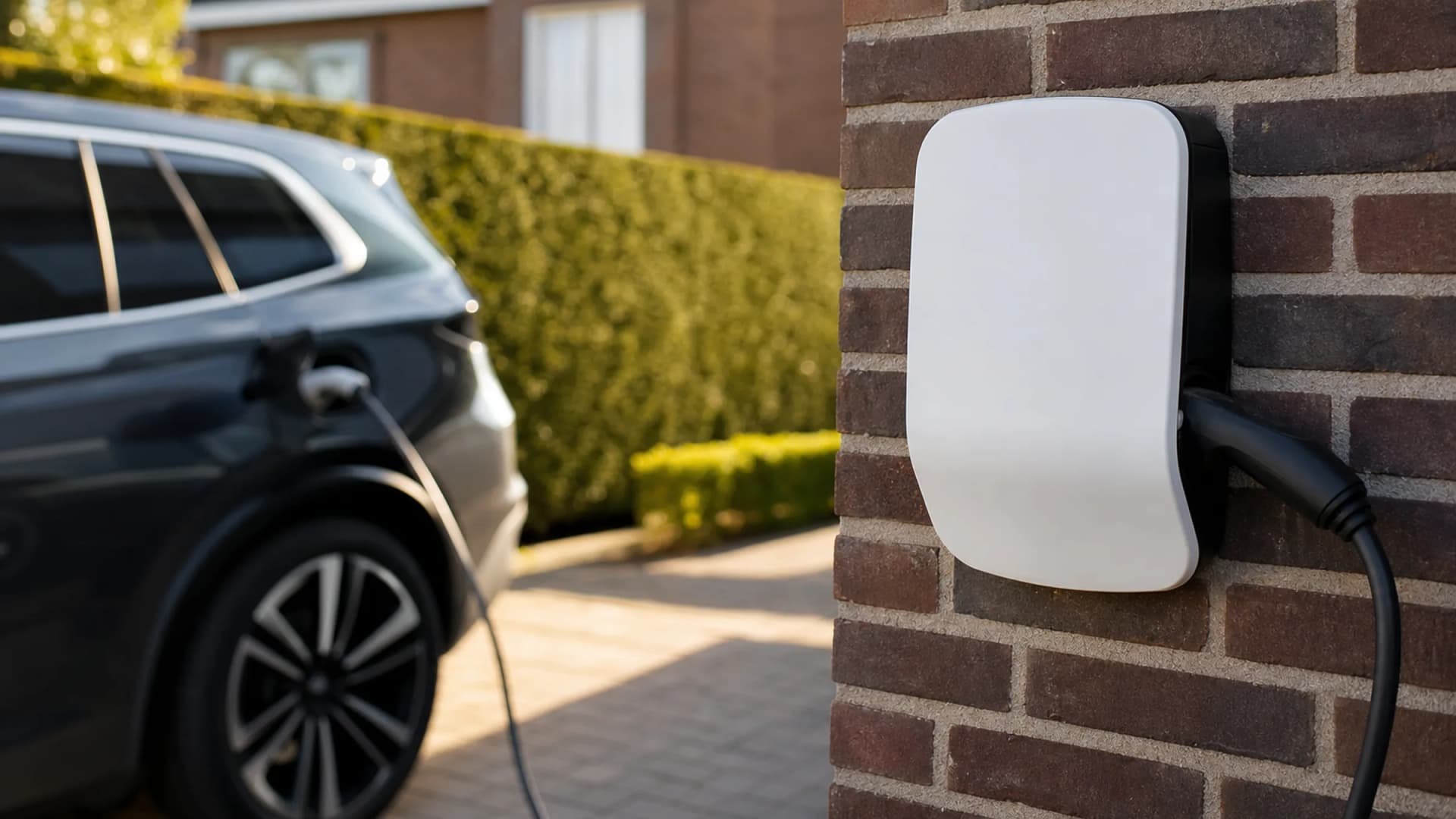
 EV charger
Add up the ratings of everything plugged in at home and you quickly end up above what your connection can supply. Yet the fuses usually hold. That is because not everything is on at once: the oven does not run all day, the kettle is on for a few minutes and the washing machine only heats at the start of the cycle.
The diversity factor is the number that captures this gap. It is the ratio between what is drawn at the same time at the busiest moment and the sum of all connected ratings. A factor of 1 means everything runs at full power together; the lower the factor, the more the peaks of individual appliances avoid each other.
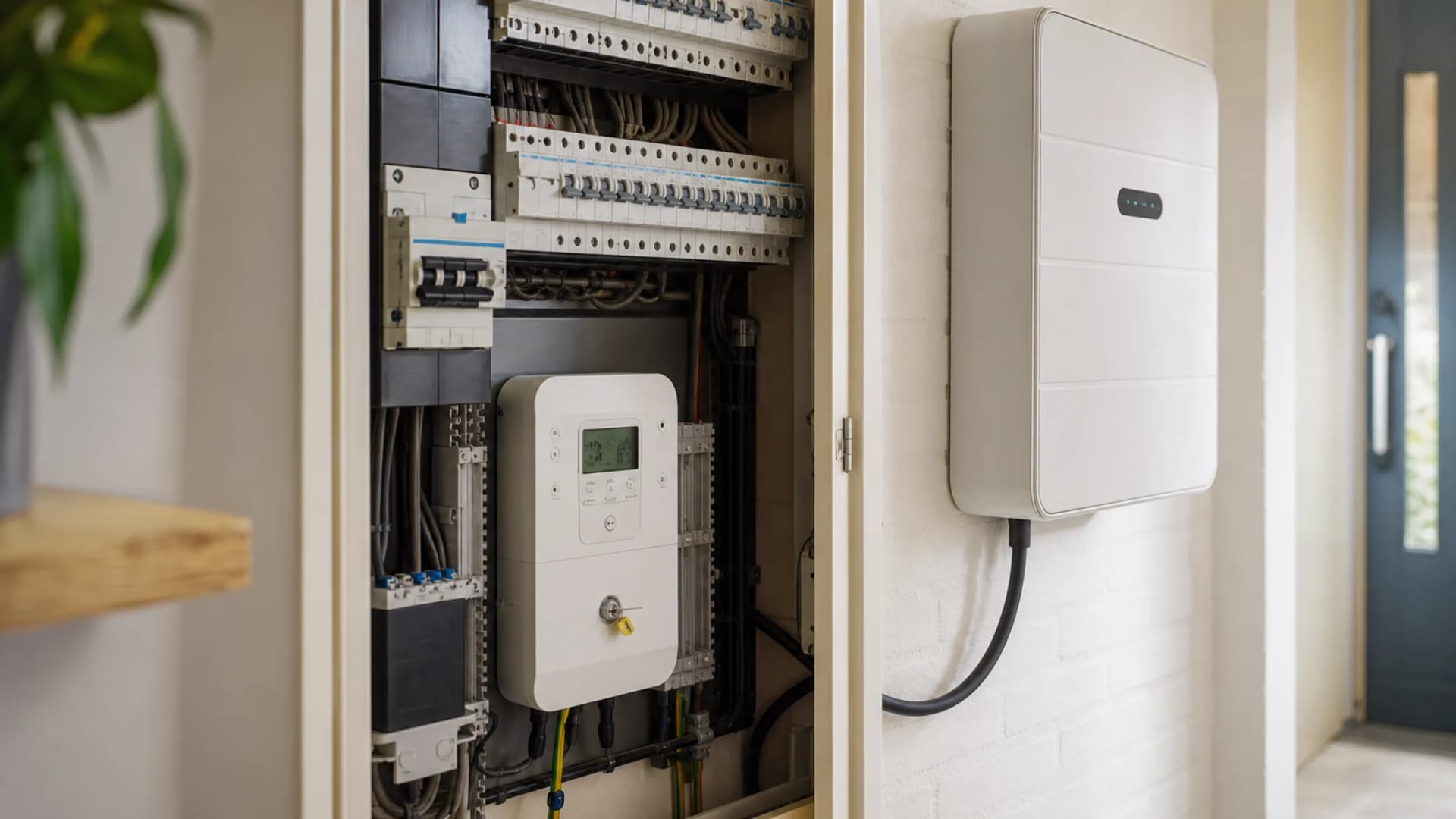
Installers use it when designing the consumer unit and choosing the main fuse. The values they use are set out in the Dutch installation standard NEN 1010 (Dutch). That standard is not freely available, so we do not quote table values here, but show how the principle works out for your home.
Why an EV charger and heat pump count differently
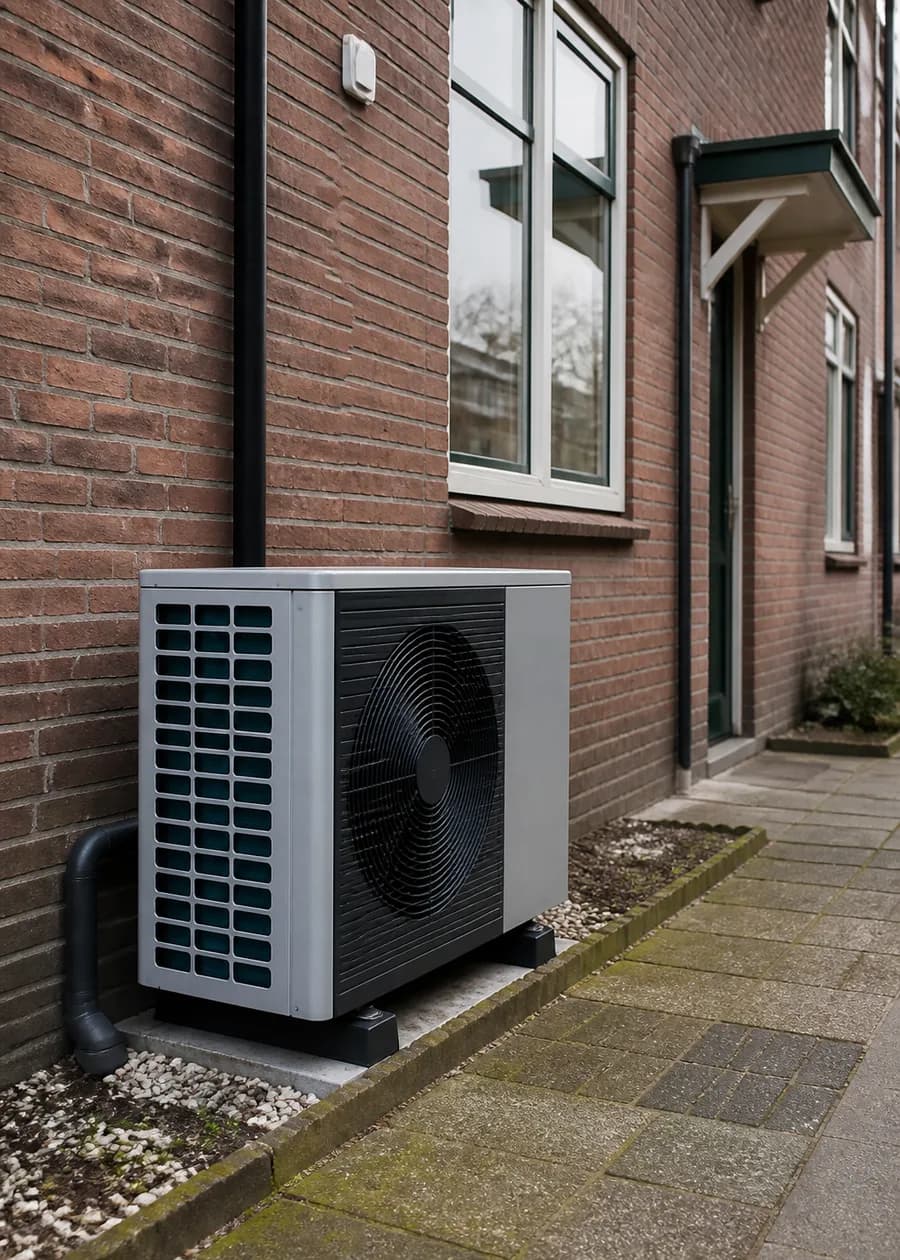
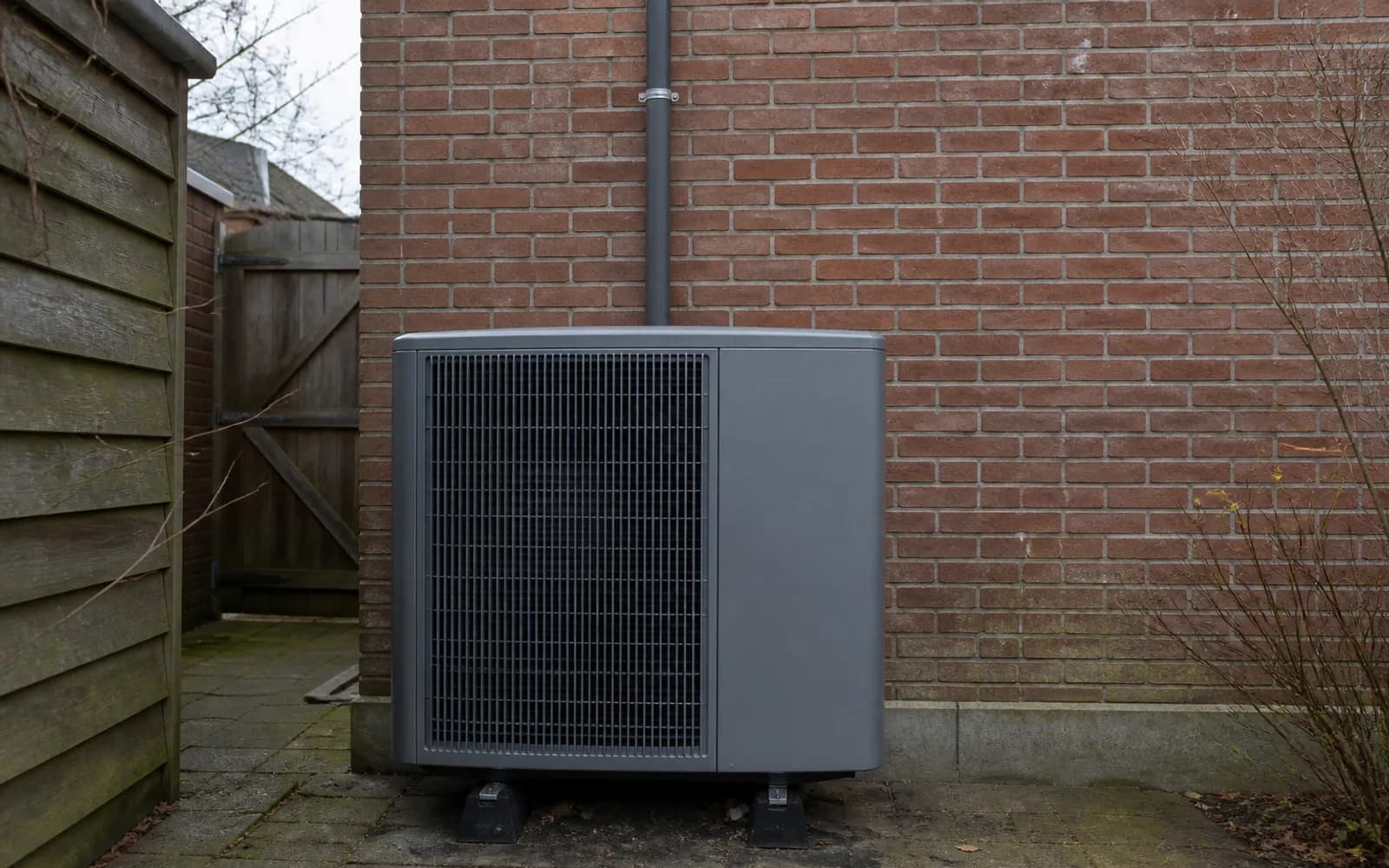
The principle works because most appliances draw a lot of power briefly and irregularly. An EV charger and a heat pump behave differently. As long as the car is charging, a charger supplies the same power for hours. On a cold day a heat pump can also draw a lot of power for a long time.
For those appliances you cannot count on peaks spreading out: when they are on, they are really on. That is why they count at close to their full rating when you check your connection, on top of what the rest of the home draws at the same time.
How to check your own connection
The ceiling is your connection. At 230 volts a single-phase 1x25 amp connection supplies about 5.7 kilowatts and a 1x35 connection roughly 8 kilowatts. A three-phase 3x25 amp connection can handle just over 17 kilowatts in total. You can tell which one you have from the main switch in your fuse box; how to recognise it is covered in single-phase or three-phase.
Set the large consumers that run for long stretches against that. Their rating is on the type plate or in the specifications. What is left is the room for the rest of the home at the busiest moment.
| Step | Power | Notes |
|---|---|---|
| Connection 3x25 amps | just over 17 kW | 230 volts times 25 amps, times three phases |
| EV charger 11 kW (3x16 amps) | 11 kW | Counts in full while the car is charging |
| Room for the rest | about 6 kW | For the heat pump, hob, oven and the rest of the home together |
Figures based on 230 volts. The actual rating of your appliances is on the type plate.
This shows quickly where it gets tight. If the car charges at full power while the heat pump runs and someone is cooking, little is left. That need not be a problem, as long as the appliances do not all ask for their maximum at once.
What if it does not fit?
Usually the answer is sharing the power smarter, not a heavier connection straight away. An EV charger with load balancing lowers its charging power as soon as the rest of the home draws a lot, and scales back up when there is room. That keeps the main fuse intact, even with the heat pump and hob on at the same time.
The choice of charger matters too. An 11 kW charger fits most three-phase homes without upgrading; a 22 kW charger almost always needs a heavier connection. The how and why is in the comparison 11 kW or 22 kW.
Upgrading your connection is possible through the grid operator, but it costs a one-off fee, and above 3x25 amps your fixed grid charges rise as well. In areas with grid congestion it can also take longer. So check first whether sharing the power smarter is enough.
Checking it together
Thinking about an EV charger, a heat pump or both, and unsure whether your connection can handle it? Put your situation to us and we will work it out with you.
Solar panels are still a smart investment in 2026. A few things matter if you want the most from your own power.
Your energy use
Planning to drive, cook or heat electrically? Factor that into how many panels you install now.
Spread the yield
Spread panels across roof faces so you generate through the day and use more of your own energy.
Your data
Choose a system with its own 4G connection and data storage in Europe so your information stays secure.
Boost your energy
A smart home battery stores today's power for later, so you use more of your own electricity after sunset.

We install your EV charger
We install your charger professionally and explain the costs upfront. We look at your car, fuse box and where the charger will sit. After installation we remain available for questions.
- Leave every morning with a full battery
- Faster charging than a wall socket
Frequently asked questions
The share of all connected ratings that actually draws power at the same time. Because not everything runs at full power at once, an installer does not have to add up every rating to choose the consumer unit and main fuse.
Count an EV charger at close to its full rating. As long as the car charges, the charger supplies the same power for hours, so its peak does not spread out. Much the same goes for a heat pump on a cold day.
Often, yes. A 3x25 connection can handle just over 17 kilowatts. With an 11 kW charger, about 6 kilowatts are left for the rest of the home. A charger with load balancing scales back when it gets busy, so the heat pump, hob and car stay within the limit together.
In the Dutch installation standard NEN 1010, which installers use to design consumer units. That standard is not freely available. For your own situation, checking your connection against the ratings of your large consumers is usually enough to see whether it fits.

Discover what smart energy can do for you
In about an hour you get insight into your savings, the options for your home and when the investment pays back. Straightforward, honest advice so you know exactly where you stand.
Smart energy at home
- Upgrade your home with our smart battery
- Our solar panels deliver up to 25% more energy
- A heat pump to minimise your energy use
- Charge your electric car easily at home with an EV charger
Booking an advice call is easy
Fill in your details below. Within a day we will contact you to schedule a no-obligation advice call together.
Related articles