
Home battery lifespan: how long does it last?
Updated on 7 min read
How long does a home battery last? HyxiPower states 6,000+ charge cycles and a 10-year warranty. Plus: how long a battery holds its charge, with an example.
All articles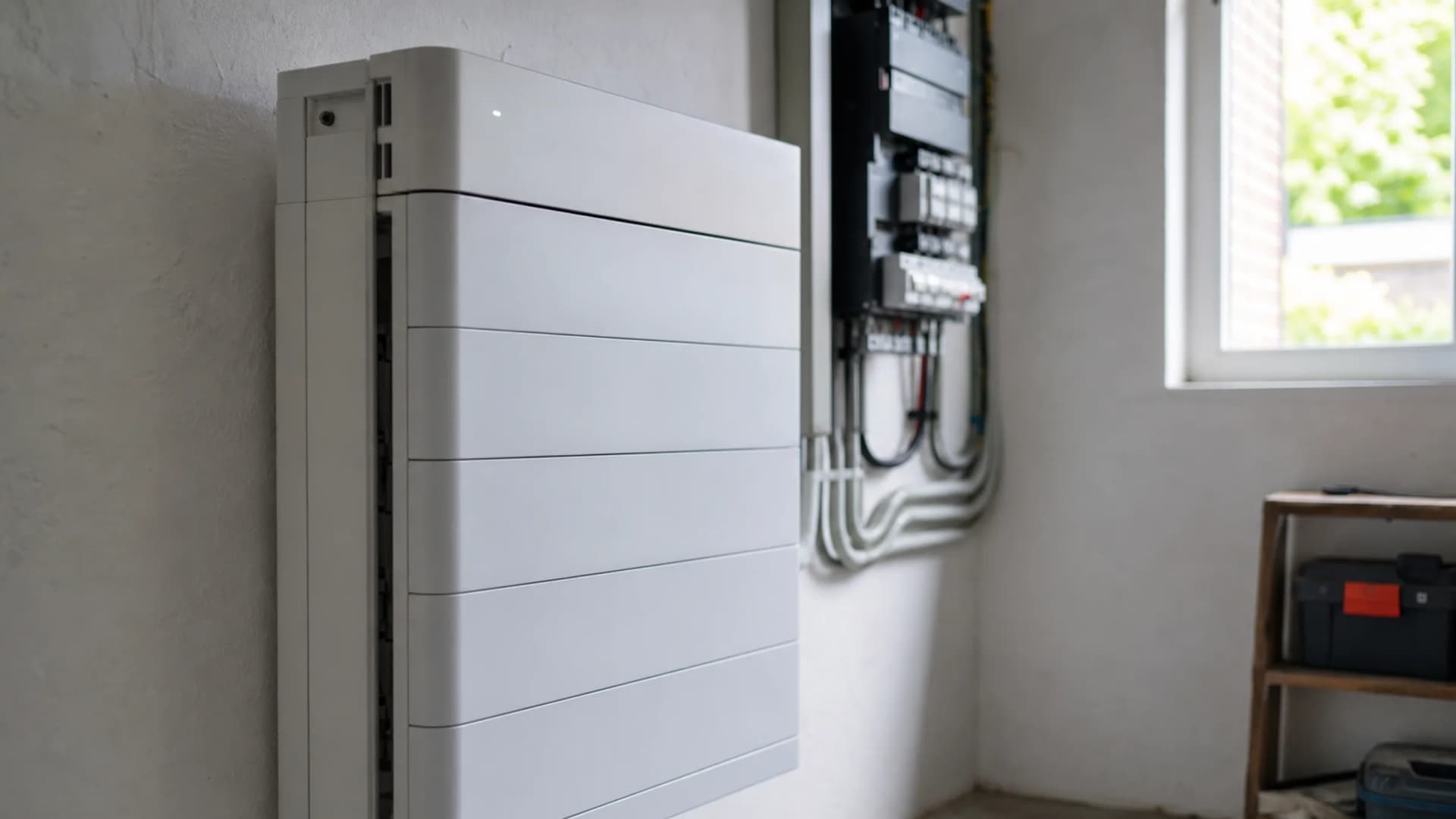
A home battery lasts for years: according to its datasheet, the HyxiPower we install reaches more than 6,000 charge cycles before its capacity has dropped to 70 percent, and it carries a ten-year factory warranty. At roughly one cycle per day you reach about 3,650 cycles after ten years. Even then the battery does not stop suddenly: its capacity declines gradually. And the power you store is normally used the same evening and night.
What determines the lifespan?
 Home battery
Two clocks tick at the same time. The first counts charge cycles: one cycle is charging fully and discharging again, and partial cycles count proportionally. A battery running on solar surplus makes roughly one cycle per day, so about 365 per year. The second clock is calendar ageing: even a battery that is rarely used slowly ages over the years.
Which of the two matters first depends on your use. If the battery only stores your own solar power, you rarely reach the maximum cycle count in practice; if you actively trade on power prices, you make more cycles per day and reach that number sooner. The cycle count of a specific system is in the manufacturer's datasheet.
Worked example: charge cycles and years
A concrete number helps. The HyxiPower HV-H datasheet states more than 6,000 charge cycles down to 70 percent remaining capacity, measured at full charge and discharge at 25 degrees. The warranty reads ten years or more than 6,000 cycles. Put that cycle count next to your use and you see what is left after ten years.
| Use | Cycles per year | Cycles after 10 years | Compared with 6,000 |
|---|---|---|---|
| One cycle per day (own solar power) | About 365 | About 3,650 | Well below |
| Two cycles per day (for example active trading) | About 730 | About 7,300 | Reached after just over eight years |
Worked example based on the cycle count in the HyxiPower datasheet. Calendar ageing comes on top of this; it is not a promise about the lifespan of your system.
If you only store your own solar power, you do not come close to the cycle count within the warranty term. If you charge and discharge twice a day, you reach it sooner. Other brands state their own cycles and warranty terms; you find those on the brand pages under home battery.
How long does a home battery hold its charge?
In practice not long, and that is the point. During the day the battery charges with your solar surplus; in the evening and at night your home uses that power again. How many hours that covers depends on the usable storage and what your home draws at that moment.
A worked example with a 10.66 kWh Dyness system, of which about 10.1 kWh is usable according to the manual: if your home draws 1 kW on average, you get about ten hours. At 0.5 kW that is about twenty hours, at 2 kW about five hours. These are worked examples, not an average household; your own use sets the real number.
If you do not charge the battery for a while, the charge slowly drops, partly because of the system's own consumption. The HyxiPower manual advises charging the battery fully if it gets no charge for more than three months, to prevent deep discharge. A loose Dyness module in storage only needs recharging after 10 to 12 months, according to the manufacturer. In a normal home with solar panels this does not come into play: the battery recharges on every sunny day.
Degradation: the battery does not stop suddenly
Worn out sounds like the battery fails one day, but that is not how it works. The capacity declines gradually: a battery that stored 10 kWh when new stores somewhat less after years of use. You notice it because the battery runs empty sooner, not because it stops. The system keeps working, just with less storage.
Many factory warranties therefore promise not only a term but also something about the remaining capacity at the end of that term. What exactly differs per manufacturer and is in the warranty conditions. When buying, that is a more useful question than the number of years alone: a long warranty without a capacity promise says less than it seems.
How to stretch the lifespan
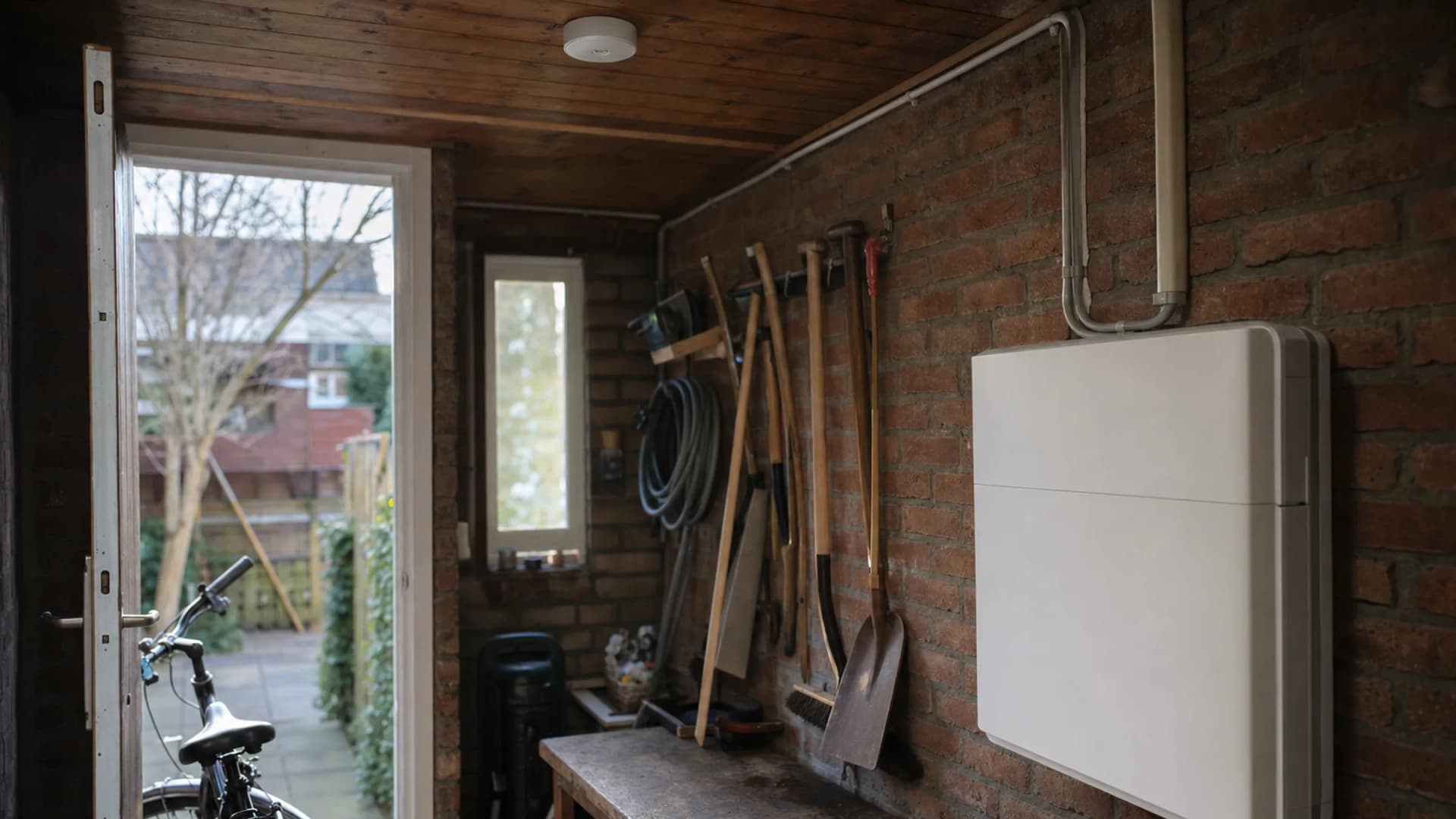
The biggest influence you have yourself is the location. Heat speeds up the ageing of lithium batteries, so a cool, dry and ventilated space is not only the fire safety advice but also good for lifespan. Which spots work and which fall off is covered in where to place a home battery.
The system does the rest itself. The battery management system guards the charge limits and the temperature, so the battery does not discharge harmfully deep or overcharge. If you choose to trade actively on a dynamic contract, you make more cycles and the battery wears somewhat faster; extra earnings stand against that. That is not right or wrong, but a trade-off you make deliberately.
Lifespan, warranty and payback time
For the buying decision one sum matters in the end: the battery must pay for itself well within its lifespan. What that sum looks like and which savings count is covered under what a home battery costs.
We give a ten-year factory warranty on the HyxiPower home battery. During the site survey we also tell you what the datasheet promises about cycles and remaining capacity, so you do not have to rely on a brochure claim. Curious what that means for your situation? Request a no-obligation quote via our home battery page.
Solar panels are still a smart investment in 2026. A few things matter if you want the most from your own power.
Your energy use
Planning to drive, cook or heat electrically? Factor that into how many panels you install now.
Spread the yield
Spread panels across roof faces so you generate through the day and use more of your own energy.
Your data
Choose a system with its own 4G connection and data storage in Europe so your information stays secure.
Boost your energy
A smart home battery stores today's power for later, so you use more of your own electricity after sunset.

We install your home battery
Usually within three weeks. Our installers fit the battery neatly and safely by your fuse box. We leave your home clean and make sure you know exactly how it all works.
- Charge smart when power is cheap
- Keep power until you need it
Frequently asked questions
Years. According to its datasheet, the HyxiPower we install reaches more than 6,000 charge cycles down to 70 percent remaining capacity and carries a ten-year factory warranty. At one cycle per day you reach about 3,650 cycles after ten years. Calendar ageing plays a role too; next to the warranty term, also check what the manufacturer promises about remaining capacity.
Normally you use stored power the same evening and night. With 10 kWh of usable storage and a home drawing 1 kW, you get about ten hours. If the battery gets no charge for a long time, the charge slowly drops; the HyxiPower manual advises a full charge after three months without charging.
That is in the datasheet of each system. For the HyxiPower HV-H it is more than 6,000 cycles down to 70 percent remaining capacity. With your own solar power you make about one cycle per day, some 365 per year.
Charging fully and discharging again once. Partial cycles count proportionally: charging and discharging halfway twice also adds up to one cycle. A battery on solar surplus makes about one cycle per day, some 365 per year.
No. The capacity declines gradually, so the battery runs empty sooner than when it was new. The system keeps working, just with less storage.
You make more cycles per day, so you approach the datasheet cycle count sooner. Extra earnings stand against that. It is a deliberate trade-off, not a hidden downside.
Pick a cool, dry and ventilated spot and have the installation done by a certified installer. The battery management system guards the charge limits and temperature by itself.
That differs per manufacturer: a term in years, often combined with a promise about remaining capacity. Check both in the warranty conditions. We give a ten-year factory warranty on the HyxiPower.

Discover what smart energy can do for you
In about an hour you get insight into your savings, the options for your home and when the investment pays back. Straightforward, honest advice so you know exactly where you stand.
Smart energy at home
- Upgrade your home with our smart battery
- Our solar panels deliver up to 25% more energy
- A heat pump to minimise your energy use
- Charge your electric car easily at home with an EV charger
Booking an advice call is easy
Fill in your details below. Within a day we will contact you to schedule a no-obligation advice call together.
Related articles